




Apical Root Elevator 3.5mm, Right, Handle No.3 | NJ Medical Instruments
SKU:
NJM-26042
Original price was: $ 30.$ 20Current price is: $ 20.
Apical Root Elevators | NJ Medical Instruments
SKU:
NJM-26043
Original price was: $ 30.$ 20Current price is: $ 20.
Bein Root Elevators Fig OA | NJ Medical Instruments
SKU:
NJM-26044
Original price was: $ 30.$ 20Current price is: $ 20.
Heidebrink Apical Fragment Ejectors Fig.1 | NJ Medical Instruments
SKU:
NJM-26045
Original price was: $ 30.$ 20Current price is: $ 20.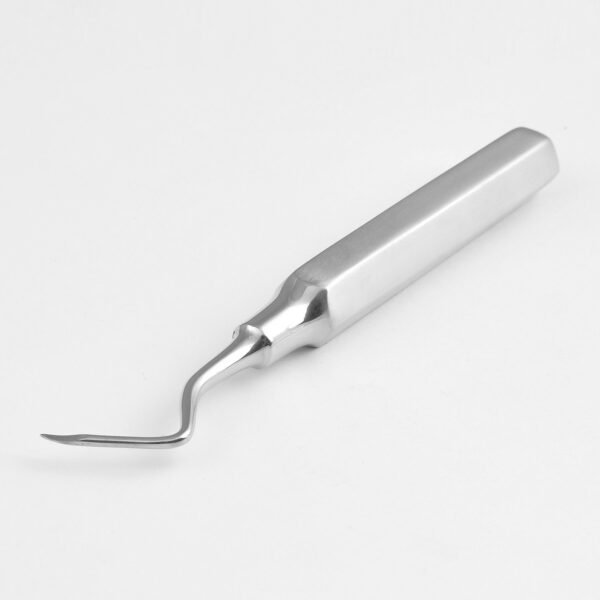
Heidebrink Apical Fragment Ejectors Fig.2 | NJ Medical Instruments
SKU:
NJM-26046
Original price was: $ 30.$ 20Current price is: $ 20.
Ratzow Apical Fragment Encleators Ejectors Fig.1 | NJ Medical Instruments
SKU:
NJM-26047
Original price was: $ 30.$ 20Current price is: $ 20.
Ratzow Apical Fragment Encleators Ejectors Fig.2 | NJ Medical Instruments
SKU:
NJM-26048
Original price was: $ 30.$ 20Current price is: $ 20.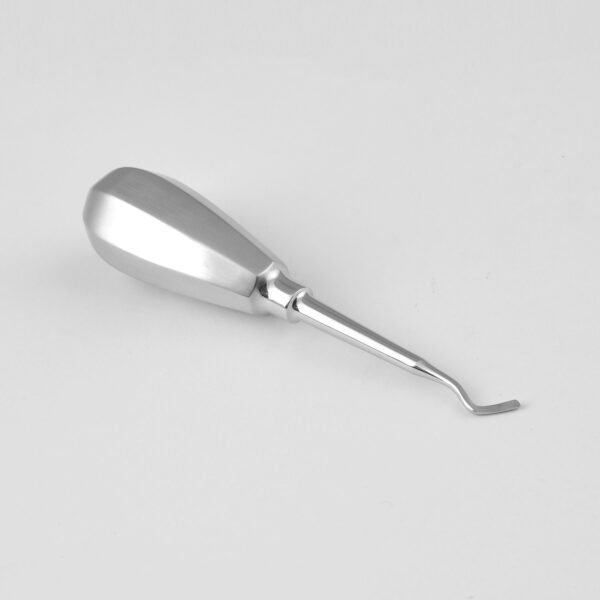
Ratzow Apical Fragment Encleators Ejectors Fig.3 | NJ Medical Instruments
SKU:
NJM-26049
Original price was: $ 30.$ 20Current price is: $ 20.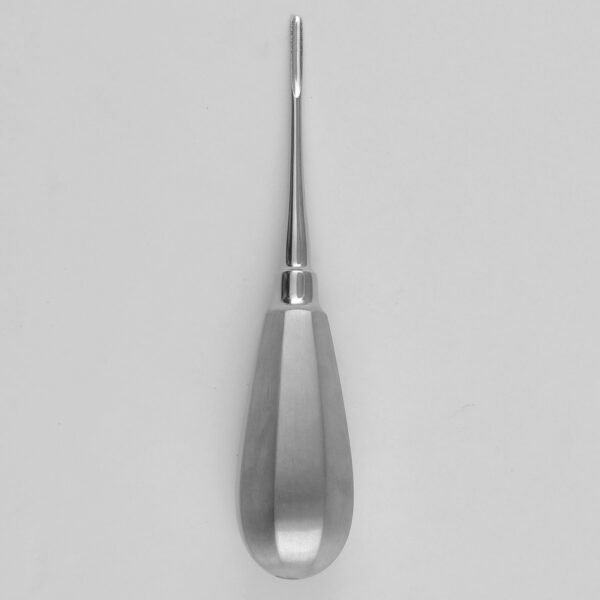

Root Elevators Bein 14cm 3mm Serrated | NJ Medical Instruments
SKU:
NJM-26050
Original price was: $ 30.$ 20Current price is: $ 20.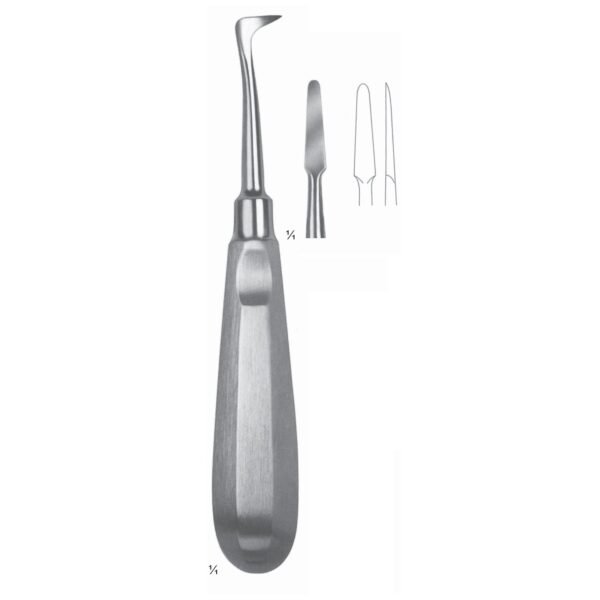
Seldin Root Elevators Fig 2 | NJ Medical Instruments
SKU:
NJM-26051
Original price was: $ 30.$ 20Current price is: $ 20.Dental Elevators - Root Elevators, Apical Fragment Ejectors and Surgical Instruments for Sale
Extraction forceps get the attention, but elevators do a lot of the actual work in oral surgery. Before a tooth can be removed with forceps, the periodontal ligament has to be disrupted, bone has to be relieved, and the tooth has to be luxated enough to move freely in the socket. That's elevator work. And when a root fractures mid-extraction - which happens regularly, especially with brittle endodontically treated teeth or curved roots - forceps become useless. You're now dealing with a root fragment sitting below the gingival margin, possibly below the level of the alveolar crest, and the only way out is the right apical instrument used correctly.
The elevators and fragment removal instruments in this category at NJ Medical Instruments cover both of those situations. They're manufactured from surgical-grade stainless steel at the company's Sialkot facility, CE-certified, and fully autoclavable.
Types of Dental Elevators and Their Clinical Uses
The category groups several instrument types that serve different stages of the extraction and root retrieval sequence.
Straight and Angled Elevators for Luxation
Standard straight elevators - Seldin, Potts, Cryer types - work by wedging between the tooth and the alveolar bone wall, then rotating on the fulcrum point to expand the socket and sever the periodontal ligament fibres. The working end width is selected based on tooth and root size: too narrow and you lose leverage, too wide and you risk compressing adjacent bone rather than creating space. Angled or cross-bar elevators are better suited for posterior teeth where straight-axis access is restricted by the adjacent teeth and cheek tissue.
For single-rooted teeth with favourable root morphology, a well-placed straight elevator often delivers enough luxation that forceps removal is straightforward. For multi-rooted teeth, sectioning and individual root elevation is usually the more predictable approach.
Apical Elevators for Deep Root Access
Apical root elevators are a different instrument entirely - they're designed for working at the apical third of the root, below the crest of the alveolus. The working tips are narrow, often paired as left and right variants, and angled to reach into the depth of the socket without the broader shaft obstructing access. They're used when conventional elevation hasn't delivered the root, when the crown has separated and only the apical portion remains, or when an endodontically treated tooth has a hypercementosed apex that resists standard luxation.
The Apical Root Elevators available here are made to this specification - narrow-tipped, appropriately angled for deep socket access, surgical-grade steel throughout. This is the instrument you reach for when the root fragment is out of reach of standard elevators and you need precision at depth.
Apical Fragment Ejectors - Specialised Root Retrieval Instruments
Fragment ejectors are a step beyond apical elevators in terms of specialisation. Rather than luxating, they engage the apical fragment directly and either push it coronally or scoop it out of the socket. The two main patterns here - Heidebrink and Ratzow - have different tip geometries that suit different fragment situations.
Heidebrink Apical Fragment Ejectors Fig. 1
The Heidebrink Apical Fragment Ejectors Fig. 1 uses a pointed hooked tip design to engage fractured root tips and fragments in the socket. The Heidebrink pattern is particularly useful when the fragment has some residual space around it - the hook tip can be worked past the fragment and then used to lever it coronally out of the socket rather than pushing blindly from below.
Ratzow Apical Fragment Enclators Ejectors Fig. 2
The Ratzow Apical Fragment Encleators Ejectors Fig. 2 takes a slightly different approach - the enucleator/ejector tip design is made to work around the fragment circumferentially, separating it from the surrounding bone and PDL remnants before ejection. The Fig. 2 designation indicates the specific angulation and tip profile within the Ratzow series, suited for the geometry of molar and premolar root sockets where straight-axis access is harder to achieve.
Build Quality and Purchasing
All instruments in this category are manufactured in surgical-grade stainless steel with appropriate hardness for the mechanical demands of elevation and fragment retrieval. Handle design follows the standard dental instrument ergonomics - balanced, autoclave-safe, and sized for controlled wrist movement rather than brute force. NJ Medical Instruments ships worldwide and offers bulk pricing for practices, oral surgery units, and distributors. Contact info@njmedicalinstruments.com for wholesale enquiries or custom instrument requirements.