


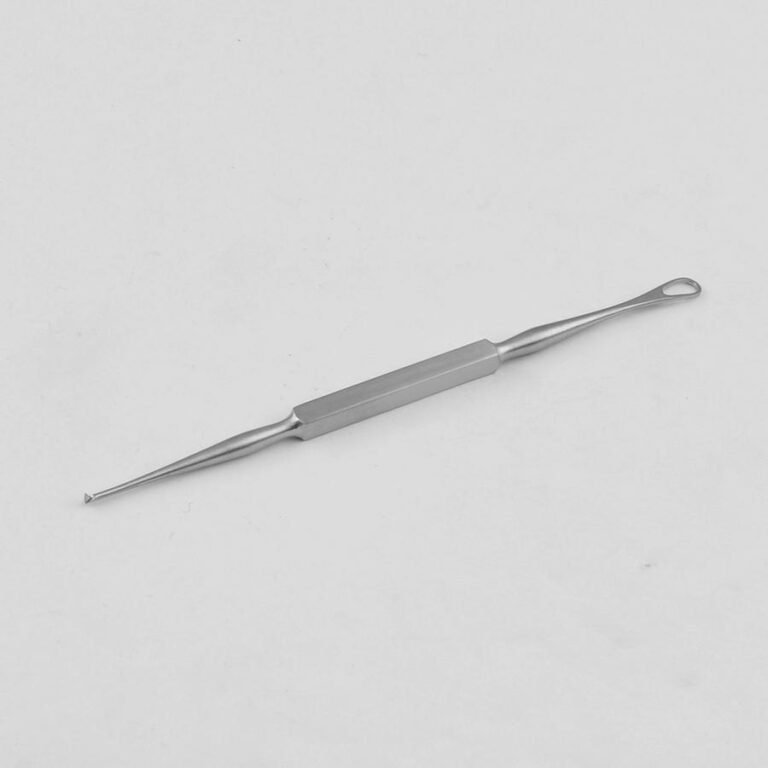
Gross Loops 12cm | NJ Medical Instruments
In stock
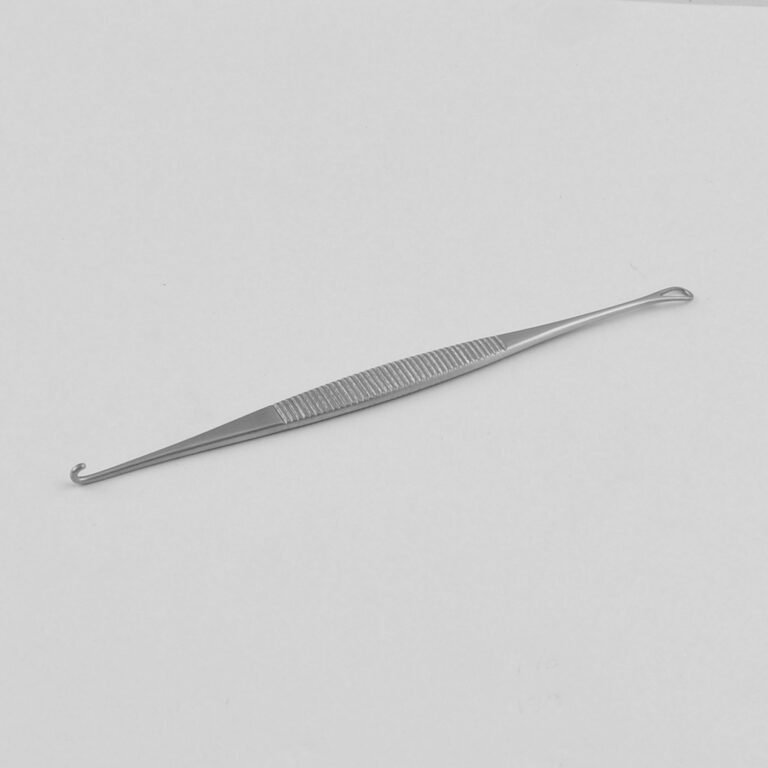
Roser Loops Blunt 14cm | NJ Medical Instruments
In stock
Surgical Loops: A Closed Wire That Works by Its Own Shape
A loop is the simplest working end in the instrument catalogue — a closed wire on a handle — and its usefulness comes from having no cutting edge and no jaws at all. Because a loop encircles rather than grips, it can pass around a structure, hold it, retrieve it or scrape past it without applying the concentrated pressure that a bladed or jawed instrument brings. In practice a loop is chosen precisely when the surgeon wants contact without compression.
Wire gauge sets the entire character
Everything about how a loop behaves comes from the diameter and temper of its wire. Fine wire flexes to follow a contour and applies very little force, which makes it ideal for delicate retrieval but useless if resistance has to be overcome. Heavier wire holds its shape against tissue and can be drawn through with real force, at the cost of conforming less. There is no general-purpose gauge — the loop either yields to the tissue or the tissue yields to the loop, and which of those you want is the specification.
Loop shape and the plane it works in
Round loops apply even contact all the way around and suit encircling. Oval and elongated loops present a longer working edge in one direction, which is what you want for drawing along a surface. Angled loops set the plane of the wire at an angle to the shaft so the loop can be laid flat against a surface the shaft approaches obliquely — the difference between a loop that sits properly on the tissue and one that touches at a single point.
Smooth versus serrated wire
A smooth loop slides over tissue and is used to encircle, position or retrieve without abrading. A serrated or roughened loop grips as it is drawn, which is what allows material to be removed by traction rather than by cutting. This is the same grip-versus-preservation trade that runs through every instrument family, expressed here in the surface finish of a single wire.
Handle, shaft and the fact that loops are pulled
Unlike instruments that are pushed or closed, a loop is usually drawn toward the operator under tension. That puts the load along the axis of the shaft and into the junction where wire meets shaft — which is the point that fails when a loop fails. A secure, well-formed junction and a handle that allows a firm pull without slipping matter more on this instrument than on most, because they carry the whole working load.
Which loop do you need?
| Task | Wire | Shape | Chosen for |
|---|---|---|---|
| Delicate retrieval | Fine gauge, smooth | Round | Contact that follows contour without force |
| Removal by traction | Heavier gauge, serrated | Oval or elongated | Grip while being drawn |
| Encircling a structure | Medium gauge, smooth | Round | Even contact all around |
| Working along a surface | Medium to heavy | Elongated | A longer working edge in one direction |
| Oblique approach | Any gauge | Angled to the shaft | Laying the loop flat on the surface |
Related instruments in this range
- General Surgery — the full range this category sits within
- Forceps — gripping and handling tissue
- Bone Curettes — scraping with tactile feedback
- ENT Diagnostic — diagnostic and retrieval instruments
- Surgical Instruments — the wider instrument catalogue
Wholesale, OEM and private-label supply
NJ Medical Instruments manufactures surgical loops in Sialkot, Pakistan, supplying single instruments through this shop and bulk quantities direct to hospitals, ENT and surgical units, and distributors. As the manufacturer we build to specification — wire gauge and temper, loop shape and size, smooth or serrated finish, angle to the shaft, shaft length, handle form, marking and private-label packaging. For volume pricing or an OEM quotation, email info@njmedicalinstruments.com or message +92-333-8733922.
Frequently asked questions
What wire gauge should I choose?
It depends on which way you want the interaction to go. Fine wire flexes and follows the contour of what it touches, applying very little force — right for delicate retrieval. Heavier wire holds its shape and can be drawn through resistance, but conforms less. There is no all-purpose gauge, so most users hold more than one.
When is a serrated loop better than a smooth one?
When material needs to be removed by traction as the loop is drawn. A smooth loop slides over tissue and is for encircling, positioning and retrieving without abrading. Serrated wire grips — useful when that is the point, unhelpful when it is not.
What does an angled loop achieve?
It sets the plane of the wire at an angle to the shaft so the loop can lie flat against a surface the shaft reaches obliquely. Without the angle, a loop approached at a slant contacts at a single point rather than around its circumference.
Where do loops usually fail?
At the junction where the wire meets the shaft. Loops are drawn toward the operator under tension rather than pushed or closed, so the whole working load runs along that junction. A secure, well-formed joint matters more on this instrument than the loop itself.
What are your loops made from?
They are manufactured from surgical-grade stainless steel, with wire temper controlled so the loop holds its intended shape and the wire-to-shaft junction inspected before dispatch. Both reusable and single-use options exist across our range — specify which you need, or ask for the material specification of a particular pattern.
Can I order in bulk or to our own specification?
Yes. As an OEM manufacturer we supply retail quantities through this shop and bulk orders direct from the factory. Custom wire gauges, loop shapes and sizes, surface finishes, angles, shaft lengths, laser marking and private-label packaging are available. Send your specification and quantity for a quotation.