


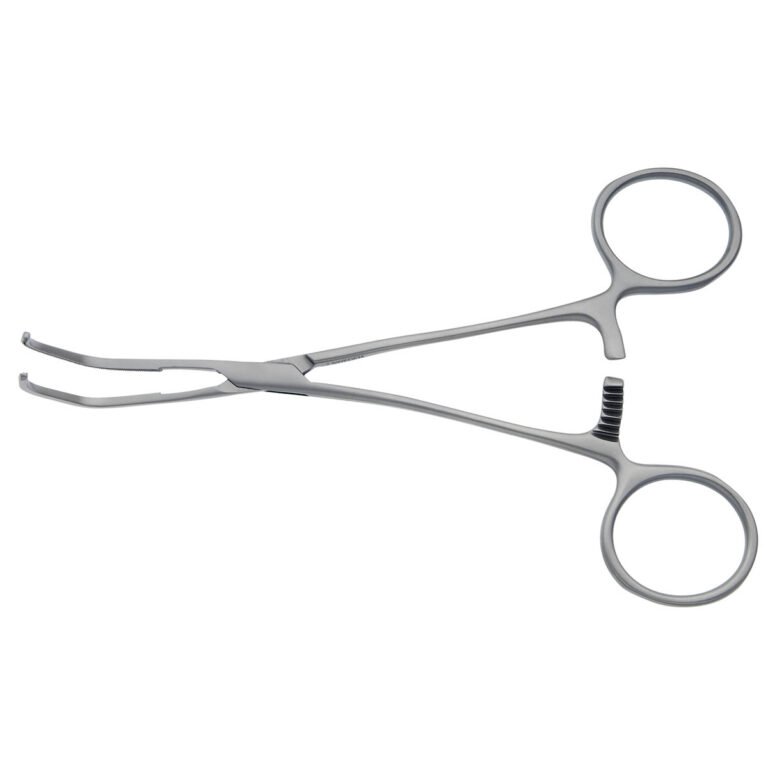
Mini Tangential Occlusion Clamp | NJ Medical Instruments
In stock
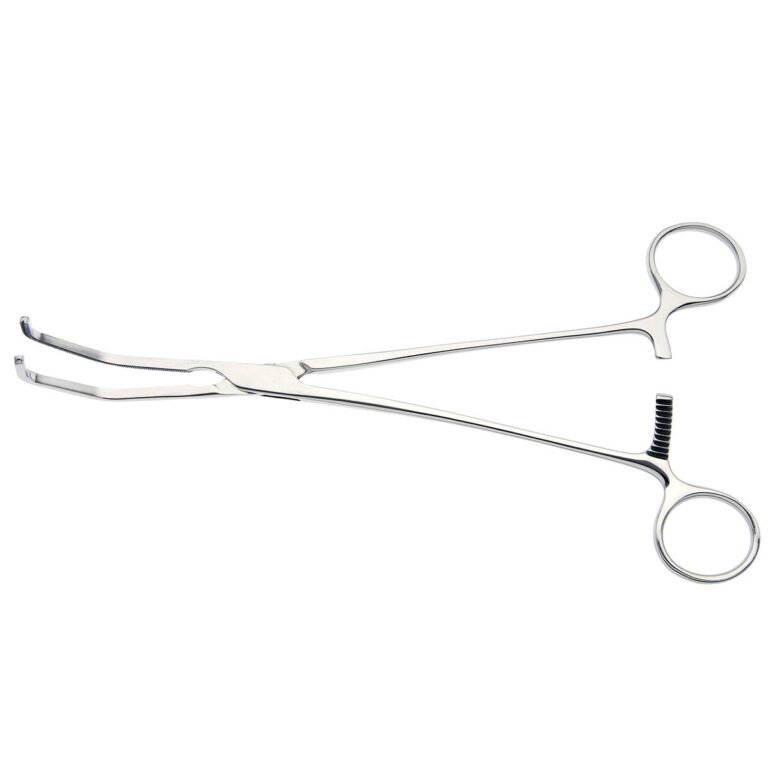
Satinsky Tangential Occlusion Clamp | NJ Medical Instruments
In stock
Tangential Occlusion Clamps: Isolating Part of a Vessel While Flow Continues
Every other clamp in this range closes a vessel. A tangential clamp deliberately does not. It takes a bite of the vessel wall from the side, sealing off a segment of the circumference so it can be opened and worked on, while the remaining lumen stays open and blood keeps moving past. That single difference in intent changes the whole design: the jaws are shaped to hold a fold of wall rather than to flatten a diameter, and the important measurement is not how firmly the clamp closes but how much lumen it leaves behind.
The trade-off that defines the category
A deeper bite gives a longer, safer margin of isolated wall to work on, but narrows the channel still carrying flow. A shallower bite preserves the lumen but leaves less wall outside the clamp. The surgeon is balancing working room against continued flow every time one of these is applied, and the shape of the clamp determines how favourable that trade-off can be. This is why a C-shaped or curved jaw matters so much here: the curve buys isolated wall without taking a proportional bite out of the channel.
Curved and C-shaped jaws
Satinsky-type patterns and their relatives use a long curved jaw that sweeps around and gathers a portion of the wall along its length. Because the bite is taken along a curve rather than straight across, a substantial length of wall is isolated while the clamp intrudes comparatively little into the lumen. Different curve depths suit different vessel sizes and different amounts of isolated wall, which is why this category is stocked as a graded family rather than as one instrument.
Jaw grip and the risk of slipping under pressure
A tangential clamp is under pressure from a vessel that is still full, and it is holding a fold rather than a flattened diameter, so it has less mechanical purchase than an occlusion clamp does. Fine multi-row atraumatic serration is used to hold the adventitia against that load without extra closing force, and the ratchet needs to be fine enough that the surgeon can find a setting that grips reliably while the tissue in the jaw remains a fold of living wall.
Shank geometry and staying out of the working area
Unlike a full occlusion clamp, this instrument stays in place while the surgeon actively works on the wall immediately in front of its jaws. The handle therefore has to be somewhere other than over the operative site. Angled, offset and bayonet shanks exist so the clamp holds its bite from the side while leaving the isolated segment fully exposed and reachable.
Which tangential clamp do you need?
| Requirement | Jaw form | Typical length | Selected for |
|---|---|---|---|
| Maximum isolated wall | Deep C-curve, long jaw | 22–26 cm | Longer working segment where the lumen can spare the bite |
| Maximum preserved flow | Shallow curve, shorter jaw | 18–22 cm | Keeping the remaining channel as wide as possible |
| Large vessels | Long curved jaw, medium serration | 24–28 cm | A bite proportionate to a wide circumference |
| Medium and small vessels | Fine curved jaw, close-pitch serration | 16–20 cm | Proportionate grip on a thinner wall |
| Exposed working site | Angled or bayonet shank | 20–24 cm | Holding from the side while the segment stays reachable |
Related clamps in this range
- All Clamps — the full clamp range
- Aortic-Aneurysm Clamps — full occlusion of large vessels
- Peripheral Vascular Clamps — jaws graded by calibre
- Anastomosis Clamps — paired control across a join
- Carotid Clamps — low-profile occlusion in shallow fields
Wholesale, OEM and private-label supply
NJ Medical Instruments manufactures tangential and partial occlusion clamps in Sialkot, Pakistan, supplying single instruments through this shop and graded families in bulk to hospitals, cardiac and vascular units, and distributors. As the manufacturer we produce to specification — curve depth and jaw length, serration pattern, ratchet graduation, shank angle and offset, marking and private-label packaging. For volume pricing or an OEM quotation, email info@njmedicalinstruments.com or message +92-333-8733922.
Frequently asked questions
What is a tangential occlusion clamp used for?
It isolates part of a vessel's circumference so that segment can be opened and worked on while flow continues through the remaining lumen. It is a partial occlusion instrument by design, which distinguishes it from every other clamp in this range.
How deep a bite should the clamp take?
That is the central judgement in using one. A deeper bite isolates more wall and gives more working room but narrows the channel still carrying flow; a shallower bite preserves the lumen but leaves a shorter margin to work with. The curve of the jaw is what makes the trade-off more favourable, which is why curve depth is a real selection criterion here.
Why are the jaws curved or C-shaped?
A curved jaw gathers wall along its length rather than straight across, so it isolates a substantial segment while intruding relatively little into the lumen. A straight jaw taking the same length of wall would take a much larger bite out of the flow channel.
Why does grip matter more on these clamps?
Because the jaw holds a fold of wall rather than a flattened diameter, and the vessel behind it is still under pressure — so there is less mechanical purchase and more load trying to displace it. Fine multi-row atraumatic serration supplies that grip without requiring extra closing force.
What are your tangential clamps made from?
They are manufactured from surgical-grade stainless steel, with jaw faces and ratchets finished and inspected before dispatch. Both reusable and single-use options are available across our vascular clamp range — specify which you need when ordering, or request the material specification for a particular pattern.
Can I order a graded family or custom specification?
Yes. As an OEM manufacturer we supply retail quantities through this shop and bulk orders direct from the factory, including graded families covering a range of curve depths and jaw lengths. Custom curves, serration patterns, shank angles, laser marking and private-label packaging are available. Send your specification and quantity for a quotation.