


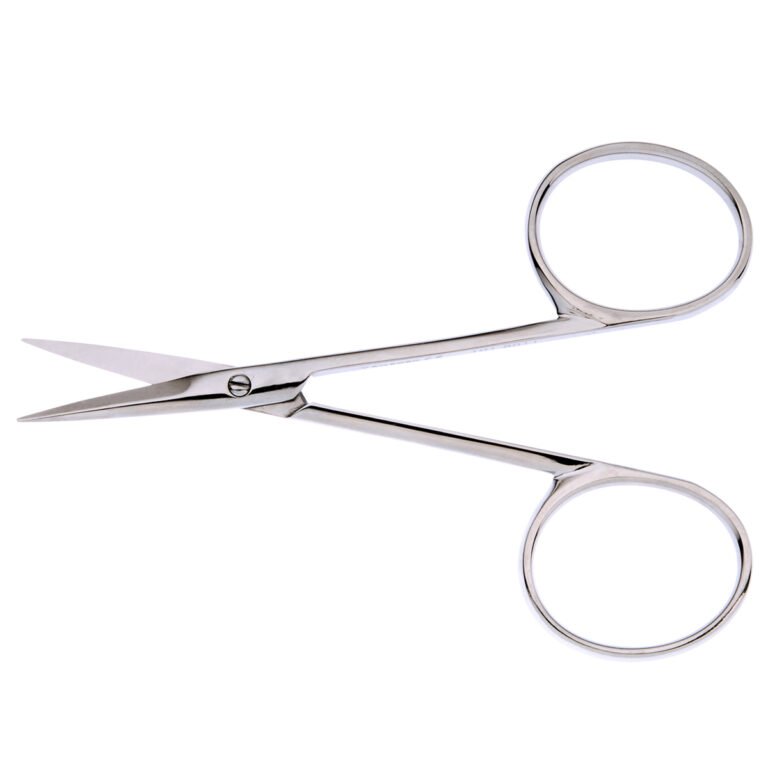
Eye Scissors 10 Cm 4 In | NJ Medical Instruments
In stock
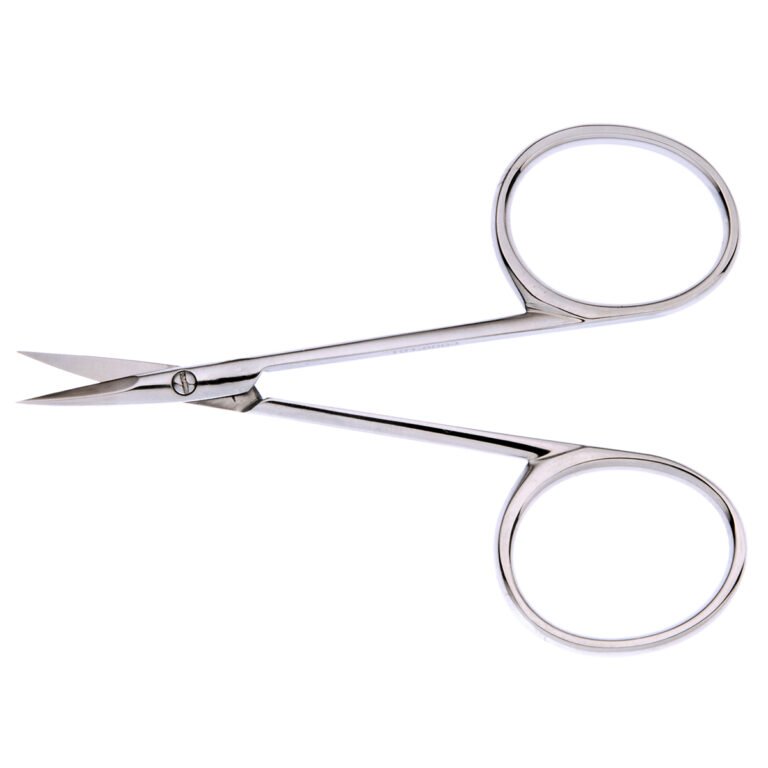
Eye Scissors 9.5 Cm 3.75 In | NJ Medical Instruments
In stock
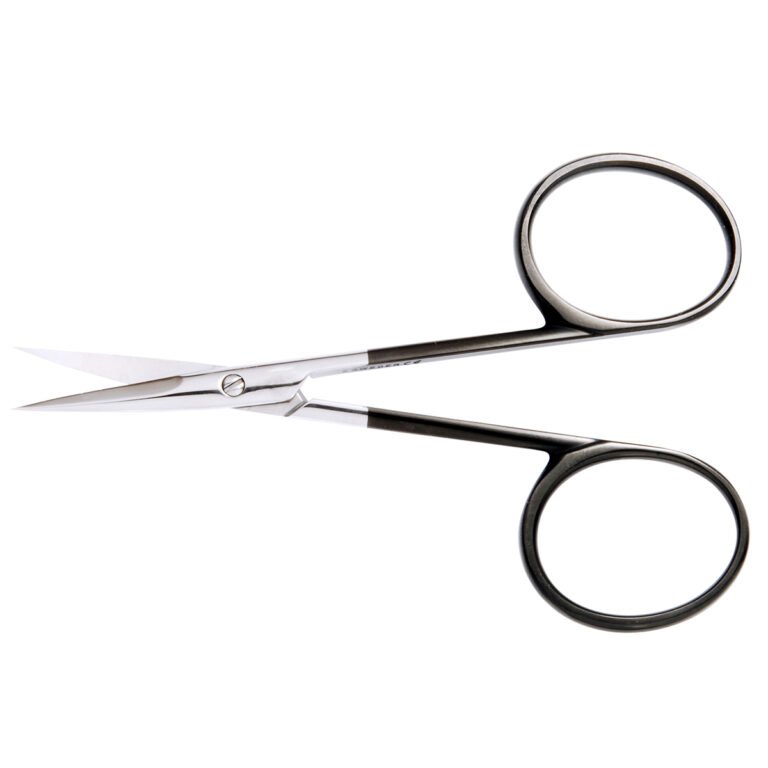
Supercut Eye Scissors | NJ Medical Instruments
In stock
Eye Scissors: Cutting Tissue Measured in Tenths of a Millimetre
Eye scissors are built for a scale where the thickness of the blade itself becomes a design problem. Corneal tissue is around half a millimetre thick and conjunctiva thinner still, so a blade that would be considered fine anywhere else in surgery is disproportionately bulky here — it displaces the tissue it is trying to cut before the edges meet. Ophthalmic patterns solve this with blades that are both short and genuinely thin in section, and with handles that convert a squeeze rather than a finger arc into blade movement. NJ Medical Instruments manufactures the range in surgical-grade stainless steel, supplied worldwide direct from the factory for individual purchase and for bulk, wholesale, and OEM/private-label supply.
Spring handles and why they matter here
Most eye scissors use a spring handle held like a pencil rather than ring handles worked with the fingers. The reason is proportion: ring handles translate a wide finger movement into blade travel, which is unmanageable when the intended cut is a fraction of a millimetre. A spring handle responds to pressure, so the blades close as far as the surgeon squeezes and reopen on their own — and the pencil grip itself steadies the hand against the patient's face or a rest.
Named patterns
Westcott scissors are the standard conjunctival and general ophthalmic pattern, spring-handled with small curved blades, blunt or sharp tipped.
Vannas scissors are finer still, with very short straight or curved blades used for capsulotomy, iris work, and cutting fine suture inside the eye.
Corneal and iris scissors come in left and right angled versions so the blades can address either side without the surgeon's hand crossing the microscope field.
Handling and edge life
These are the most easily damaged scissors on any tray. The tips are fine enough that a single knock against another instrument in a tray can misalign them, and once the blades no longer meet precisely at the tip they cannot cut tissue this thin at all. They should be stored with tip protectors, kept separate from heavier instruments, and never used on suture heavier than they were designed for — the edge rolls immediately.
Which eye scissors do you need?
| Pattern | Handle and blade | Best for |
|---|---|---|
| Westcott, blunt tips | Spring handle, curved blades | Conjunctival dissection |
| Westcott, sharp tips | Spring handle, curved blades | Precise conjunctival and tissue cuts |
| Vannas, straight | Spring handle, very short blades | Capsulotomy and intraocular suture |
| Vannas, curved | Spring handle, very short blades | Fine work following a curve |
| Corneal scissors, left / right | Angled blades, side specific | Enlarging a corneal section |
| Iris scissors | Ring or spring handle | Iris and fine anterior segment work |
Explore related instruments
- Tenotomy Scissors — closely related fine patterns
- Blepharoplasty Scissors for eyelid tissue
- All Surgical Scissors
- Ophthalmic Surgery Sets
All manufactured in surgical-grade stainless steel to international standards, reusable and autoclavable, with worldwide shipping.
Bulk, wholesale & OEM supply
As a direct manufacturer, NJ Medical Instruments supplies eye scissors in bulk and wholesale quantities to hospitals, eye units, and distributors, and produces OEM / private-label scissors to custom specifications and laser marking. Contact us by email at info@njmedicalinstruments.com or by WhatsApp for volume pricing — no minimum-order barriers, no middlemen.
Frequently asked questions
What are eye scissors used for?
They cut conjunctiva, cornea, iris, and fine intraocular suture — tissue measured in fractions of a millimetre, where standard surgical scissors are disproportionately bulky and displace the tissue instead of cutting it.
Why do eye scissors have spring handles?
Ring handles translate a wide finger movement into blade travel, which is unmanageable when the cut is a fraction of a millimetre. A spring handle responds to squeeze pressure and reopens on its own, and the pencil grip steadies the hand.
What is the difference between Westcott and Vannas scissors?
Westcott scissors are the general ophthalmic pattern with small curved blades, used mainly on conjunctiva. Vannas scissors are finer still, with very short blades for capsulotomy, iris work, and cutting fine suture inside the eye.
Why are corneal scissors made left and right handed?
So each side of a corneal section can be addressed with the blades correctly oriented, without the surgeon's hand crossing over and obstructing the microscope field.
Why do eye scissors stop cutting?
Usually tip misalignment rather than bluntness. The tips are fine enough that a single knock against another instrument can displace them, and once they no longer meet precisely they cannot cut tissue this thin. Tip protectors and separate storage prevent it.
Do you supply eye scissors in bulk or for OEM / private label?
Yes. As a direct manufacturer we supply eye scissors in bulk and wholesale quantities and offer OEM / private-label production to custom specifications. Contact us by email or WhatsApp for volume pricing.