


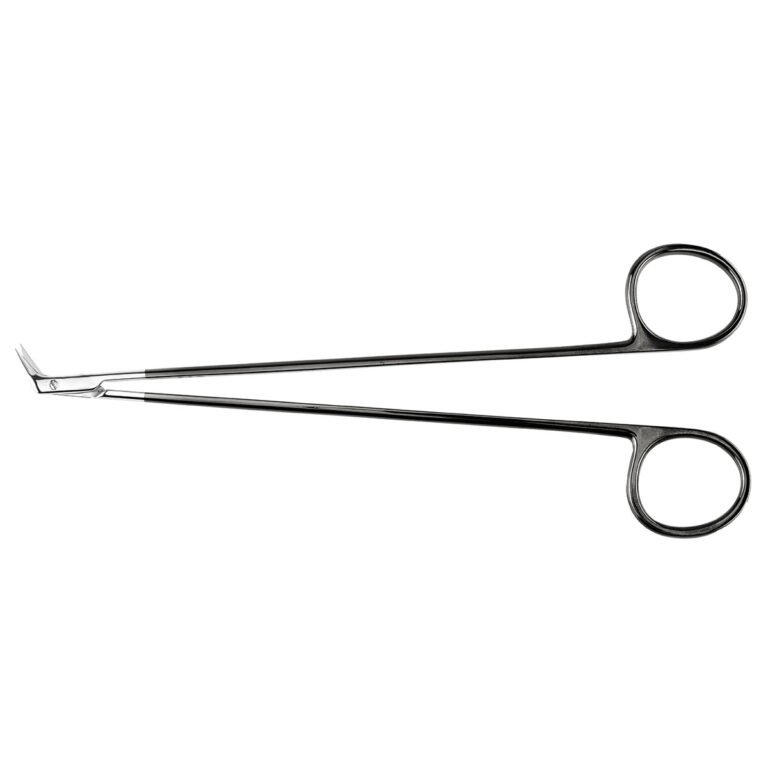
Supercut Extra Fine Vascular Scissors | NJ Medical Instruments
In stock
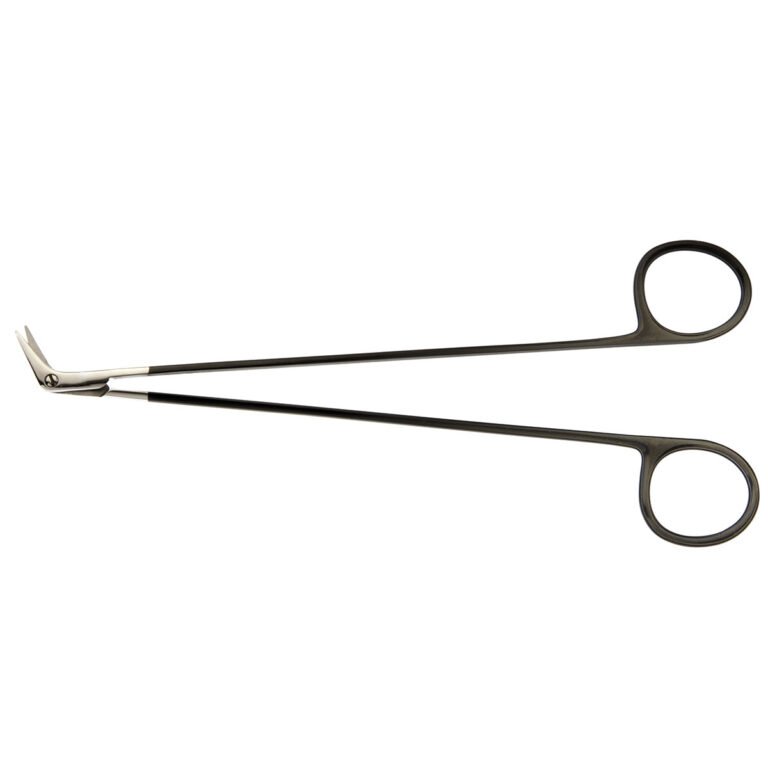
SuperCut Vascular Scissors – Angled Blades for Fine Vessels
In stock
Vascular Scissors: Cutting a Vessel That Has to Be Sewn Back Together
Vascular scissors differ from other scissors in one respect that matters more than any other: the tissue they cut is going to be repaired, and the quality of the cut determines how well that repair holds. Elsewhere, a slightly ragged edge is trimmed away or simply heals. In a vessel it becomes the anastomotic line — a frayed or crushed intima is where thrombus forms, and the technical result of the repair depends on the edge being clean. That is why vascular scissors carry finer, sharper edges than their size suggests, and why they are protected from any use that would blunt them. NJ Medical Instruments manufactures the range in surgical-grade stainless steel, supplied worldwide direct from the factory for individual purchase and for bulk, wholesale, and OEM/private-label supply.
Angled blades and the arteriotomy
The characteristic vascular pattern has blades angled at 45 or 60 degrees to the shaft. The reason is geometric: to open a vessel lengthwise, the blade must lie along the vessel wall while the surgeon's hand stays above and clear of it. A straight scissors approaches at the wrong angle and the lower blade lifts the vessel rather than travelling inside it. The angled pattern lets one blade slide within the lumen while the cut extends cleanly along the axis.
Potts-Smith and De Bakey patterns
Potts-Smith scissors are the classic angled arteriotomy pattern, made in a range of angles so the surgeon can match the approach to the vessel's orientation in the field. De Bakey scissors and similar fine vascular patterns are used for trimming graft ends, cutting suture at the anastomosis, and dividing fine branches.
Protecting the edge
Vascular scissors are ruined by exactly one habit: cutting suture with them. Prolene and other monofilament vascular sutures are hard, and a single pass through one is enough to leave a notch in an edge honed for intima. Every vascular tray carries a separate suture pair for that reason, and the vascular scissors are handled back to the scrub nurse rather than left in the field where they will be picked up for the nearest job.
Which vascular scissors do you need?
| Pattern | Blade | Best for |
|---|---|---|
| Potts-Smith, 45° | Angled, fine | Extending an arteriotomy |
| Potts-Smith, 60° | More steeply angled | Vessels lying deeper in the field |
| Potts-Smith, 25° | Shallow angle | Superficial vessels |
| De Bakey vascular scissors | Fine straight or curved | Trimming grafts and fine branches |
| Micro vascular scissors | Spring handle, very fine | Microvascular anastomosis |
| Dedicated suture scissors | Heavier, separate pair | Protecting the vascular edges |
Explore related instruments
- All Surgical Scissors and Dissecting Scissors
- Clamps including vascular and bulldog patterns
- Thumb Forceps including DeBakey atraumatic patterns
- All Surgical Instruments
All manufactured in surgical-grade stainless steel to international standards, reusable and autoclavable, with worldwide shipping.
Bulk, wholesale & OEM supply
As a direct manufacturer, NJ Medical Instruments supplies vascular scissors in bulk and wholesale quantities to hospitals, vascular and cardiac units, and distributors, and produces OEM / private-label scissors in custom angles and lengths with laser marking. Contact us by email at info@njmedicalinstruments.com or by WhatsApp for volume pricing — no minimum-order barriers, no middlemen.
Frequently asked questions
What are vascular scissors used for?
They open and extend arteriotomies, trim graft ends, and divide fine vascular branches. Because the vessel will be repaired, the cut edge becomes part of the anastomosis, so cut quality directly affects the technical result.
Why are vascular scissors angled?
To open a vessel lengthwise, one blade must lie along or within the vessel wall while the hand stays clear above it. A straight scissors approaches at the wrong angle and lifts the vessel instead of travelling along it.
What are Potts-Smith scissors?
Potts-Smith scissors are the classic angled arteriotomy pattern, supplied in a range of angles — commonly 25, 45, and 60 degrees — so the surgeon can match the blade approach to how the vessel lies in the field.
Why does the cut edge matter so much in vascular surgery?
Because that edge becomes the anastomotic line. A frayed or crushed intima is where thrombus forms, so a clean cut is a technical requirement of the repair rather than a matter of neatness.
Can vascular scissors be used to cut suture?
No. Monofilament vascular suture such as Prolene is hard, and a single cut can notch an edge honed for intima. Vascular trays carry a separate dedicated suture pair for this reason.
Do you supply vascular scissors in bulk or for OEM / private label?
Yes. As a direct manufacturer we supply vascular scissors in bulk and wholesale quantities and produce OEM / private-label scissors in custom angles and lengths. Contact us by email or WhatsApp for volume pricing.