


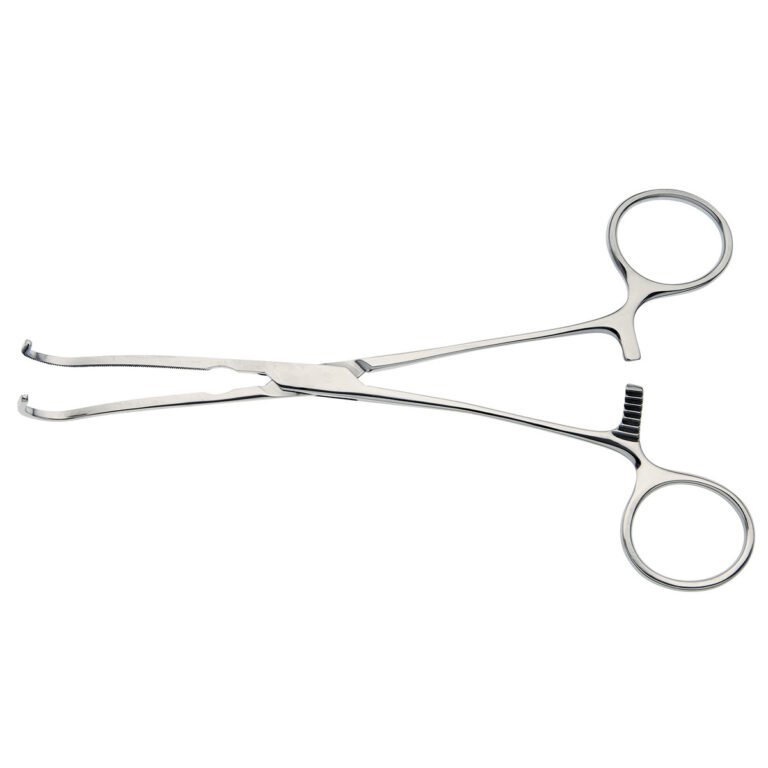
Anastomosis Clamp | NJ Medical Instruments
In stock
Lambert-kay Aortic Anastomosis Clamp | NJ Medical Instruments
In stock
Anastomosis Clamps: Holding Two Vessel Ends Still While They Are Joined
An anastomosis clamp does something no ordinary vascular clamp does — it holds two vessel ends in position relative to each other while the surgeon sews them together. Occluding a vessel is the easy part. The difficulty in an anastomosis is that both ends must stay aligned, at the right distance and rotation, through every suture pass. Hold them with two separate clamps and each moves independently; ask an assistant to hold them and the alignment drifts with fatigue. An approximating clamp fixes both ends in one frame so the relationship between them stays constant while the surgeon works around the circumference. NJ Medical Instruments manufactures the range in surgical-grade stainless steel, supplied worldwide direct from the factory for individual purchase and for bulk, wholesale, and OEM/private-label supply.
Approximation and tension
The frame usually allows the two jaws to be slid closer together, which takes tension off the anastomotic line. Tension is the enemy of a vascular repair — a suture line pulled apart by the natural retraction of the vessel ends is where leaks and later stenosis occur. Approximating the ends before suturing means the completed anastomosis sits without strain when the clamp is released.
Rotation as a feature
Many patterns allow the clamped ends to be rotated as a unit. This matters practically: rather than the surgeon working around to reach the back wall of the anastomosis in an awkward position, the vessel is turned so each part of the circumference presents itself to the front. In a deep field that difference decides whether the posterior suture line can be placed accurately at all.
Jaw pressure
The jaws are atraumatic for the usual reason — the vessel is being reopened, and crushed intima at the clamp site becomes a focus for thrombus. But there is a second consideration specific to anastomosis: the clamp is on for the whole duration of a suture line rather than a brief occlusion, so the lowest pressure that holds securely is the correct setting.
Which clamp do you need?
| Feature | Function | Why it matters |
|---|---|---|
| Double approximating jaws | Holds both ends in one frame | Alignment stays constant while sewing |
| Sliding adjustment | Brings ends closer | Removes tension from the suture line |
| Rotating frame | Turns the ends as a unit | Presents the back wall to the front |
| Atraumatic jaw inserts | Fine, shallow serrations | Protects intima over a long clamp time |
| Single vessel clamp | One end only | Where ends are already aligned |
| Micro anastomosis clamp | Very fine, spring closure | Microvascular work |
Explore related instruments
- All Clamps and Peripheral Vascular Clamps
- Vascular Scissors
- Thumb Forceps including DeBakey atraumatic patterns
- Needle Holders
All manufactured in surgical-grade stainless steel to international standards, reusable and autoclavable, with worldwide shipping.
Bulk, wholesale & OEM supply
As a direct manufacturer, NJ Medical Instruments supplies anastomosis clamps in bulk and wholesale quantities to hospitals, vascular and cardiac units, and distributors, and produces OEM / private-label clamps in custom jaw sizes and frame patterns with laser marking. Contact us by email at info@njmedicalinstruments.com or by WhatsApp for volume pricing — no minimum-order barriers, no middlemen.
Frequently asked questions
What is an anastomosis clamp used for?
It holds two vessel ends in position relative to each other while they are sutured together, so alignment, distance, and rotation stay constant through every suture pass.
How is it different from an ordinary vascular clamp?
An ordinary clamp occludes one vessel. An anastomosis or approximating clamp holds both ends in a single frame, which is what keeps their relationship fixed while the surgeon works around the circumference.
Why does the clamp allow the ends to be brought closer?
To take tension off the anastomotic line. A suture line pulled apart by the natural retraction of the vessel ends is where leaks and later stenosis develop, so approximating before suturing means the completed join sits without strain.
Why do some anastomosis clamps rotate?
So the clamped ends can be turned as a unit, presenting each part of the circumference to the front. That is often what makes accurate placement of the posterior suture line possible in a deep field.
What jaw pressure should be used?
The lowest that holds securely. The clamp stays on for the duration of a suture line rather than a brief occlusion, so prolonged excess pressure risks crushing intima at the clamp site.
Do you supply anastomosis clamps in bulk or for OEM / private label?
Yes. As a direct manufacturer we supply anastomosis clamps in bulk and wholesale quantities and produce OEM / private-label clamps in custom jaw sizes and frame patterns. Contact us by email or WhatsApp for volume pricing.