


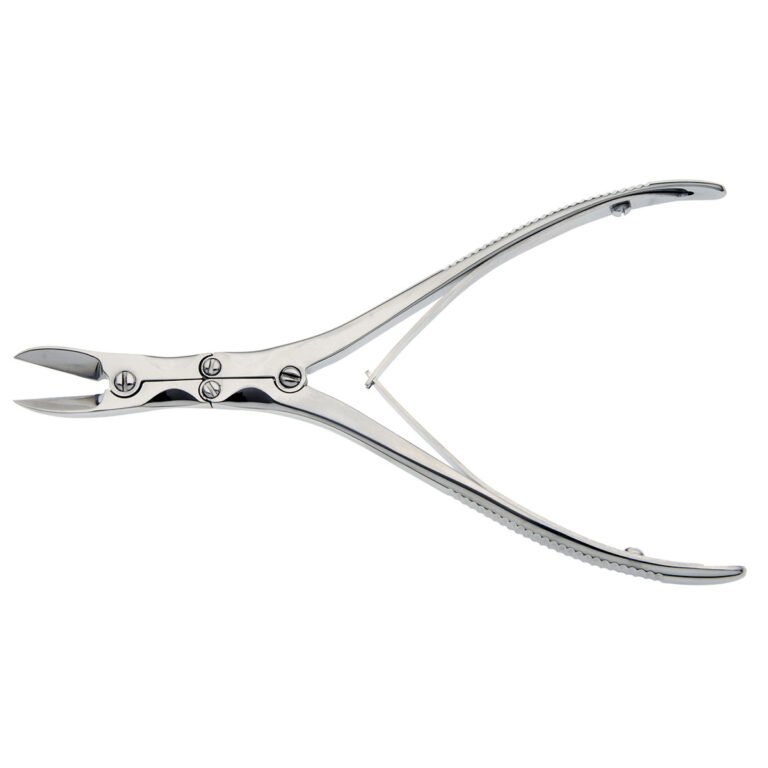
Bone Cutting Forceps Angled | NJ Medical Instruments
In stock
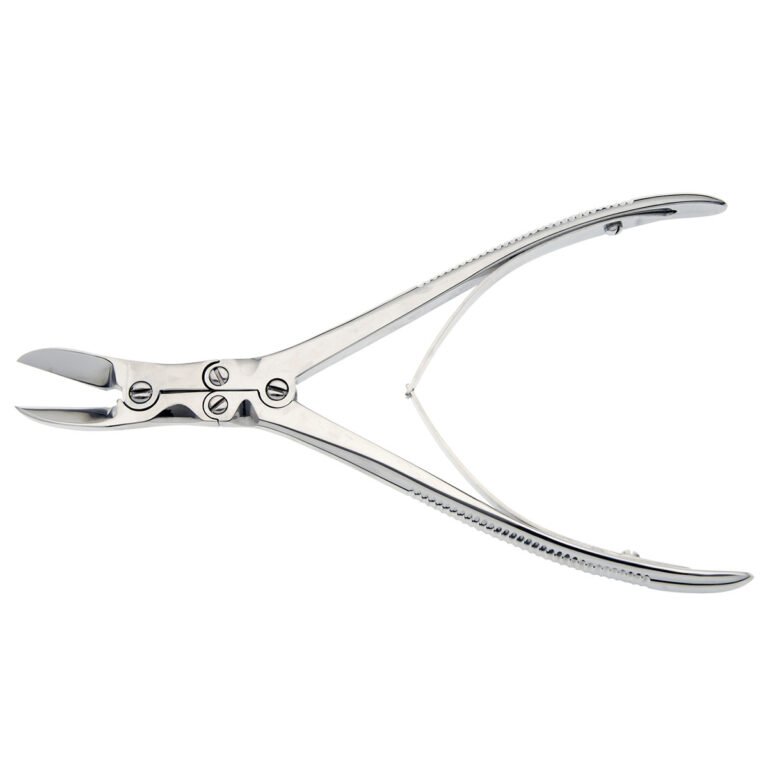
Bone Cutting Forceps Curved | NJ Medical Instruments
In stock
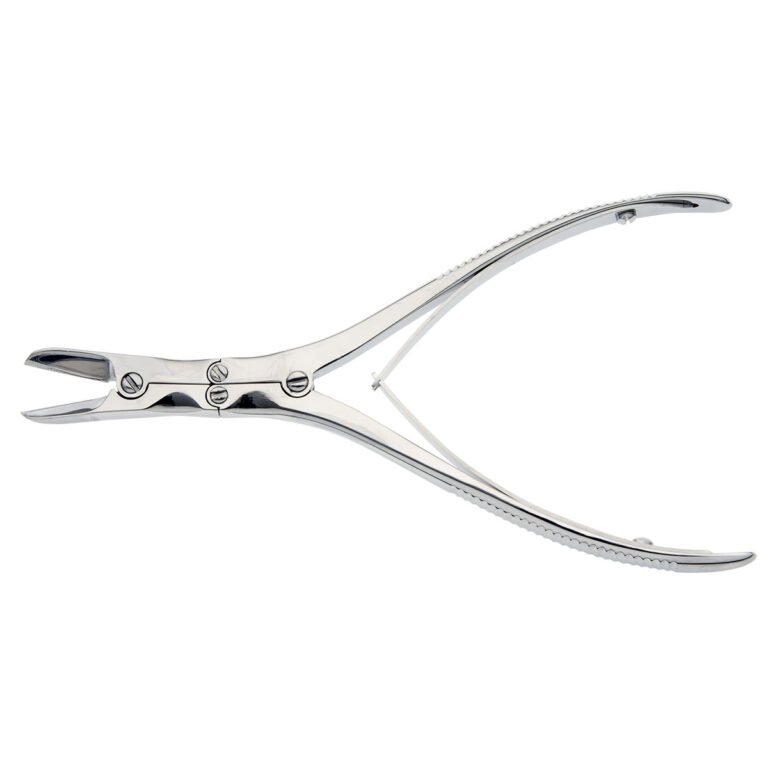
Bone Cutting Forceps Straight | NJ Medical Instruments
In stock
Bone Cutting Forceps: Dividing Bone With a Closing Edge
A bone cutting forceps divides bone by driving two opposed edges through it, and everything that separates a good one from a poor one is about what happens in the last millimetre of that closure. The blades must meet accurately, stay meeting under load, and part the bone rather than crushing it sideways. Cutting capacity is set by the geometry of the edge and the leverage behind it — not by how heavy the instrument feels in the hand.
Edge geometry: what actually divides the bone
The working edges are ground to a defined angle and meet along their whole length when the handles close. A steeper edge angle is more durable and better suited to dense cortical bone; a finer angle cuts with less force but is more vulnerable to chipping if used beyond its intended density. Because both blades move toward a shared line, any misalignment at the joint means the edges pass rather than meet — and a forceps that passes does not cut, it crushes.
Single action, double action and where the leverage comes from
Single-action forceps have one pivot: handle travel converts directly to blade travel, giving a fast, controlled cut on smaller or softer bone. Double-action patterns add a second joint, multiplying the force delivered at the blades for the same effort at the handle. That extra leverage is what makes heavier cortical bone practical to divide, at the cost of a bulkier head and a slightly slower stroke. Most departments hold both rather than treating one as an upgrade of the other.
Blade form: straight, curved and angled
Straight blades cut on the line of the shaft and give the most direct transmission of force — the default where the bone can be approached face-on. Curved blades let the cut be made around a surface or from an angle where a straight head cannot be seated flat. Angled patterns move the handles out of the sightline, which matters when the cut is deep or when a second instrument is holding the fragment.
Why joint quality decides the working life
Every cut loads the box joint or screw joint in shear. A joint with play lets the blades separate laterally under load, so the edges stop meeting cleanly and the instrument degrades from cutting to crushing long before the edges themselves are worn out. Joint fit, not edge sharpness, is usually what determines how long a bone cutting forceps stays serviceable.
Which bone cutting forceps do you need?
| Requirement | Action and blade | Typical length | Chosen for |
|---|---|---|---|
| Dense cortical bone | Double action, straight, steeper edge | 20–27 cm | Maximum force at the blades for the effort applied |
| Smaller or softer bone | Single action, straight | 14–18 cm | Fast, direct, controlled cutting |
| Angled or awkward approach | Curved blades | 17–23 cm | Seating the head where a straight cut cannot be made |
| Deep field | Angled head, longer shanks | 23–27 cm | Keeping handles clear of the sightline |
| Fine work | Light single action, fine edge | 12–16 cm | Small bones where a heavy head is disproportionate |
Related instruments in this range
- Bone Cutters & Rongeurs — the full range this category sits within
- Bone Holding Forceps — securing the bone that is being cut
- Laminectomy Punches — biting removal in confined access
- Rongeurs — piecemeal bone removal
- Surgical Instruments — the wider instrument catalogue
Wholesale, OEM and private-label supply
NJ Medical Instruments manufactures bone cutting forceps in Sialkot, Pakistan, supplying single instruments through this shop and bulk quantities direct to hospitals, orthopedic units and distributors. As the manufacturer we build to specification — single or double action, blade form and edge angle, shank length, joint type, marking and private-label packaging. For volume pricing or an OEM quotation, email info@njmedicalinstruments.com or message +92-333-8733922.
Frequently asked questions
What is the difference between single-action and double-action bone cutting forceps?
Single-action forceps have one pivot, so handle movement translates directly into blade movement — quick and controlled on smaller or softer bone. Double-action forceps add a second joint that multiplies the force reaching the blades for the same handle effort, which is what makes denser cortical bone practical. Neither is an upgrade of the other; they suit different work.
How do I choose between straight and curved blades?
Straight blades transmit force most directly and are the default when the bone can be approached face-on. Curved blades let the head be seated where a straight cut is not possible — around a surface or from an angle. If you are buying one pattern, straight is more versatile; add curved when access is the limiting factor.
Why does my forceps crush rather than cut?
Usually because the blades no longer meet along their full length. Play in the joint lets them separate laterally under load so the edges pass instead of meeting. This is a joint problem rather than a sharpness problem, and it is why joint fit determines the working life of the instrument more than edge condition does.
What length should I order?
Match length to the depth of the field and the density of the bone. Heavier double-action patterns at 20–27 cm suit cortical work and deep exposure; lighter single-action patterns at 12–18 cm suit smaller bones and shallow access. Departments doing varied work generally hold one of each.
What are your bone cutting forceps made from?
They are manufactured from surgical-grade stainless steel, with the cutting edges ground and the joints fitted and inspected before dispatch. Both reusable and single-use options exist across our range — specify which you need when ordering, or ask for the material specification of a particular pattern.
Can I order in bulk or to our own specification?
Yes. We are an OEM manufacturer supplying retail quantities through this shop and bulk orders direct from the factory. Custom blade forms, edge angles, lengths, joint types, laser marking and private-label packaging are all available. Send your specification and quantity for a quotation.