


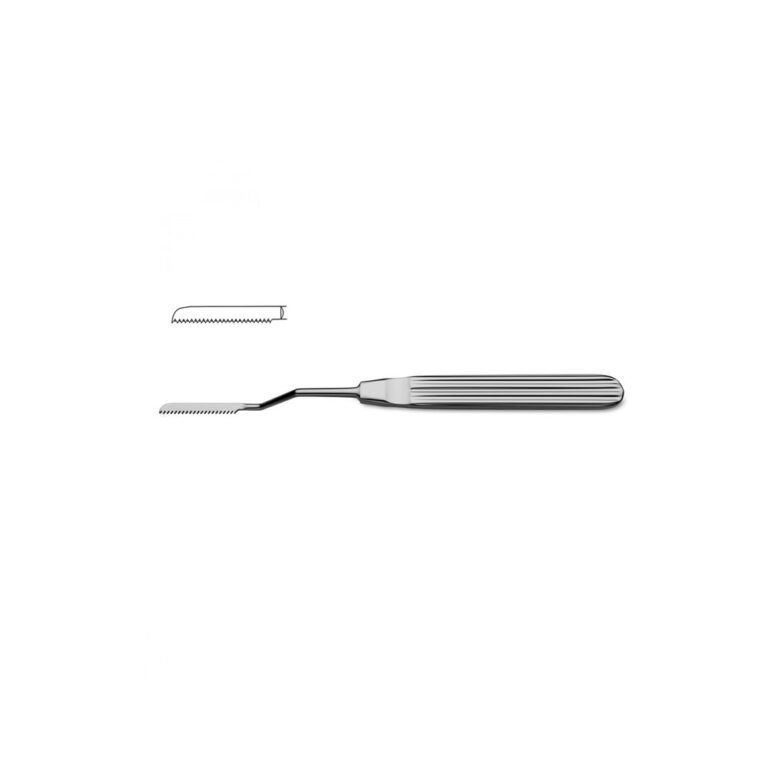
Joseph Bone Saw – Bayonet | NJ Medical Instruments
In stock
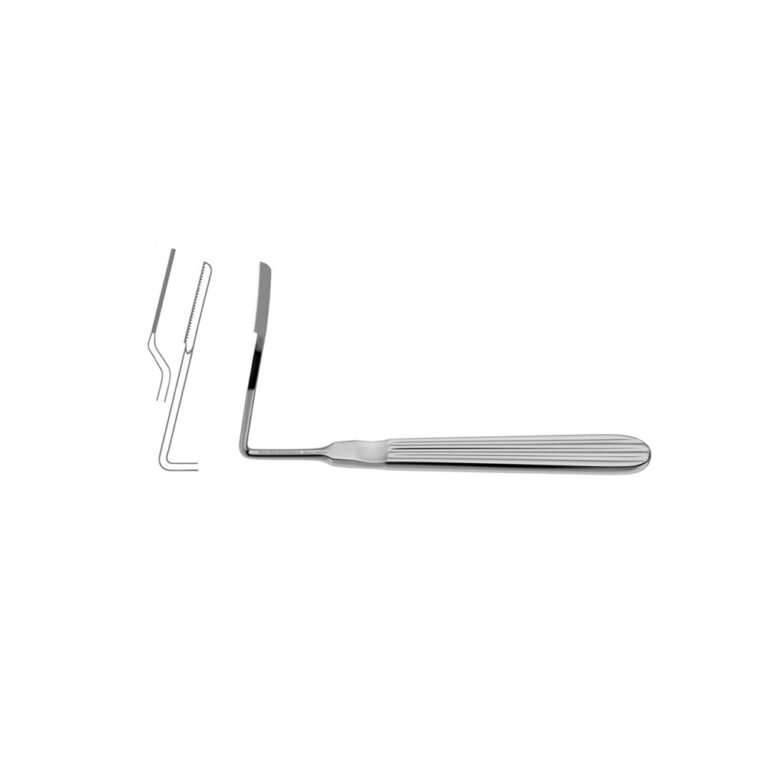
Joseph Nasal Saw – Angled | NJ Medical Instruments
In stock
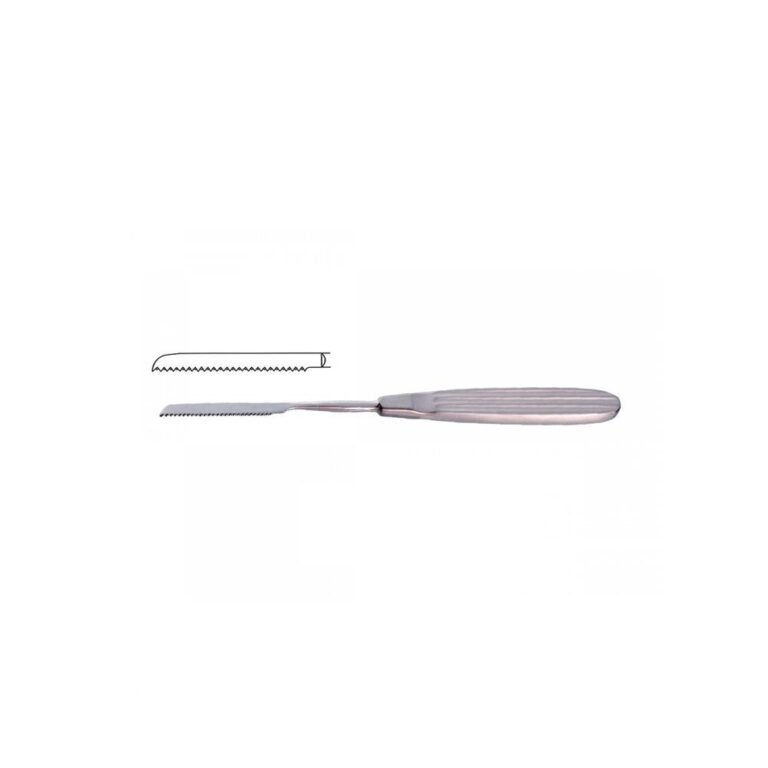
Joseph Nasal Saw – Delicate Straight | NJ Medical Instruments
In stock
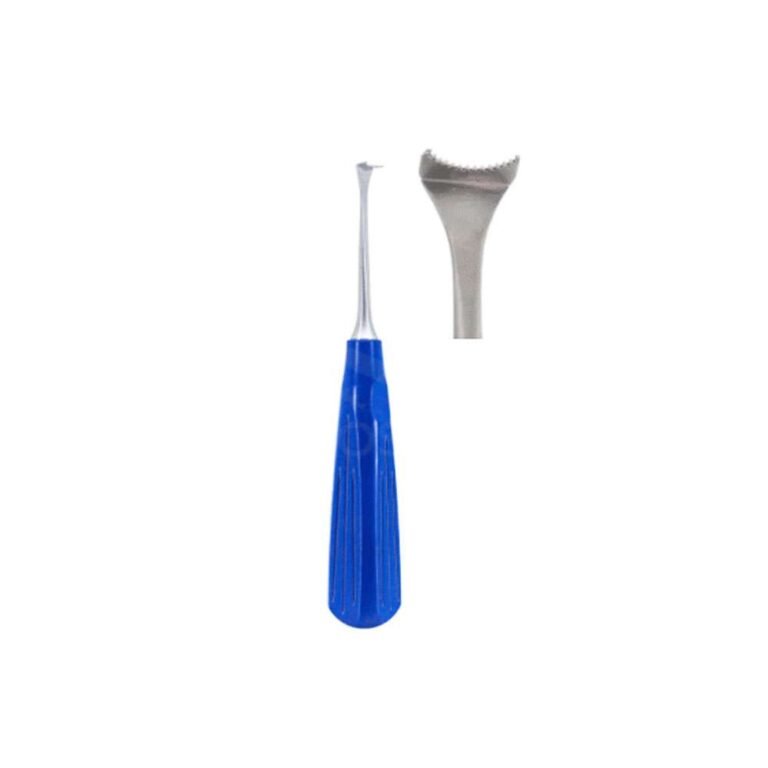
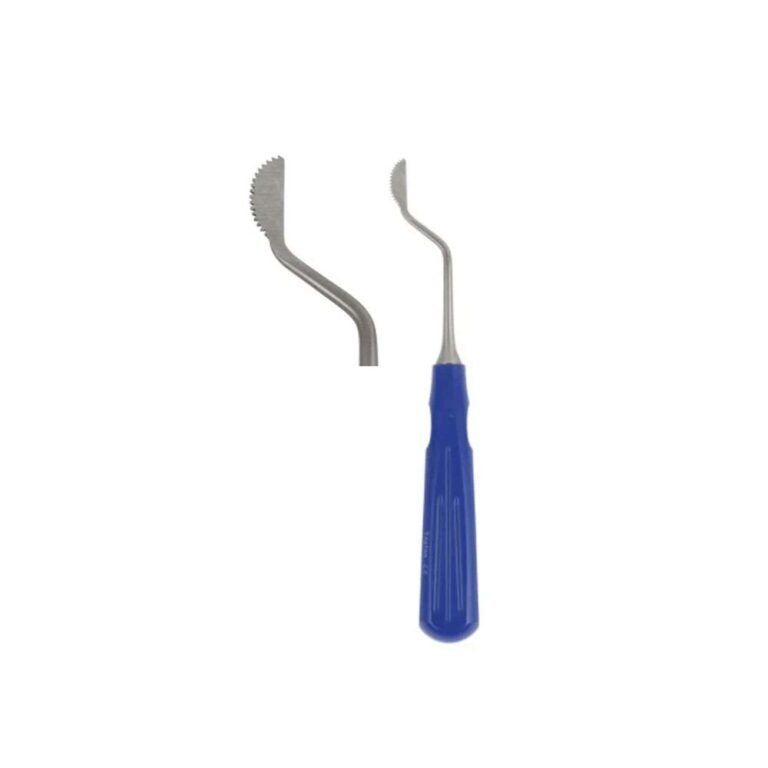
Preservation Rhinoplasty-COSTA Nasal SAW | NJ Medical Instruments
In stock
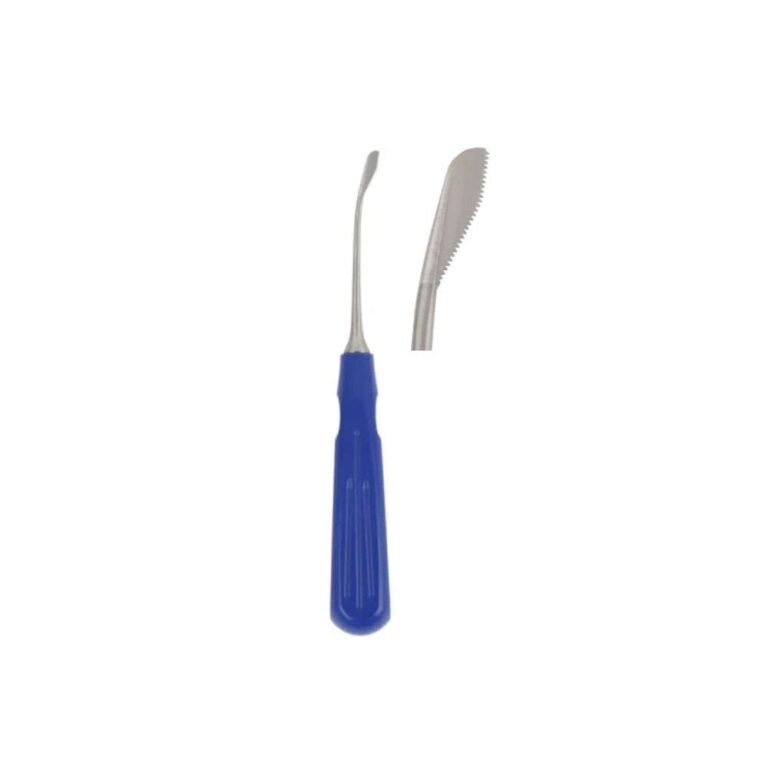
Preservation Rhinoplasty-Tastan Cakir Lateral Nasal Saw | NJ Medical Instruments
In stock
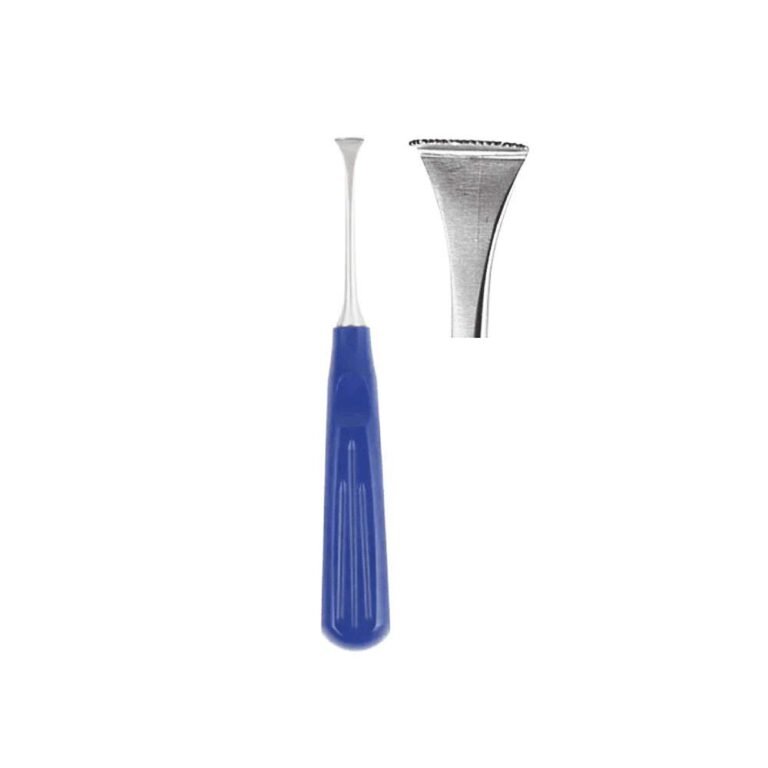
Preservation Rhinoplasty-Tastan Cakir Nasal Convex Transverse Saw | NJ Medical Instruments
In stock
Surgical Saws: Cutting Bone Where an Osteotome Cannot
A saw cuts bone by removing a narrow channel of material, whereas an osteotome splits it — and that difference decides which instrument a procedure needs. An osteotome driven by mallet is fast and clean, but it follows the grain of the bone and can propagate a fracture line beyond where the surgeon intended. A saw cuts only where its teeth pass, which makes it the instrument of choice when the cut has to be geometrically exact: a defined osteotomy in maxillofacial surgery, a graft harvested to a specific shape, or a cut through cortical bone too thick to split predictably. NJ Medical Instruments manufactures hand saws and blades in surgical-grade stainless steel, supplied worldwide direct from the factory for individual purchase and for bulk, wholesale, and OEM/private-label supply.
Heat is the real constraint
The thing that governs technique with any bone saw is friction heat. Bone is living tissue, and temperatures reached during sawing can cause thermal necrosis along the cut margin — dead bone at exactly the interface where healing needs to happen. Three practices reduce it: irrigation during the cut to carry heat away, light pressure letting the blade cut at its own rate rather than being forced, and a sharp blade, since a blunt blade generates far more heat for the same progress. This is why blades are treated as consumables rather than instruments to be sharpened indefinitely.
Blade choice
Fine-toothed blades cut slowly and leave a smooth kerf, suited to precise cuts in thinner bone where the surface matters. Coarse-toothed blades cut faster through thicker bone but leave a rougher edge that usually needs finishing with a file. Blade depth should be selected so the cut can be completed without the blade body binding in the kerf.
Hand saw patterns
Gigli saws are flexible twisted wire drawn back and forth between two handles — passed behind bone and cut from the far side outward, useful where no rigid blade could be positioned. Amputation saws have a rigid frame and long blade for larger bone. Small bone and nasal saws are fine, short-bladed, and often angled for confined access in facial and hand surgery.
Which saw do you need?
| Type | Blade | Best for |
|---|---|---|
| Gigli wire saw | Flexible twisted wire | Cutting from behind bone, no rigid access |
| Amputation saw | Rigid framed blade | Larger long bones |
| Small bone saw | Short fine blade | Hand, foot, facial bone |
| Nasal saw | Fine, often angled | Confined access in rhinoplasty |
| Fine-toothed blade | Close tooth pitch | Smooth kerf, precise cuts |
| Coarse-toothed blade | Wide tooth pitch | Faster cutting through thick bone |
Explore related instruments
- Osteotomes and Chisels for splitting rather than cutting
- Files and Rasps for finishing the cut edge
- Bone Cutters & Rongeurs
- Orthopedic Sets
All manufactured in surgical-grade stainless steel to international standards, reusable and autoclavable, with worldwide shipping.
Bulk, wholesale & OEM supply
As a direct manufacturer, NJ Medical Instruments supplies surgical saws and replacement blades in bulk and wholesale quantities to hospitals, orthopedic and maxillofacial units, and distributors, and produces OEM / private-label instruments to custom specifications and laser marking. Because blades are consumables, they are commonly ordered alongside the frames on repeat schedules. Contact us by email at info@njmedicalinstruments.com or by WhatsApp for volume pricing — no minimum-order barriers, no middlemen.
Frequently asked questions
When is a saw used instead of an osteotome?
When the cut must be geometrically exact. An osteotome splits bone and can propagate a fracture line beyond the intended point, while a saw removes a narrow channel and cuts only where its teeth pass — necessary for defined osteotomies and shaped graft harvesting.
Why does irrigation matter when sawing bone?
Friction generates heat, and bone is living tissue. Temperatures reached during sawing can cause thermal necrosis along the cut margin, leaving dead bone exactly where healing needs to occur. Irrigation carries that heat away.
How much pressure should be applied?
Light pressure, letting the blade cut at its own rate. Forcing the blade increases friction heat substantially without proportionally increasing progress, and it increases the risk of the blade binding or breaking.
What is a Gigli saw used for?
A Gigli saw is a flexible twisted wire drawn between two handles. It is passed behind the bone and cuts from the far side outward, which allows a cut where no rigid blade could be positioned.
How often should saw blades be replaced?
Blades are consumables. A blunt blade generates far more heat for the same progress and cuts less predictably, so blades are replaced rather than sharpened indefinitely.
Do you supply surgical saws in bulk or for OEM / private label?
Yes. As a direct manufacturer we supply saws and replacement blades in bulk and wholesale quantities, commonly on repeat schedules, and offer OEM / private-label production to custom specifications. Contact us by email or WhatsApp for volume pricing.