


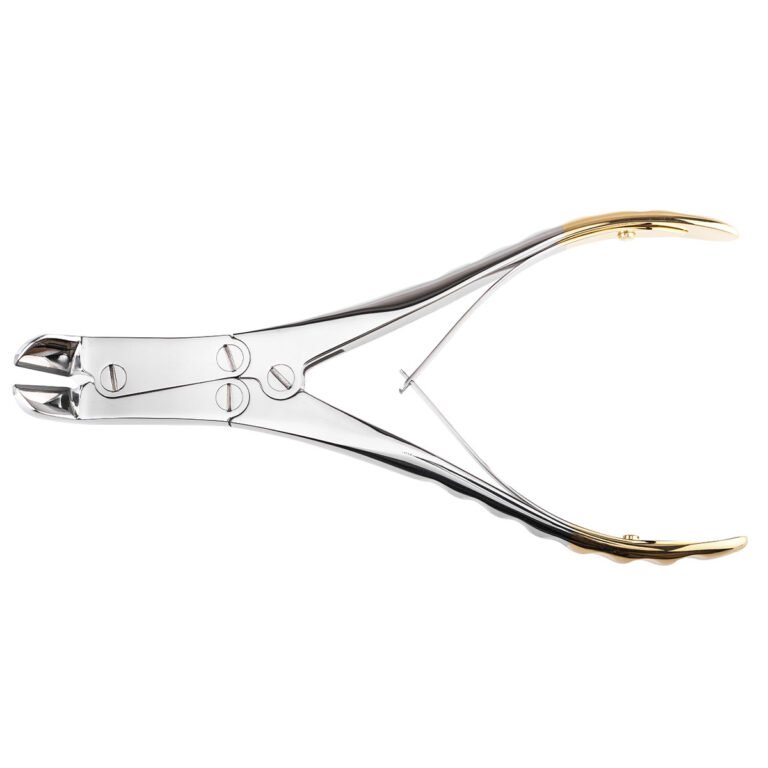
Extra Strong Double-action Joint Wire Cutter | NJ Medical Instruments
In stock
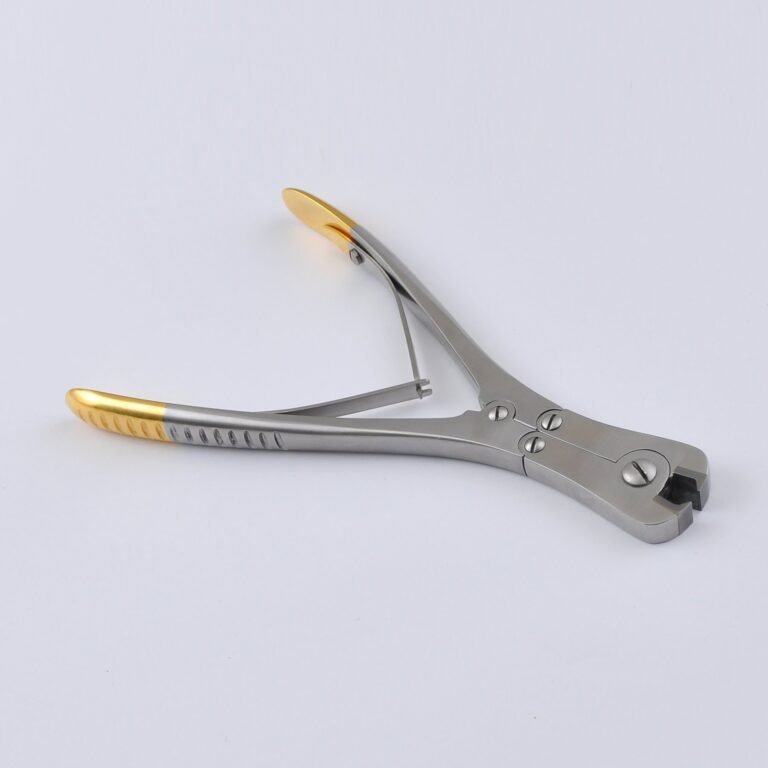
L Wire Cutter 17cm | NJ Medical Instruments
In stock
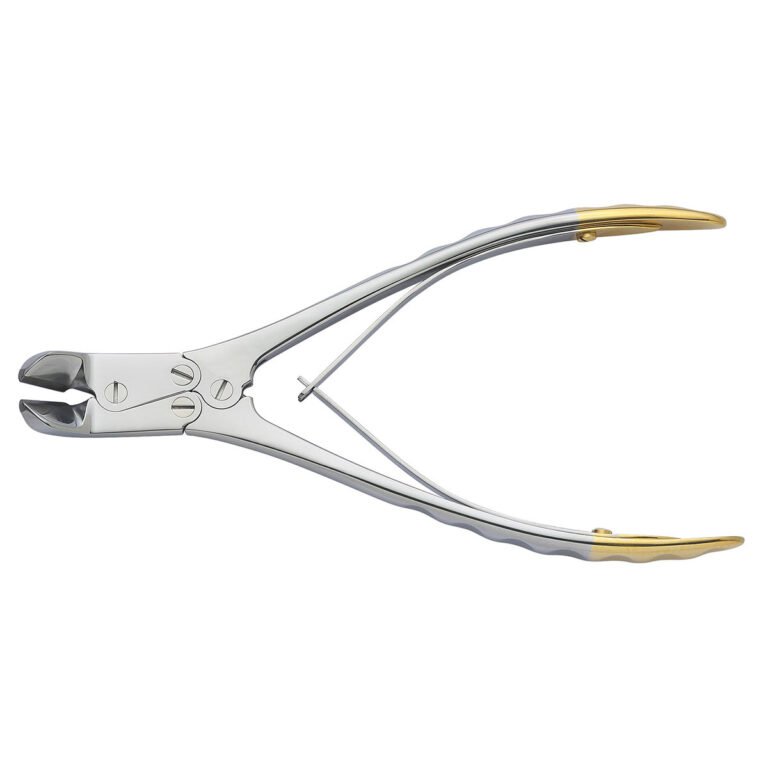
NJ Medical Instruments Double-Action Joint Wire Cutter | NJ Medical Instruments
In stock
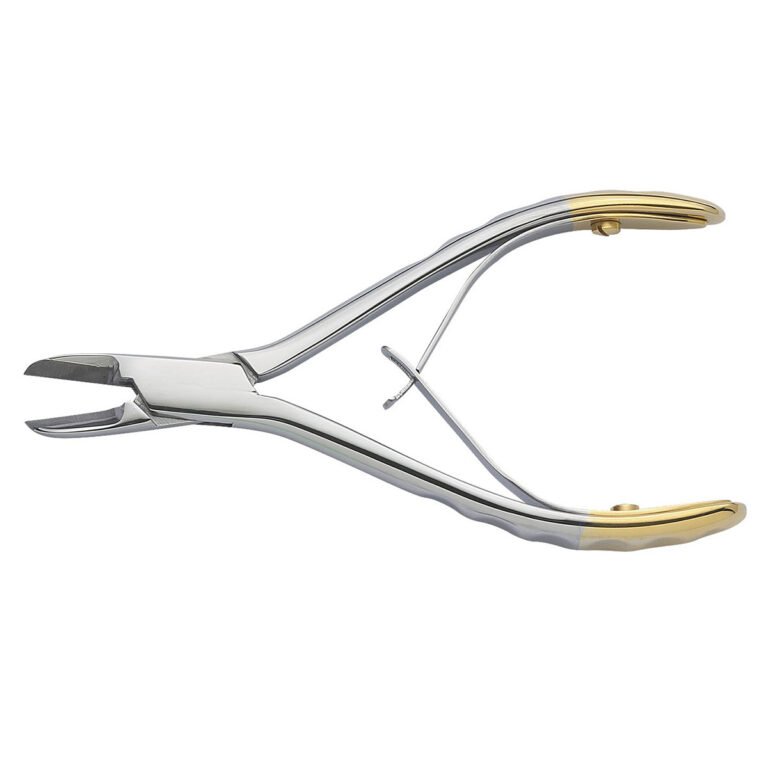
Single-action Joint Wire Cutter | NJ Medical Instruments
In stock
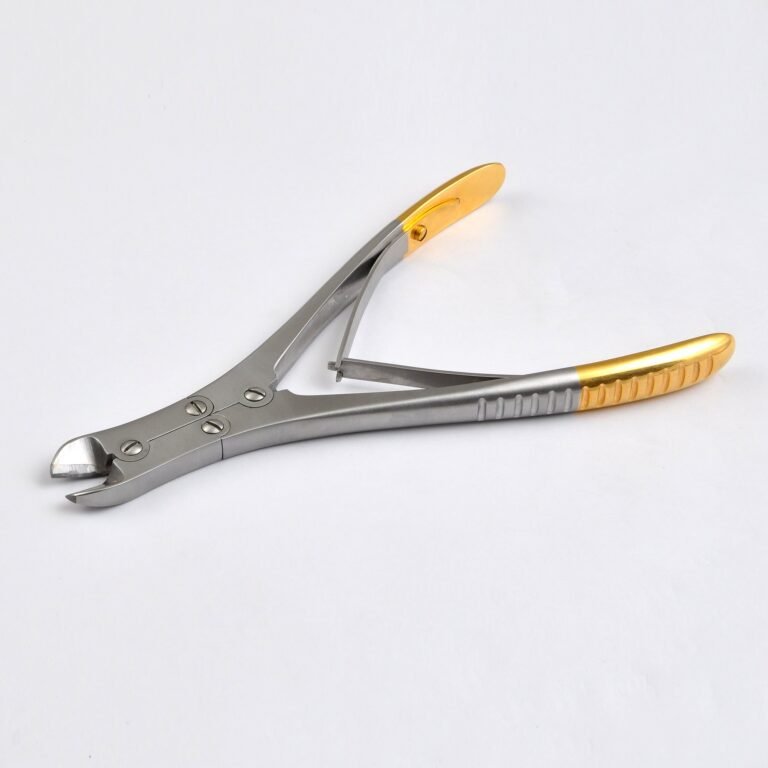
TC Wire Cutter 16.5cm | NJ Medical Instruments
In stock
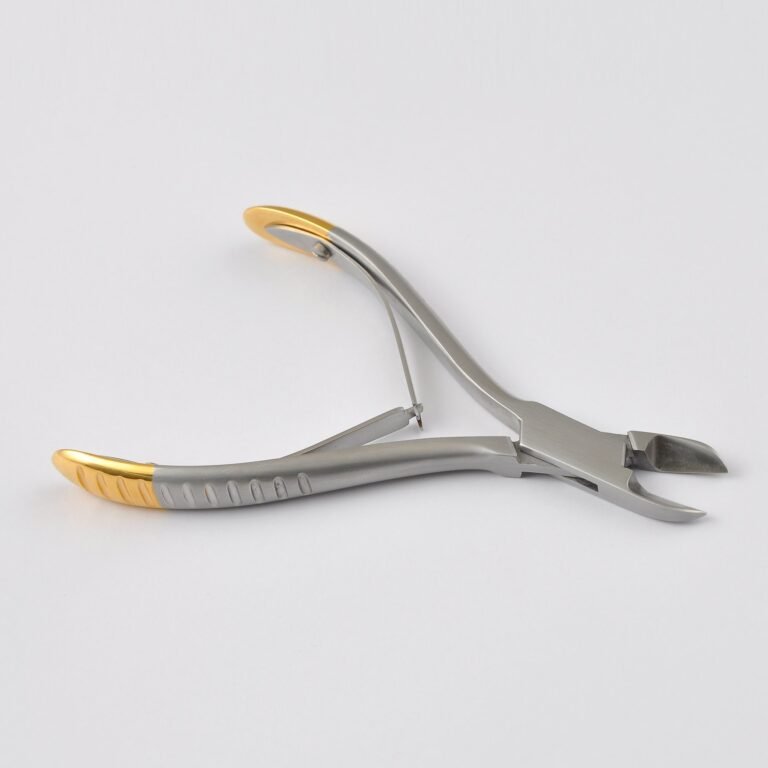
Wire Cutter – 12.4 cm | NJ Medical Instruments
In stock
Surgical Wire Cutters: Dividing Wire Without Losing the Fragment
A surgical wire cutter has to do something an ordinary cutter does not — divide hardened wire cleanly while controlling where the cut end goes. Surgical wire is stiff and under tension, whether it is sternal closure wire, a cerclage around bone, or an orthodontic archwire. Cut it without control and the fragment springs away, which in a surgical field means a lost piece of metal that must then be found. Good cutters address this in two ways: jaws that hold the offcut, and a cutting action clean enough that the wire divides rather than tearing and leaving a burr. A burred end is worse than a fragment — it snags tissue and gloves as it is withdrawn. NJ Medical Instruments manufactures the range in surgical-grade stainless steel with tungsten carbide inserts, supplied worldwide direct from the factory for individual purchase and for bulk, wholesale, and OEM/private-label supply.
Why tungsten carbide is standard here
Wire is harder than tissue, harder than suture, and harder than bone. Plain stainless jaws deform against it — the edges roll rather than the wire dividing — and once rolled the cutter crushes wire instead of cutting it. Tungsten carbide inserts are hard enough to divide stainless and even nickel-titanium wire repeatedly without deforming, which is why almost every wire cutter in regular use carries them, identified by gold handle rings.
Front, side and end cutting
The cutting position determines where the instrument can reach. Side cutters cut with the jaws perpendicular to the shaft, the general-purpose arrangement. End cutters cut with jaws in line with the shaft, which lets the operator cut flush in a confined space where the body of a side cutter would not fit. Front cutters sit between the two. In sternal closure and orthopedic work the choice is usually dictated by what the surrounding anatomy allows.
Removing wire safely
Wire removal is where control matters most. The wire is usually cut, then withdrawn by pulling the intact end through — so the cut must leave an end that will pass through tissue without catching. This is the practical argument for keeping cutters sharp: a clean division leaves a smooth end, while a crushed one leaves a burr that drags through the very tract it is being withdrawn from.
Which cutter do you need?
| Type | Cutting position | Best for |
|---|---|---|
| Side cutter | Perpendicular to shaft | General-purpose wire cutting |
| End cutter | In line with shaft | Flush cutting in confined space |
| Front cutter | Angled forward | Intermediate access |
| Tungsten carbide inserts | Gold handle rings | Hard wire without edge deformation |
| Double action | Two hinges, more leverage | Heavy gauge wire, less hand force |
| Pin and wire cutter | Heavier jaws | Orthopedic pins and K-wire |
Explore related surgical instruments
- Bone Cutters & Rongeurs
- All Surgical Instruments
- Orthodontic Pliers including ligature and hard wire cutters
- Orthopedic Sets
All manufactured in surgical-grade stainless steel to international standards, reusable and autoclavable, with worldwide shipping.
Bulk, wholesale & OEM supply
As a direct manufacturer, NJ Medical Instruments supplies surgical wire cutters in bulk and wholesale quantities to hospitals, cardiac and orthopedic units, and distributors, and produces OEM / private-label instruments with tungsten carbide inserts and custom laser marking. Contact us by email at info@njmedicalinstruments.com or by WhatsApp for volume pricing — no minimum-order barriers, no middlemen.
Frequently asked questions
What are surgical wire cutters used for?
They divide surgical wire — sternal closure wire, cerclage wire around bone, orthopedic K-wire, and orthodontic archwire — cleanly and with control over where the cut end goes.
Why do wire cutters need tungsten carbide inserts?
Wire is harder than tissue, suture, or bone. Plain stainless jaws roll their edges against it and then crush rather than cut. Tungsten carbide is hard enough to divide stainless and nickel-titanium wire repeatedly without deforming.
What is the difference between side, front and end cutters?
The cutting position relative to the shaft. Side cutters cut perpendicular and are general purpose; end cutters cut in line with the shaft, allowing flush cuts where the body of a side cutter would not fit; front cutters sit between the two.
Why does a clean cut matter when removing wire?
Because the wire is withdrawn through tissue after cutting. A clean division leaves a smooth end that passes through; a crushed cut leaves a burr that snags tissue and gloves on the way out.
How do I know when a wire cutter needs replacing?
When it crushes rather than divides, when the jaws no longer meet in alignment, or when cut ends show burrs. All three indicate the cutting edges have deformed.
Do you supply wire cutters in bulk or for OEM / private label?
Yes. As a direct manufacturer we supply surgical wire cutters in bulk and wholesale quantities, with tungsten carbide inserts, and offer OEM / private-label production. Contact us by email or WhatsApp for volume pricing.