


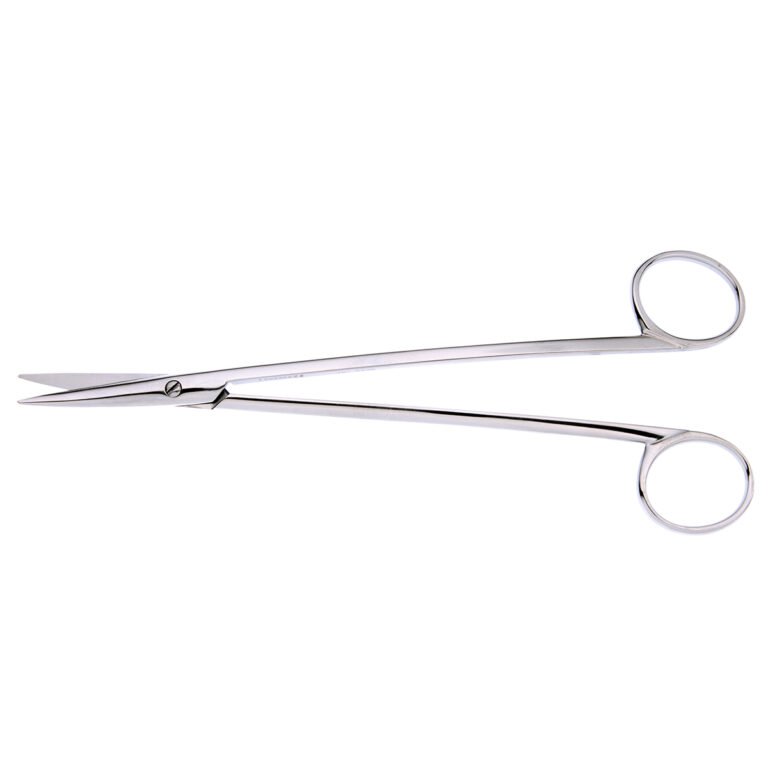
Boyd Tonsil Scissors – Sharp Tips, S-Shaped Shanks
In stock
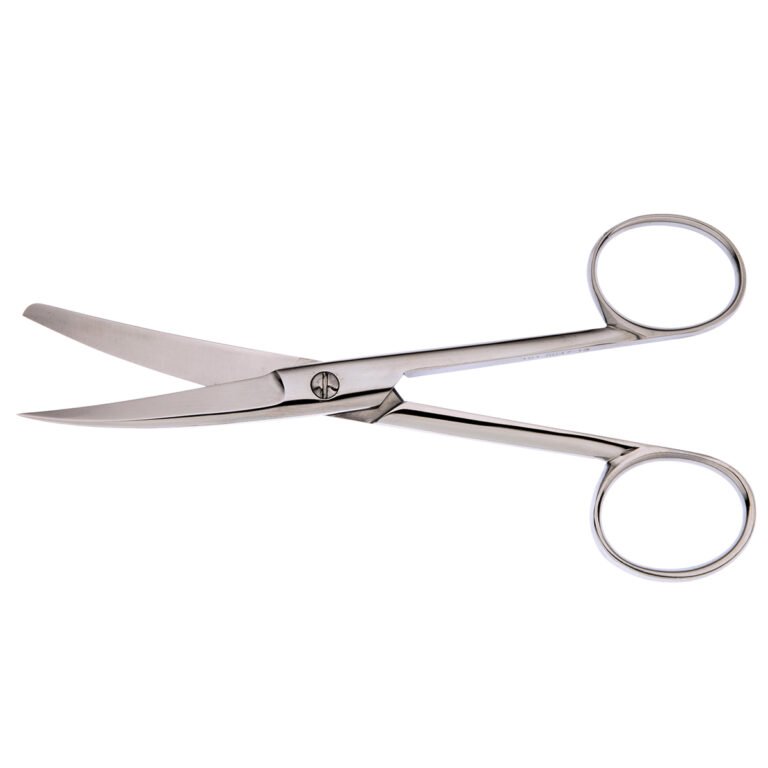
Cooper Operating Scissors – Straight, Beveled Blades
In stock
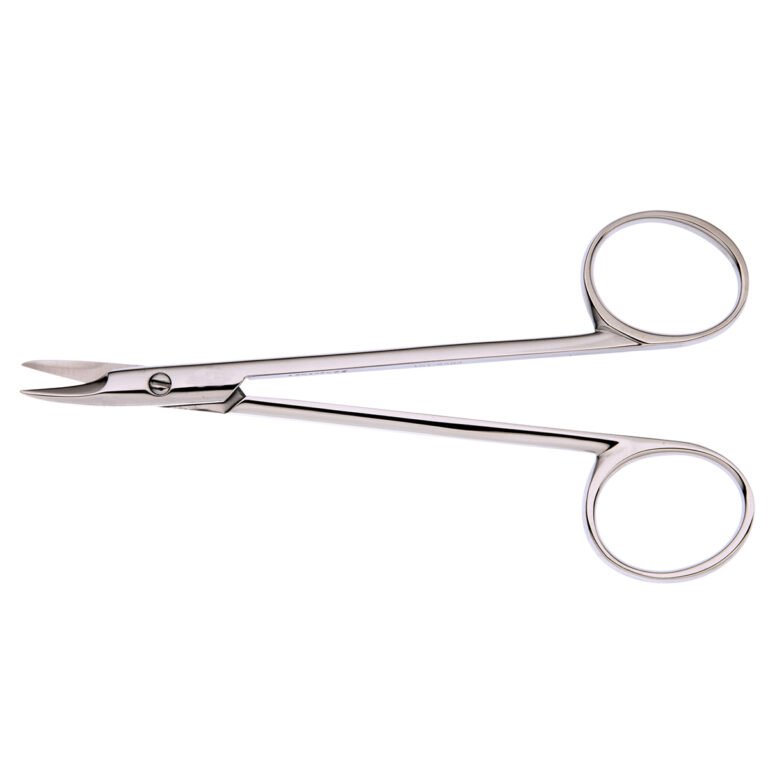
König Nail-Splitting Scissors – Straight, Beveled Blades
In stock
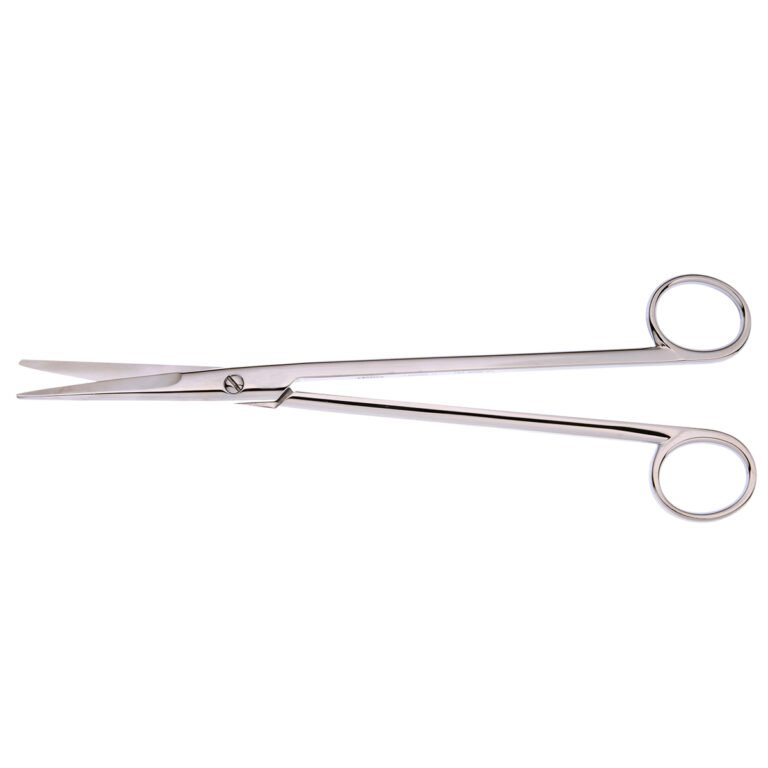
Mayo-Harrington Operating Scissors – Straight, Beveled Blades
In stock
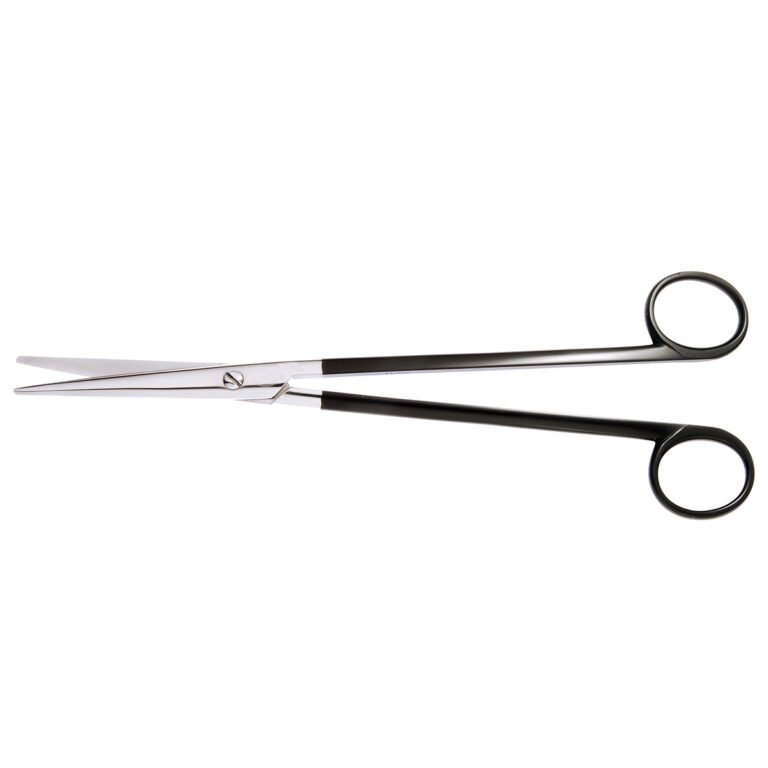
Mayo-harrington Supercut Operating Scissors
In stock
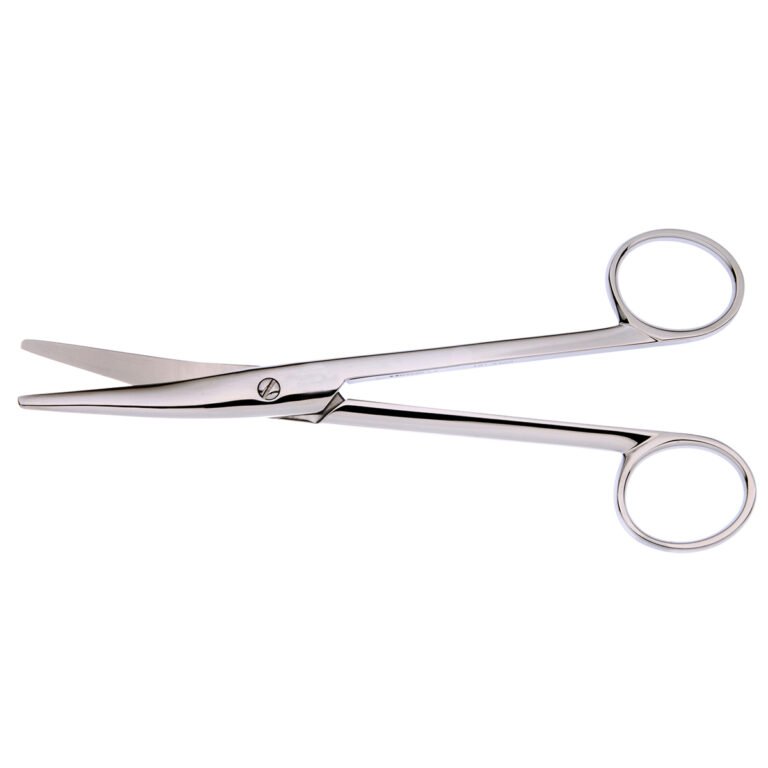
Ragnell Mammary Plastic Operating Scissors – Rounded Blades
In stock
Operating Scissors: The Workhorse Pair on Every Tray
Operating scissors are the general-purpose pair — the one reached for when something needs cutting and precision is not the deciding factor. They are classified by a simple convention that tells you exactly what you are holding: the combination of blade tips, written as sharp/sharp, sharp/blunt, or blunt/blunt. That designation is not a manufacturing detail, it is a safety specification. A sharp/blunt pair used near bowel or vessel puts the blunt point against the tissue that must not be perforated, while the sharp side still cuts. Choosing the wrong combination is how avoidable perforations happen. NJ Medical Instruments manufactures the full range in surgical-grade stainless steel, straight and curved, supplied worldwide direct from the factory for individual purchase and for bulk, wholesale, and OEM/private-label supply.
Reading the tip designation
Sharp/sharp cuts cleanly at both points and is used where nothing beneath is at risk — trimming, cutting material, superficial work.
Sharp/blunt is the compromise pair: the blunt point is placed against the underlying tissue while the sharp point does the cutting. This is the most versatile combination and the one most trays carry in quantity.
Blunt/blunt has rounded points at both ends, used where perforation must be avoided entirely, and for cutting dressings against skin.
Where operating scissors should not be used
The most common error in an operating theatre is not using the wrong scissors — it is using the right scissors on the wrong material. Operating scissors are intended for tissue, suture, and general cutting. Metzenbaum scissors are not, and cutting suture with a Metzenbaum blunts an expensive fine instrument in a single action. The reverse also applies: using operating scissors for fine tissue dissection is possible but imprecise. Keeping a dedicated suture pair on the tray is what protects both.
Straight or curved
Straight blades give a direct line of force and are the usual choice for cutting suture and material. Curved blades let the operator see past the instrument to the tips and follow tissue contours, which suits cutting within a wound. Most trays carry both, in more than one length.
Which operating scissors do you need?
| Designation | Tips | Best for |
|---|---|---|
| Sharp / sharp | Both points sharp | Clean cutting where nothing is at risk beneath |
| Sharp / blunt | One sharp, one rounded | General use — the versatile default |
| Blunt / blunt | Both points rounded | Avoiding perforation, cutting dressings |
| Straight blades | Inline | Suture and material, direct force |
| Curved blades | Curved | Cutting within a wound, tip visibility |
| Tungsten carbide | TC inserts, gold rings | Longer edge life in frequent use |
Explore related scissors
- All Surgical Scissors
- Dissecting Scissors — Metzenbaum and Mayo patterns
- SuperCut Scissors and Tenotomy Scissors
- All Surgical Instruments
All manufactured in surgical-grade stainless steel to international standards, reusable and autoclavable, with worldwide shipping.
Bulk, wholesale & OEM supply
As a direct manufacturer, NJ Medical Instruments supplies operating scissors in bulk and wholesale quantities to hospitals, surgical centres, teaching institutions, and distributors. Because these are among the fastest-turning instruments on any tray, they are commonly ordered in depth. OEM and private-label production with custom laser marking is available. Contact us by email at info@njmedicalinstruments.com or by WhatsApp for volume pricing — no minimum-order barriers, no middlemen.
Frequently asked questions
What does sharp/blunt mean on operating scissors?
It describes the tips: one point is sharp and one is rounded. The blunt point is placed against tissue that must not be perforated while the sharp point does the cutting, which makes it the most versatile combination.
When should blunt/blunt scissors be used?
Where perforation must be avoided entirely, and for cutting dressings against skin, since both rounded points can rest safely against the tissue beneath.
What is the difference between operating scissors and Metzenbaum scissors?
Operating scissors are the general-purpose pair for tissue, suture, and material. Metzenbaum scissors are fine dissectors with long shanks and short slim blades, reserved for delicate tissue — cutting suture with them blunts the edge immediately.
Should operating scissors be straight or curved?
Straight blades give direct force and suit suture and material. Curved blades let the operator see past the instrument to the tips and follow tissue contours, which suits cutting within a wound. Most trays carry both.
Can operating scissors be used to cut suture?
Yes — that is one of their intended uses, and it is why keeping a dedicated pair for suture protects the finer dissecting scissors on the tray from being used for the same job.
Do you supply operating scissors in bulk or for OEM / private label?
Yes. As a direct manufacturer we supply operating scissors in bulk and wholesale quantities and offer OEM / private-label production to custom specifications. Contact us by email or WhatsApp for volume pricing.