


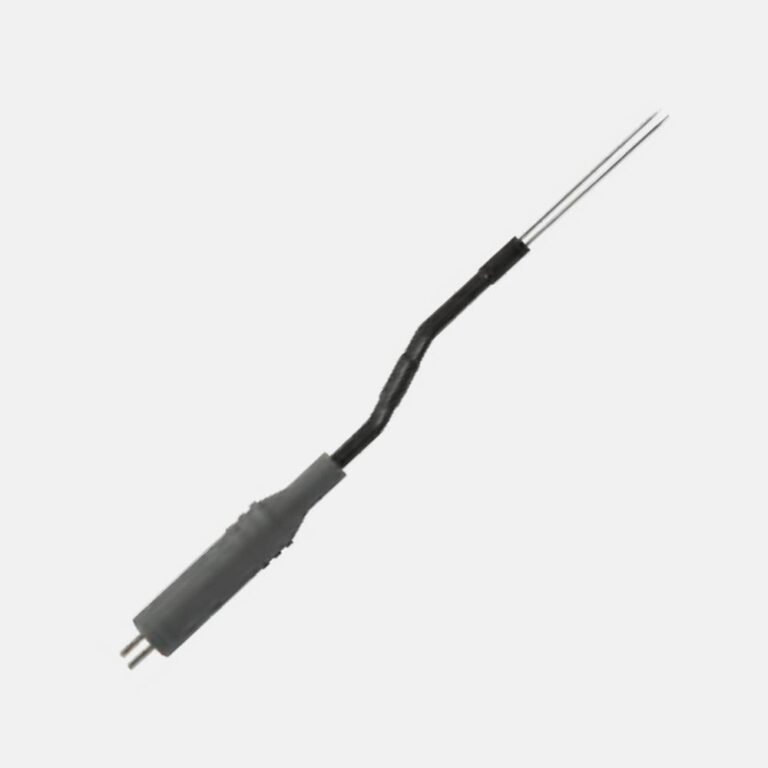
Bi-turbinate Probe 17.5cm | NJ Medical Instruments
In stock
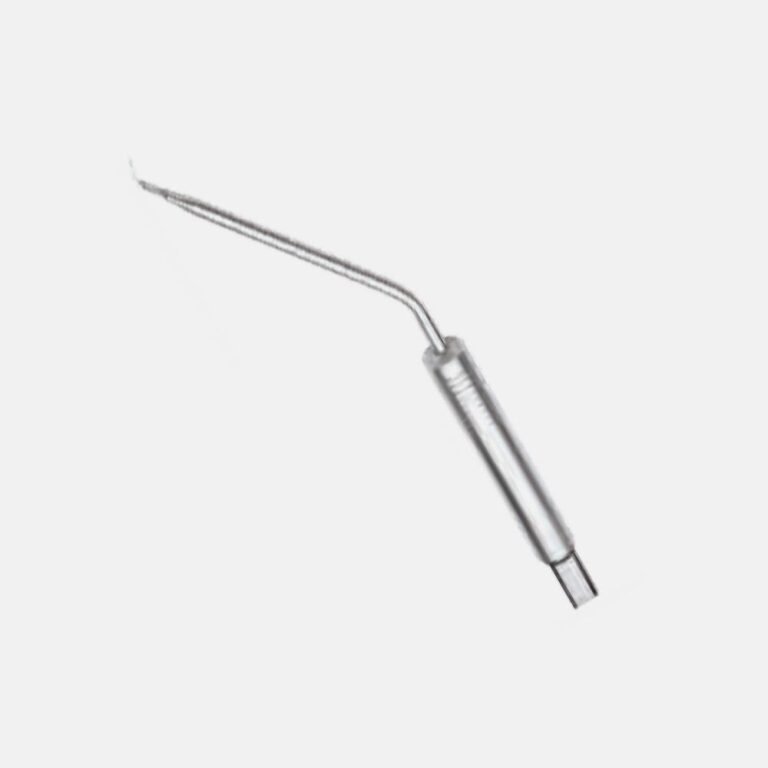
Bipolar Electrodes Angled | NJ Medical Instruments
In stock
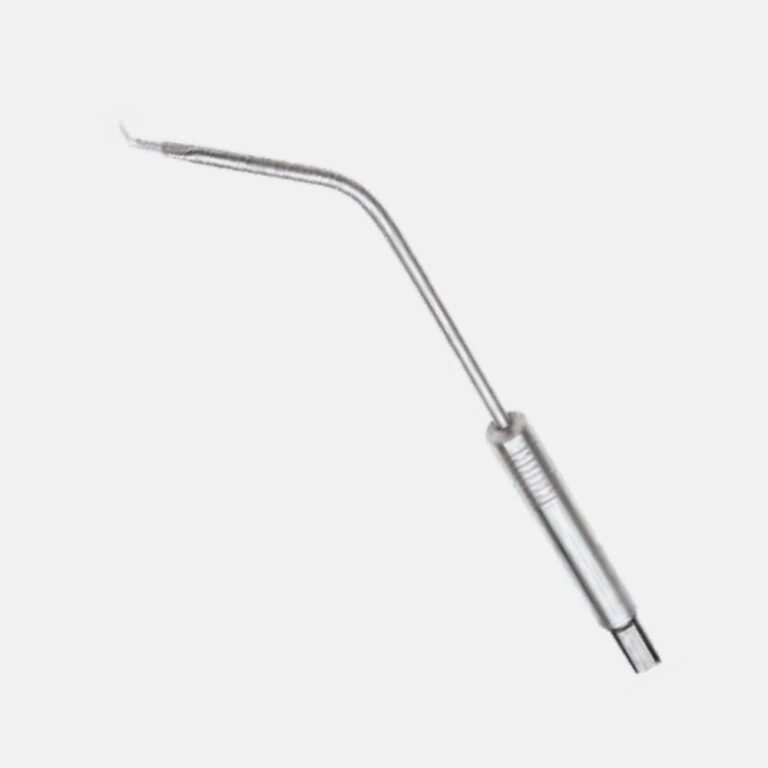
Bipolar Electrodes Angled 45° | NJ Medical Instruments
In stock
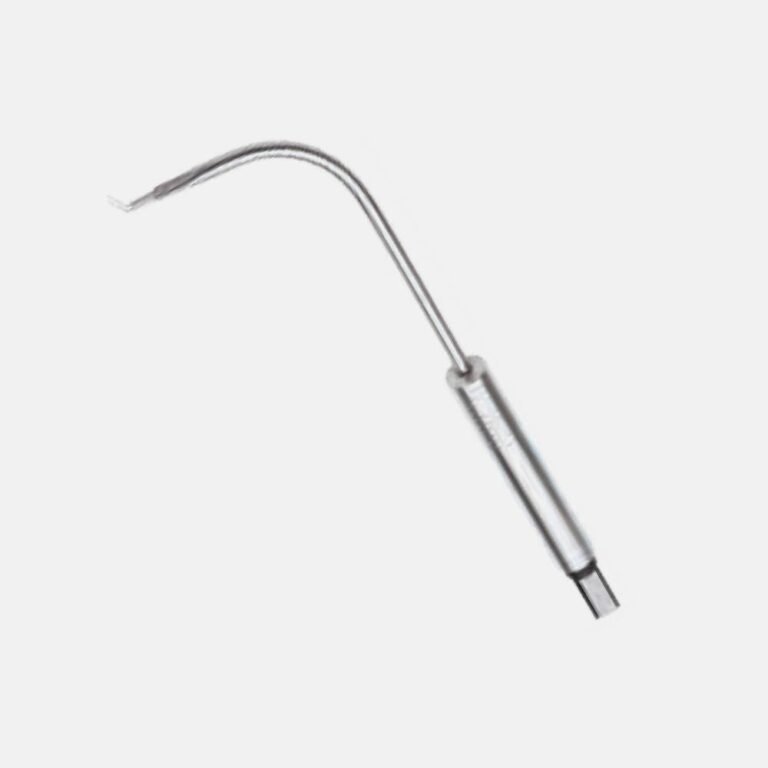
Bipolar Electrodes Angled 90° | NJ Medical Instruments
In stock
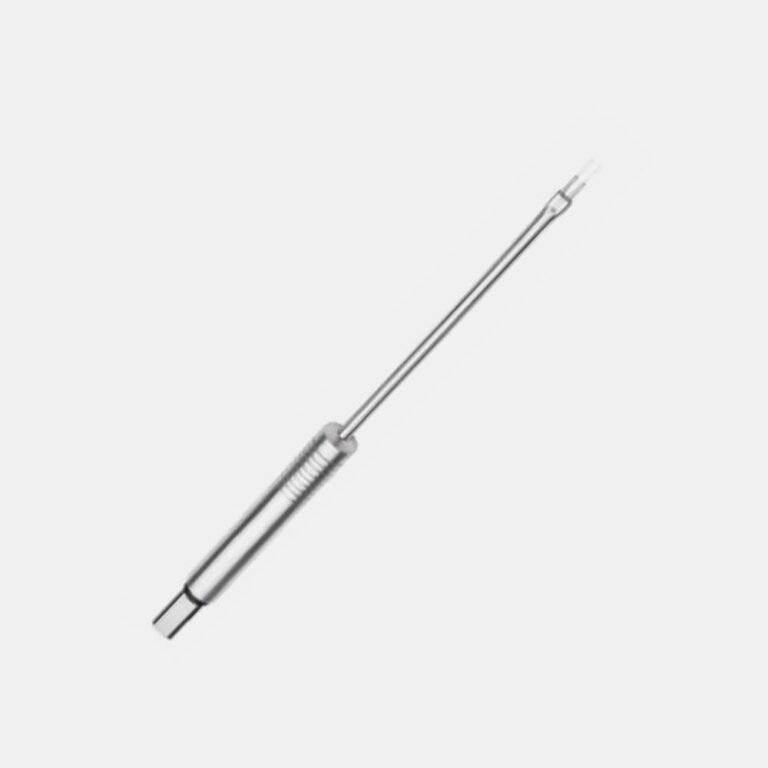
Straight Bipolar Electrodes | NJ Medical Instruments
In stock
Bipolar Electrodes: Both Poles on One Instrument
A bipolar electrode carries both the active and return poles at its own tip, so current travels only the short distance between them and never passes through the patient's body. That is the fundamental difference from monopolar, where current enters at the electrode and exits through a return plate somewhere on the thigh or back, taking whatever route through the tissue it finds. The practical consequences follow directly: no patient return plate is needed, there is no pathway for a burn at a distant site, and the thermal effect stays confined to the millimetres of tissue between the poles. That containment is why bipolar is the standard where precision matters more than speed. NJ Medical Instruments manufactures the range in surgical-grade stainless steel, supplied worldwide direct from the factory for individual purchase and for bulk, wholesale, and OEM/private-label supply.
Where bipolar electrodes differ from bipolar forceps
Both are bipolar, but they work differently. Forceps grasp tissue between two tips and coagulate what is held. A bipolar electrode has both poles built into a single working end — a probe, ball, needle, or loop — so it can be applied to a surface without grasping anything. That suits situations where there is nothing to grip: coagulating a bleeding point on a flat surface, treating a mucosal area, or working where the tissue cannot be lifted away from what lies beneath it.
Why current density still governs the effect
Tip geometry decides what happens, exactly as it does in monopolar. A needle-type bipolar electrode concentrates current into a small area and cuts or coagulates precisely. A ball tip spreads the same current over a curved surface and coagulates broadly. Power settings are typically lower than monopolar equivalents, because the current is not dispersing through the body — running a bipolar unit at monopolar settings simply chars tissue.
Safety points that still apply
Bipolar removes the return-plate risk but not every hazard. The connector standard must match the cable and generator — European and USA two-pin systems are not interchangeable. Insulation along the shaft must be intact, since a fault there can deliver current where it is not intended. And char on the tip insulates the poles and progressively reduces effect, prompting operators to increase power when cleaning the tip is what is actually needed.
Which bipolar electrode do you need?
| Tip | Current density | Used for |
|---|---|---|
| Needle tip | High, concentrated | Precise cutting and coagulation |
| Ball tip | Low, spread | Surface coagulation over an area |
| Probe tip | Moderate | Point coagulation on a surface |
| Loop tip | Moderate | Excising small lesions |
| Angled shaft | Varies | Access around structures |
| Insulated shaft | Confines current to tip | All applications — inspect before use |
Explore related electrosurgical instruments
- European Bipolar Forceps and USA 2 Pin Bipolar Forceps
- Bipolar Cables — must match the connector standard
- Electrodes (2.4 mm) and Electrodes (4.0 mm) for monopolar use
- All Electrosurgical Instruments
All manufactured in surgical-grade stainless steel to international standards, reusable and autoclavable, with worldwide shipping.
Bulk, wholesale & OEM supply
As a direct manufacturer, NJ Medical Instruments supplies bipolar electrodes in bulk and wholesale quantities to hospitals, surgical centres, and distributors, and produces OEM / private-label electrodes in custom tip shapes and shaft lengths with laser marking. Contact us by email at info@njmedicalinstruments.com or by WhatsApp for volume pricing — no minimum-order barriers, no middlemen.
Frequently asked questions
What is a bipolar electrode?
A bipolar electrode carries both the active and return poles at its own tip, so current travels only between them and never passes through the patient's body. No patient return plate is required.
What is the difference between bipolar and monopolar?
In monopolar, current enters at the electrode and exits through a return plate placed elsewhere on the body, travelling through tissue in between. In bipolar, both poles are at the tip, so the effect stays confined to the millimetres of tissue between them.
What is the difference between a bipolar electrode and bipolar forceps?
Forceps grasp tissue between two tips and coagulate what is held. A bipolar electrode has both poles in a single working end, so it can be applied to a surface without grasping — useful where there is nothing to grip.
Why are bipolar power settings lower than monopolar?
Because the current is not dispersing through the body before reaching the target. Running a bipolar unit at monopolar power settings simply chars the tissue rather than coagulating it.
Why is my bipolar electrode losing effect?
Usually char on the tip. Carbonised tissue insulates the poles and progressively reduces the effect, which tempts operators to increase power when cleaning the tip is what is actually needed.
Do you supply bipolar electrodes in bulk or for OEM / private label?
Yes. As a direct manufacturer we supply bipolar electrodes in bulk and wholesale quantities and produce OEM / private-label electrodes in custom tip shapes and shaft lengths. Contact us by email or WhatsApp for volume pricing.