


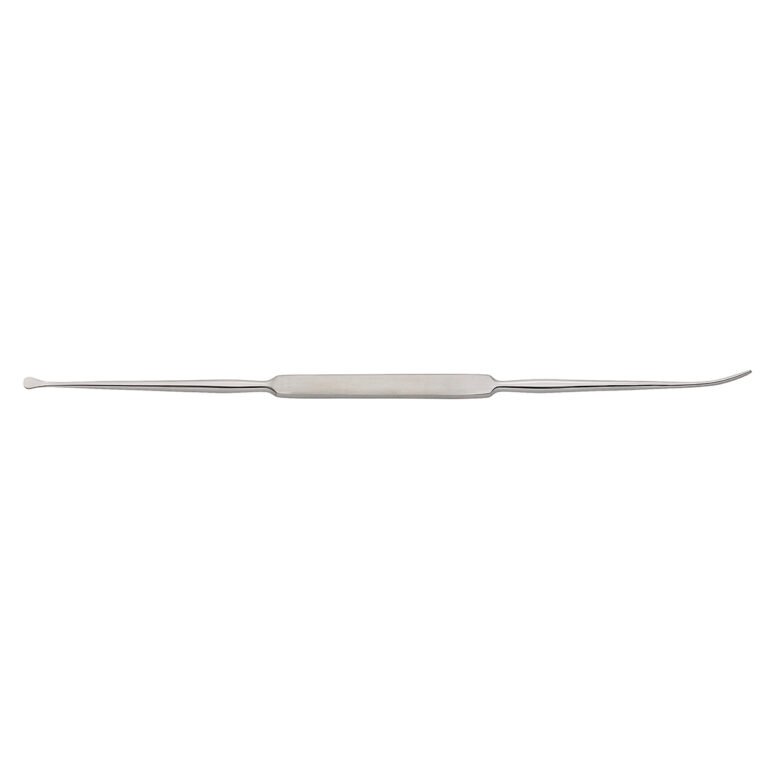
Cottle Septum Elevator | NJ Medical Instruments
In stock
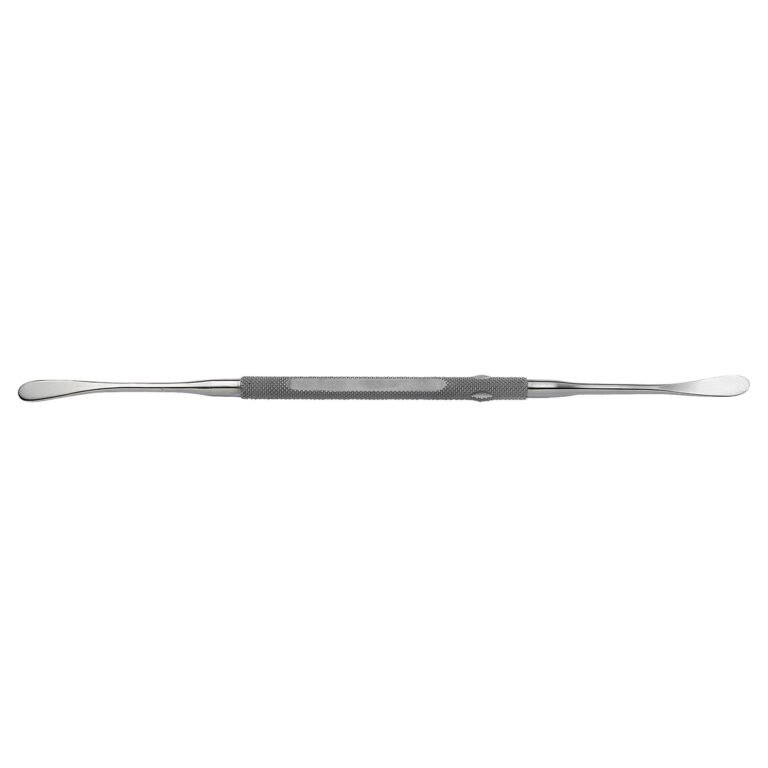
Freer Elevator | NJ Medical Instruments
In stock
Elevators: Lifting Tissue Cleanly Off Bone
An elevator works against a hard surface, and that changes everything about how it is designed and used. One face of the instrument stays in contact with bone while the working edge lifts tissue away from it. Because the bone provides a firm backing, the edge can be advanced with real force — and because the tissue is thin and the bone unyielding, the angle at which the edge meets that surface decides whether the layer comes away in one clean sheet or in torn fragments.
The angle of approach does the work
Held too steep, the edge digs into bone and stops. Held too flat, it rides over the tissue without getting underneath it. The usable range between these is narrow, and the shape of the blade and shaft is what makes it easy to hold. A well-designed elevator keeps the edge naturally at the correct angle when the handle sits comfortably in the hand, so the surgeon maintains the plane without consciously managing it.
Blade width and the sheet you are trying to raise
Wide blades lift a broad sheet in fewer passes and keep the layer intact across its width, which is what you want on a flat expanse of bone. Narrow blades concentrate force at the leading edge and start a plane that a wider instrument cannot enter, and they follow a curved or irregular surface far better. Most work begins with a narrow blade to establish the plane and continues with a wider one to advance it.
Curved, straight and offset patterns
Bone surfaces are curved, and an elevator whose blade does not follow the curvature contacts at one edge only, which is where tearing starts. Curved blades match convex and concave surfaces so the edge stays in contact across its width. Offset and angled shafts keep the hand out of the way when the working point is deep or when the approach is oblique to the surface being cleared.
Edge condition, and why a sharp elevator is a gentler one
It is counterintuitive, but a well-maintained edge lifts tissue with less force and therefore less trauma than a rounded one. A dulled edge has to be pushed, and pushing at a hard surface is what tears the layer and damages what remains. As with curettes, edge condition here governs the quality of the result more than the size or weight of the instrument does.
Which elevator do you need?
| Task | Blade | Shaft | Chosen for |
|---|---|---|---|
| Starting a plane | Narrow, fine edge | Straight | Concentrating force to get underneath the layer |
| Advancing a broad sheet | Wide | Straight | Keeping the layer intact across its width |
| Curved bone surfaces | Curved to match | Straight or angled | Edge contact maintained across the blade |
| Deep or oblique approach | Any width | Offset or angled | Keeping the hand clear of the working point |
| Fine or confined work | Small, light | Short | Control where a heavy instrument overpowers the tissue |
Related instruments in this range
- Curettes, Raspatories & Elevators — the full range this category sits within
- Dissectors — separating soft-tissue planes
- Bone Curettes — scraping with tactile feedback
- Bone Cutters & Rongeurs — cutting and removing bone
- Surgical Instruments — the wider instrument catalogue
Wholesale, OEM and private-label supply
NJ Medical Instruments manufactures elevators in Sialkot, Pakistan, supplying single instruments through this shop and graded sets in bulk to hospitals, orthopedic, dental and maxillofacial units, and distributors. As the manufacturer we produce to specification — blade width and curvature, edge profile, shaft offset and length, handle form and balance, marking and private-label packaging. For volume pricing or an OEM quotation, email info@njmedicalinstruments.com or message +92-333-8733922.
Frequently asked questions
What blade width should I order?
Usually two. A narrow blade concentrates force at the edge and is what starts a plane that a wider instrument cannot enter; a wide blade then advances that plane in fewer passes and keeps the sheet intact across its width. Working with only one width means either struggling to start or tearing while advancing.
Why does the angle of approach matter so much?
Because the usable range is narrow. Too steep and the edge digs into bone; too flat and it rides over the tissue instead of getting under it. Good blade and shaft geometry holds the edge at the right angle when the handle sits naturally in the hand, so the plane is maintained without conscious effort.
When do I need a curved blade?
Whenever the bone surface is curved. A straight blade on a curved surface contacts along one edge only, and that single line of contact is where tearing begins. A curved blade matched to the surface keeps the edge in contact across its full width.
Is a sharper elevator more traumatic?
No — the opposite. A well-maintained edge gets under the layer with less force, while a dulled edge has to be pushed against a hard surface, which is what tears tissue. Edge condition affects the quality of the result more than the size or weight of the instrument.
What are your elevators made from?
They are manufactured from surgical-grade stainless steel, with blade edges ground and handles finished and inspected before dispatch. Both reusable and single-use options exist across our range — specify which you need when ordering, or ask for the material specification of a particular pattern.
Can I order a graded set or custom specification?
Yes. As an OEM manufacturer we supply retail quantities through this shop and bulk orders direct from the factory, including graded sets spanning blade widths and curvatures. Custom blade profiles, shaft offsets, lengths, handle forms, laser marking and private-label packaging are available. Send your specification and quantity for a quotation.