


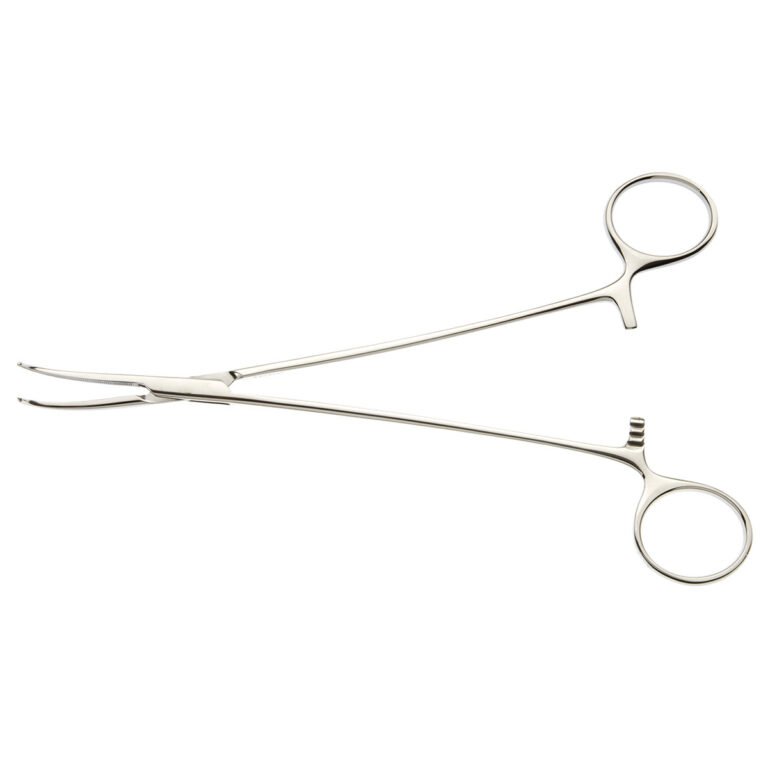
Artery & Ligature Clamp | NJ Medical Instruments
In stock
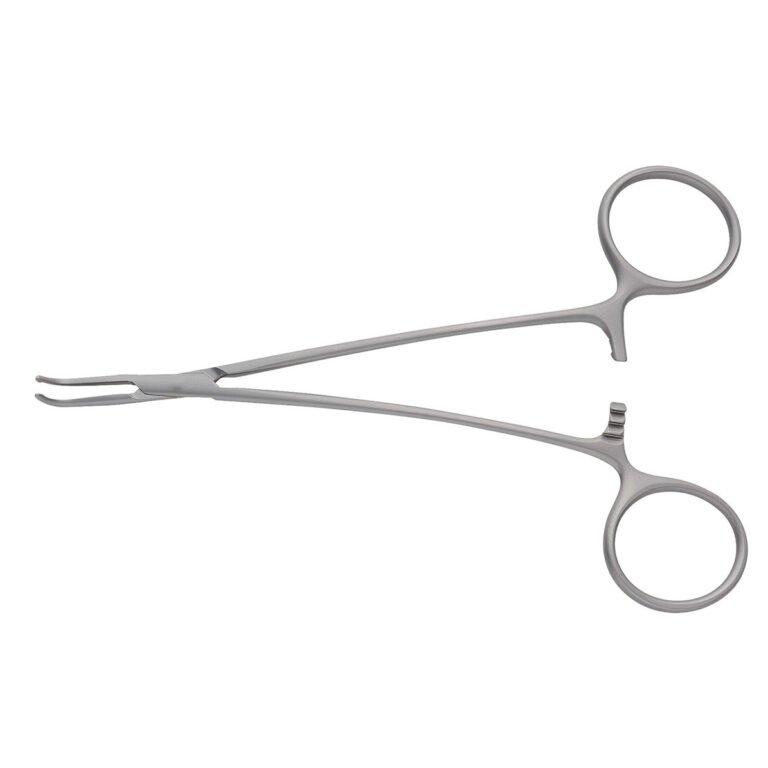
Ehrén Ligature Clamp | NJ Medical Instruments
In stock
Artery and Ligature Clamps: Occluding a Vessel Long Enough to Secure It
These clamps are placed to hold a bleeding point closed for the short period it takes to tie or seal it, and then to be removed — which makes them the most-handled instruments on the tray and gives them a very particular set of design requirements. The clamp has to grip a small, slippery, pressurised structure reliably, stay locked without attention, and then release cleanly at a chosen instant without disturbing the ligature that has just been placed around it. Almost every feature in this category exists to serve one of those three moments.
The tip does the finding, the jaw does the holding
A haemostat is applied by placing its tip precisely on a bleeding point, often by feel as much as by sight. Fine-tipped patterns can be placed accurately on a small vessel with minimal surrounding tissue taken; broader jaws hold more securely but take more with them. Because the tissue caught in the jaw is what gets tied, the amount of surrounding tissue included is a direct consequence of the tip chosen — which is why haemostats come in a range of tip refinements rather than one general size.
Serration direction and why it is transverse here
Unlike the longitudinal serrations used on atraumatic bowel and vessel clamps, haemostat jaws are serrated across their width. Transverse ridges resist the vessel being pulled out along the axis of the jaw, which is exactly the force applied when a ligature is drawn around and tightened. The clamp is deliberately not atraumatic — the tissue in its jaw is going to be tied or divided, so secure holding is the priority.
Release: the moment most often overlooked
A haemostat is removed while a knot is being tightened, and if the ratchet releases with a jolt the tip moves and the ligature can be displaced before it is secure. Smooth, progressive release from the ratchet is therefore a genuine quality difference in these instruments, and it is felt immediately in use even though it is invisible on the bench. This is the specification that most separates well-made haemostats from poor ones.
Straight and curved, and why most trays hold both
Straight jaws suit points that can be approached directly and are easiest to place quickly. Curved jaws allow the tip to be placed around and beneath a structure, and the curve lifts the handles clear so a ligature can be passed around the jaw without the instrument obstructing it. Because passing a tie is easier around a curved clamp, curved patterns dominate where the vessel is to be ligated rather than simply held.
Which artery or ligature clamp do you need?
| Task | Tip and jaw | Typical length | Chosen for |
|---|---|---|---|
| General haemostasis | Standard tip, transverse serration | 12–16 cm | The everyday clamp on most trays |
| Fine vessels | Fine tip, close serration | 10–14 cm | Accurate placement with minimal surrounding tissue |
| Ligating rather than holding | Curved jaw | 14–18 cm | Passing a tie around the jaw without obstruction |
| Deep field | Long shanks | 20–26 cm | Reach with the handles outside the wound |
| Heavier pedicles | Broad jaw, robust ratchet | 18–24 cm | Secure holding of a larger bulk of tissue |
Related instruments in this range
- Artery Forceps and Ligature Clamps — the full range this category sits within
- Artery Forceps — haemostatic forceps patterns
- Needle Holders — needle control during suturing
- Forceps — tissue handling
- Clamps — occlusion clamps across specialties
Wholesale, OEM and private-label supply
NJ Medical Instruments manufactures artery and ligature clamps in Sialkot, Pakistan, supplying single instruments through this shop and bulk quantities direct to hospitals, surgical centres, dental practices and distributors. As the manufacturer we produce to specification — tip refinement, jaw width and serration, curvature, ratchet graduation and release characteristics, length, box-joint construction, marking and private-label packaging. For volume pricing or an OEM quotation, email info@njmedicalinstruments.com or message +92-333-8733922.
Frequently asked questions
Why are haemostat jaws serrated across the width rather than lengthways?
Because the force trying to pull the vessel out of the jaw runs along the jaw's axis when a ligature is drawn around and tightened. Transverse ridges resist that directly. These clamps are deliberately not atraumatic — the tissue held is going to be tied or divided, so secure holding takes priority.
Should I choose straight or curved?
Curved where the vessel is to be ligated, because a tie can be passed around the jaw without the instrument obstructing it and the tip can be placed around and beneath a structure. Straight where the point can be approached directly and speed of placement matters. Most trays carry both.
Why does the ratchet release matter so much?
Because the clamp is removed while a knot is being tightened. A ratchet that releases with a jolt moves the tip and can displace the ligature before it is secure. Smooth progressive release is the specification that most distinguishes a well-made haemostat, and it is obvious in use though invisible on inspection.
What tip size should I order?
A range. Fine tips place accurately on small vessels and take little surrounding tissue with them; broader jaws hold more securely but include more tissue in the tie. Since whatever is in the jaw is what gets ligated, tip choice directly determines that, which is why sets carry several refinements.
What are your artery and ligature clamps made from?
They are manufactured from surgical-grade stainless steel, with jaws aligned, box joints fitted and ratchets set and inspected before dispatch. Both reusable and single-use options are available — specify which you need when ordering, or ask for the material specification of a particular pattern.
Can I order in bulk or to our own specification?
Yes. As an OEM manufacturer we supply retail quantities through this shop and bulk orders direct from the factory. Custom tip refinements, jaw serrations, curvatures, ratchet characteristics, lengths, laser marking and private-label packaging are available. Send your specification and quantity for a quotation.