


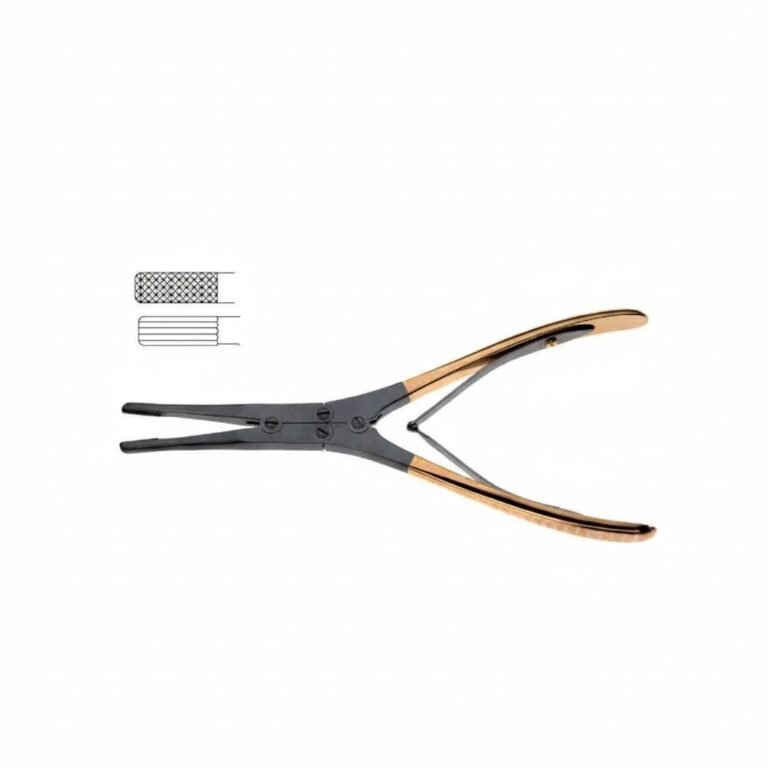
Gorney Septal Morselizer, 21.6 cm – Tungsten Carbide
In stock
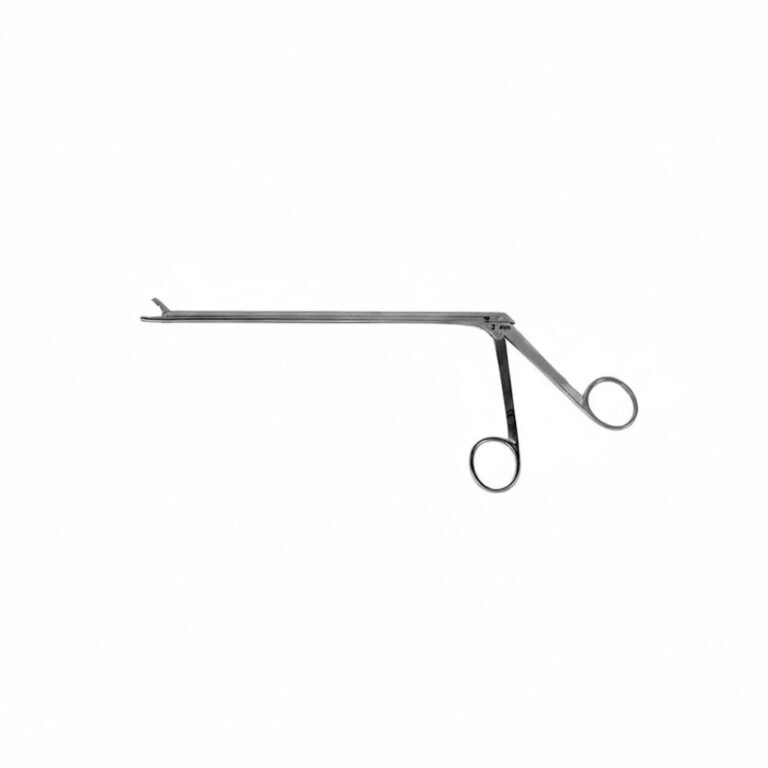
Pituitary Rongeur | NJ Medical Instruments
In stock
Rongeurs: Removing Bone in Bites Instead of Cuts
A rongeur takes bone away a piece at a time, and that incremental approach is a deliberate choice rather than a limitation. Cutting instruments divide bone along a line and commit to that line in a single action. A rongeur nibbles: each bite is small, the result is inspected, and the next bite is placed accordingly. Where the final shape is judged rather than planned — trimming an edge, clearing a margin, reducing a prominence — that iterative process is exactly what is wanted, and no cutting instrument substitutes for it.
Cup shape and the bite it takes
The jaws end in a cup with a sharpened rim, and the shape of that cup determines the shape of each bite. Narrow cups take small, precisely placed pieces and suit finishing at a margin. Wider cups clear volume faster with less placement accuracy. Because the cup both cuts and holds the fragment, its depth also affects whether debris comes away with the instrument or is left in the field — a practical difference that shows up over the course of a procedure.
Single and double action, and the force at the jaw
Single-action rongeurs convert handle movement directly into jaw movement, which is quick and gives good feedback about what the jaw is meeting. Double-action patterns add a second joint that multiplies force at the jaw for the same handle effort, making denser bone manageable. The trade is a larger head and slightly less direct feel — so single action tends to be preferred where the bone is softer and placement matters most, and double action where the material is dense.
Spring return and the rhythm of use
Because the instrument is used in repeated bites rather than single cuts, the spring that reopens the jaws sets the working rhythm. A spring that is too weak leaves the surgeon opening the jaws manually between bites; one that is too strong makes each closure tiring across dozens of repetitions. Spring quality is easy to overlook when comparing rongeurs on paper and is one of the first things noticed in use.
Straight, curved and angled jaws
Straight jaws bite along the line of the shaft and are the general-purpose choice. Curved jaws let the cup be presented flat to a surface that lies oblique to the approach, so the whole rim engages instead of one edge. Angled patterns move the handle out of the sightline, which matters because a rongeur is used while watching the bite closely and repositioning after each one.
Which rongeur do you need?
| Task | Cup and action | Jaw form | Chosen for |
|---|---|---|---|
| Bulk removal, dense bone | Wide cup, double action | Straight | Force at the jaw for the effort applied |
| Precise finishing | Narrow cup, single action | Straight or curved | Placement accuracy and direct feel |
| Oblique surfaces | Any cup | Curved | Whole rim engaging instead of one edge |
| Deep or watched field | Any cup | Angled | Handle clear of the line of sight |
| Sustained use | Any cup, well-judged spring | Any | Rhythm maintained over many bites |
Related instruments in this range
- Plastic Surgery Instruments — the full range this category sits within
- Gouges — curved-edge cutting with self-limiting depth
- Kerrison Rongeurs — sliding punch mechanism
- Bone Cutters & Rongeurs — cutting and removing bone
- Bone Curettes — scraping with tactile feedback
Wholesale, OEM and private-label supply
NJ Medical Instruments manufactures rongeurs in Sialkot, Pakistan, supplying single instruments through this shop and graded sets in bulk to hospitals, orthopedic, spinal and plastic surgery units, and distributors. As the manufacturer we produce to specification — cup width and depth, single or double action, jaw form, spring characteristics, shaft length, marking and private-label packaging. For volume pricing or an OEM quotation, email info@njmedicalinstruments.com or message +92-333-8733922.
Frequently asked questions
When should I use a rongeur rather than a cutting forceps?
When the final shape is judged rather than planned. A cutting forceps divides along a line and commits to it in one action; a rongeur takes small bites so the result can be inspected and the next bite placed accordingly. For trimming an edge or clearing a margin, that iterative approach is the point.
How is a rongeur different from a Kerrison?
Mechanism. A rongeur pivots, closing a cupped jaw against an opposing surface. A Kerrison slides — an upper cutting element travels along a fixed footplate. The Kerrison suits passing under bone in confined access; the rongeur is the more general instrument for open piecemeal removal.
Single or double action?
Single action gives quicker, more direct feedback about what the jaw is meeting and suits softer bone and precise placement. Double action multiplies force at the jaw for the same handle effort, which makes dense bone manageable at the cost of a larger head and slightly less feel.
Does the spring really matter?
Yes, more than it appears to on paper. The instrument is used in repeated bites, so the spring sets the working rhythm — too weak and the jaws must be opened manually between bites, too strong and each closure becomes tiring across dozens of repetitions.
What are your rongeurs made from?
They are manufactured from surgical-grade stainless steel, with cup rims ground and joints and springs fitted and inspected before dispatch. Both reusable and single-use options exist across our range — specify which you need when ordering, or ask for the material specification of a particular pattern.
Can I order a graded set or custom specification?
Yes. As an OEM manufacturer we supply retail quantities through this shop and bulk orders direct from the factory, including graded sets spanning cup sizes and jaw forms. Custom cup dimensions, actions, jaw curvatures, spring tensions, shaft lengths, laser marking and private-label packaging are available. Send your specification and quantity for a quotation.