


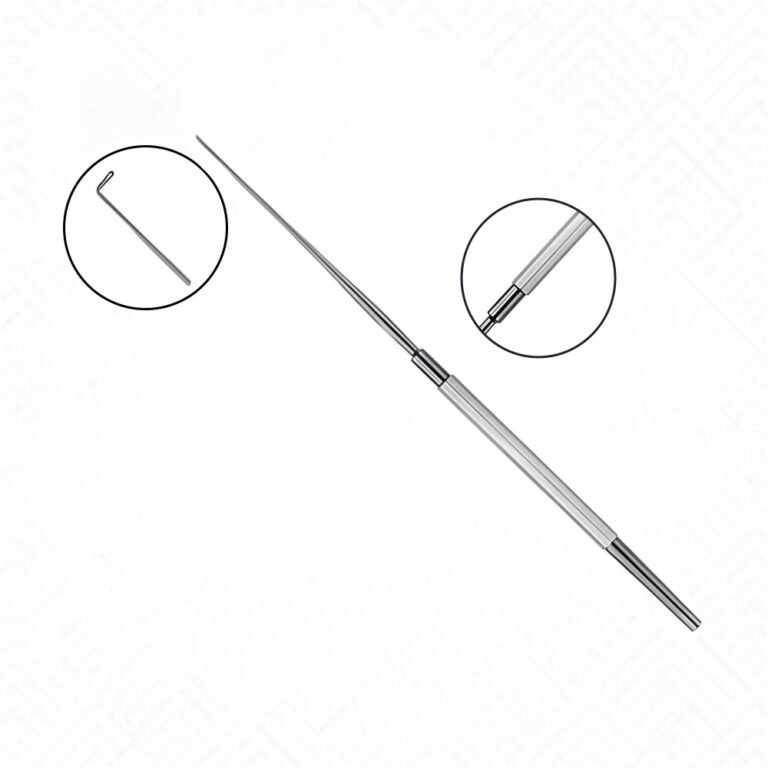
Allport mastoid searcher | NJ Medical Instruments
In stock
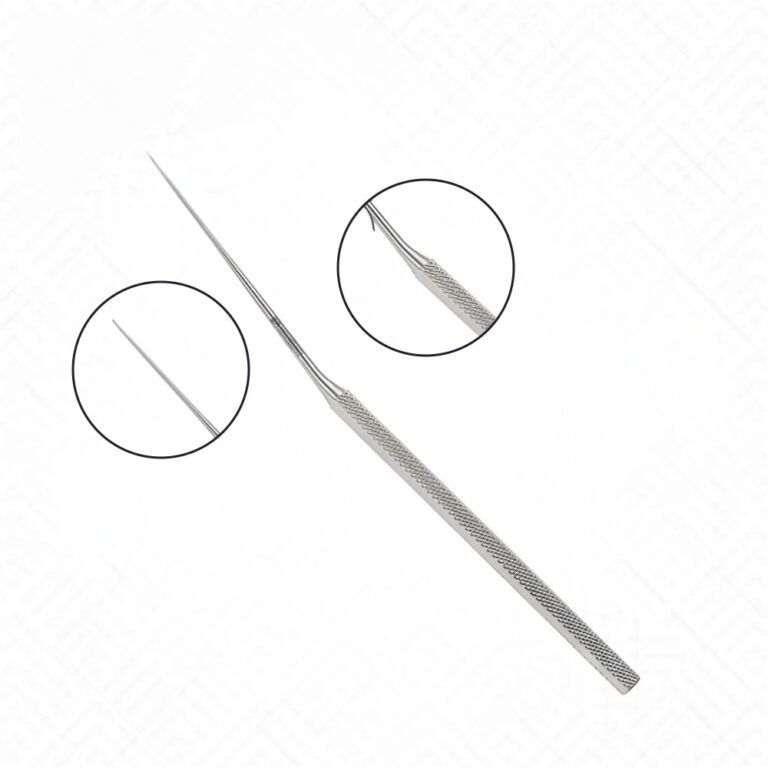
Antoli Candela micro hook – for lifting incus | NJ Medical Instruments
In stock
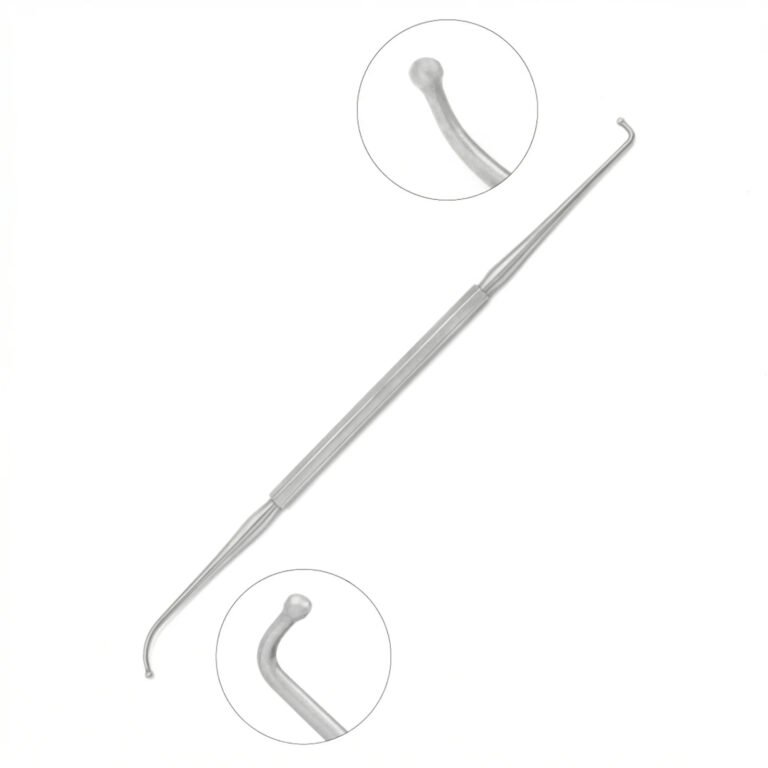
Antrum Ball Probe, 19 cm (1.2 & 2 mm)
In stock
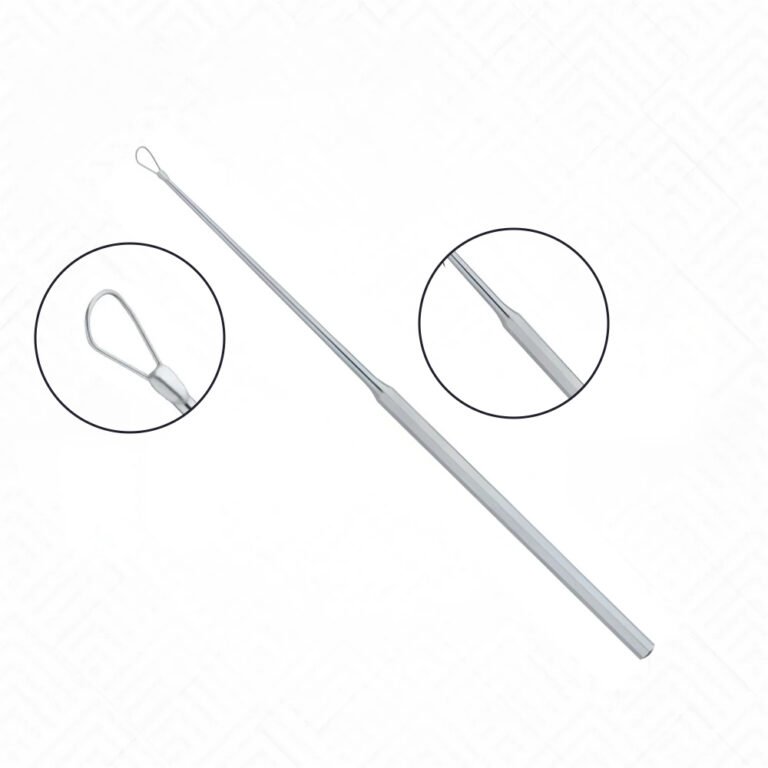
Billeau Ear Loop | NJ Medical Instruments
In stock
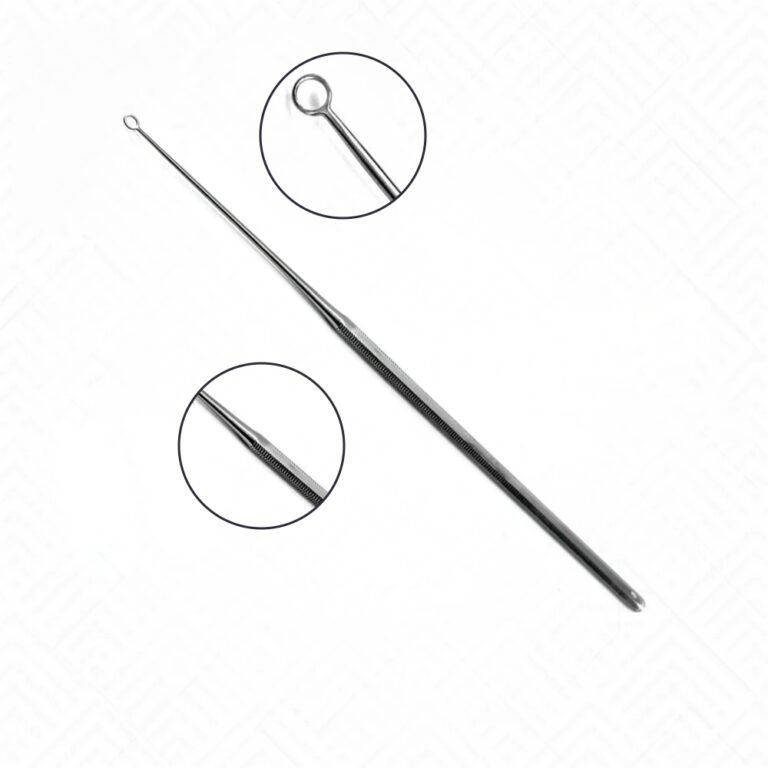
Buck Ear Curette 17 cm – 6 3/4 inches | NJ Medical Instruments
In stock
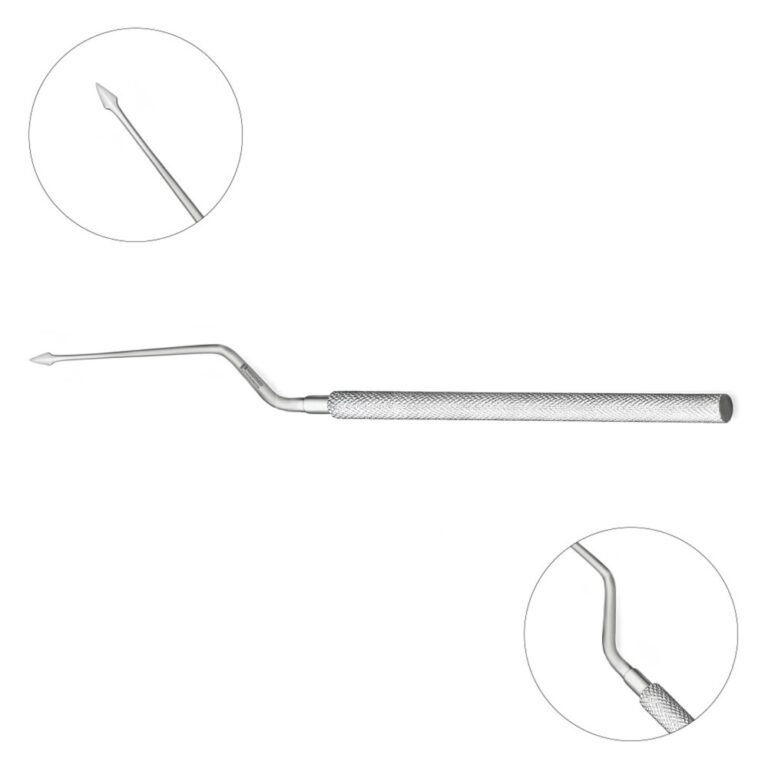
Buck Myringotomy Knife with a Bayonet Triangle Tip | NJ Medical Instruments
In stock
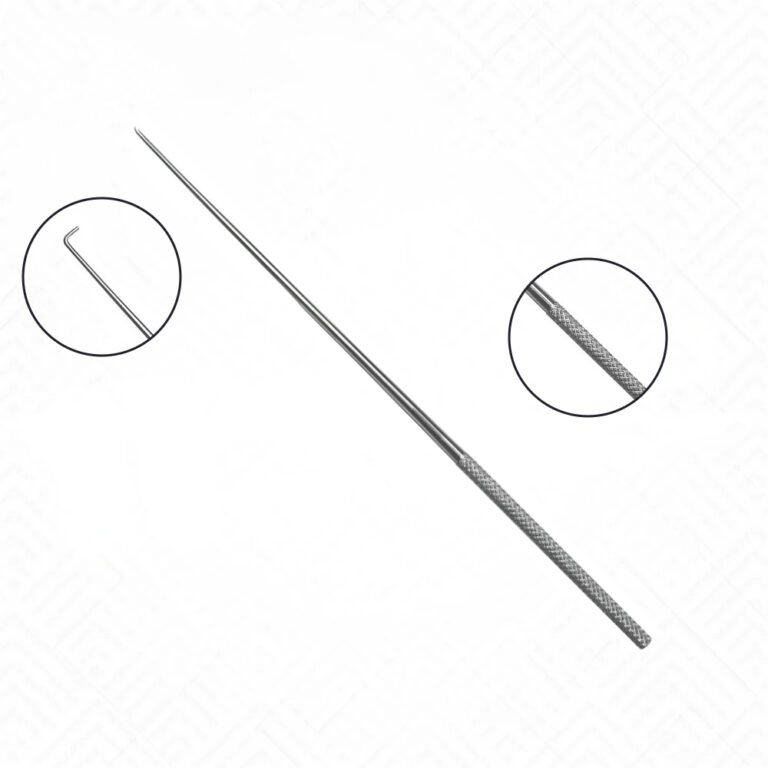
Day Ear Hook 17 cm – 6 3/4 Inches | NJ Medical Instruments
In stock
Probes & Curettes: Feeling What You Cannot See, Then Removing It
These two instruments cover the two halves of working in a space too narrow to see into properly — a probe tells you what is there and how far it extends, and a curette removes it. In ENT practice that space is usually the ear canal, the nasal cavity, or a sinus opening: a few millimetres wide, curved, and lit only by whatever the otoscope or headlight can throw down it. The probe gathers information by touch that the eye cannot supply — whether an obstruction is soft or hard, mobile or fixed, and where it ends. Only then does the curette follow. Removing something before knowing what it is attached to is how canal walls get abraded and drums get touched. NJ Medical Instruments manufactures the full range in surgical-grade stainless steel, supplied worldwide direct from the factory for individual purchase and for bulk, wholesale, and OEM/private-label supply.
Probes gather information
A blunt probe is passed gently to define what is present. Its blunt tip follows existing spaces rather than creating new ones, so it maps rather than damages. In the ear it distinguishes hard impacted wax from a soft plug or a foreign body, and establishes how deep the obstruction sits relative to the drum — which decides whether a curette can safely pass behind it or whether irrigation is the better approach.
Curettes remove it
A ring or loop curette has an open working end that scoops material out while letting the clinician see through the instrument to the canal ahead — a real advantage in a space where the instrument itself is the main obstruction to the view. A solid spoon curette handles firmer debris. Both work by drawing material outward, which is why size selection matters more than force: an instrument too large to pass the narrowing of the canal will push a plug deeper rather than bring it out.
Working end size and canal anatomy
The ear canal narrows toward the drum at the isthmus, and an instrument that fits comfortably at the opening may not pass that point. Curettes and probes are therefore supplied in graded sizes, and the correct size varies between adults and children and even between one ear and the other in the same patient. Choosing the size at the start, rather than persisting with the one already in hand, is what keeps the procedure atraumatic.
Which instrument do you need?
| Instrument | Working end | Used for |
|---|---|---|
| Blunt probe | Rounded tip | Assessing consistency and depth by touch |
| Angled probe | Bent tip | Reaching around the canal curve |
| Ring / loop curette | Open loop | Scooping wax with a see-through end |
| Spoon curette | Solid cupped end | Firmer debris and granulation |
| Double-ended | Probe and curette combined | Fewer instrument changes |
| Graded set | Range of sizes | Matching the canal, adult or child |
Explore related ENT instruments
- Ear Catheters and Excavators
- Otoscopes and Ear Specula & Tuning Forks
- Ear Forceps for grasping and removal
- All ENT Diagnostic Instruments
All manufactured in surgical-grade stainless steel to international standards, reusable and autoclavable, with worldwide shipping.
Bulk, wholesale & OEM supply
As a direct manufacturer, NJ Medical Instruments supplies probes and curettes in graded sets and in bulk and wholesale quantities to hospitals, ENT and general practice clinics, and distributors, and produces OEM / private-label instruments with custom sizing and laser marking. Contact us by email at info@njmedicalinstruments.com or by WhatsApp for volume pricing — no minimum-order barriers, no middlemen.
Frequently asked questions
What is a probe used for in ENT examination?
A blunt probe assesses by touch what cannot be judged by sight alone — whether an obstruction is hard or soft, mobile or fixed, and how deep it sits. That information determines whether removal by curette is safe or whether another approach is better.
What is an ear curette used for?
An ear curette removes wax, debris, and granulation from the ear canal. Ring or loop patterns scoop material while letting the clinician see through the working end; solid spoon patterns handle firmer material.
Why is a loop curette better than a solid one for wax?
The open loop lets the clinician see through the instrument to the canal ahead. In a space where the instrument itself is the main obstruction to the view, that visibility is a genuine advantage.
What size curette should be used?
One small enough to pass the narrowing of the canal near the drum. An instrument that fits at the opening may not pass the isthmus, and forcing it pushes the plug deeper rather than removing it. Sizes vary between adults, children, and even a patient's two ears.
Why probe before removing wax?
Because removing something before knowing what it is attached to, or how deep it sits, is how canal walls are abraded and drums are touched. The probe establishes that first.
Do you supply probes and curettes in bulk or for OEM / private label?
Yes. We supply probes and curettes in graded sets and in bulk and wholesale quantities, and offer OEM / private-label production with custom sizing. Contact us by email or WhatsApp for volume pricing.