


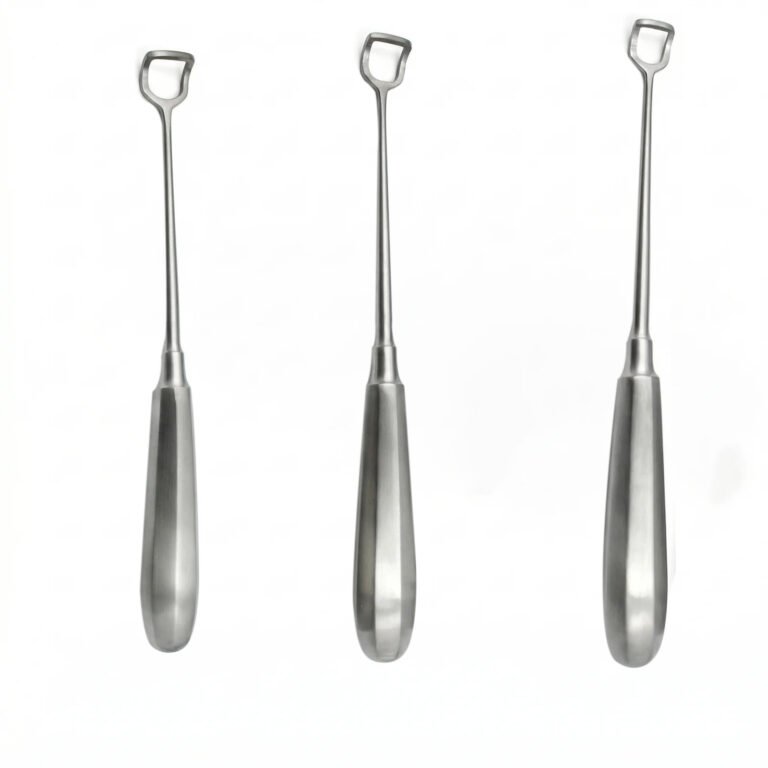
Barnhill Adenoid Curette Set of 3 Pcs | NJ Medical Instruments
In stock
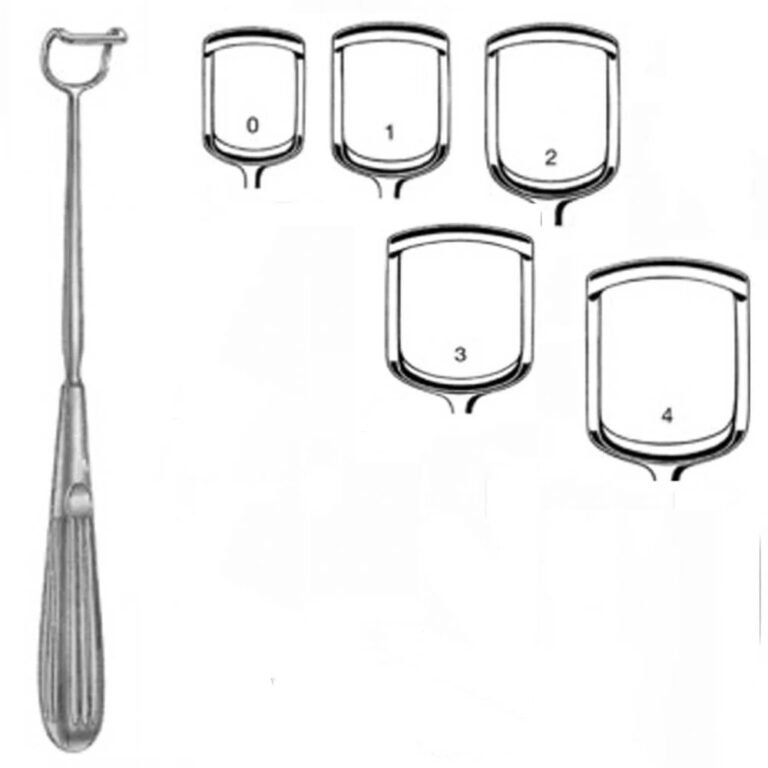
Barnhill Adenoid Curette, Stainless Steel | NJ Medical Instruments
In stock
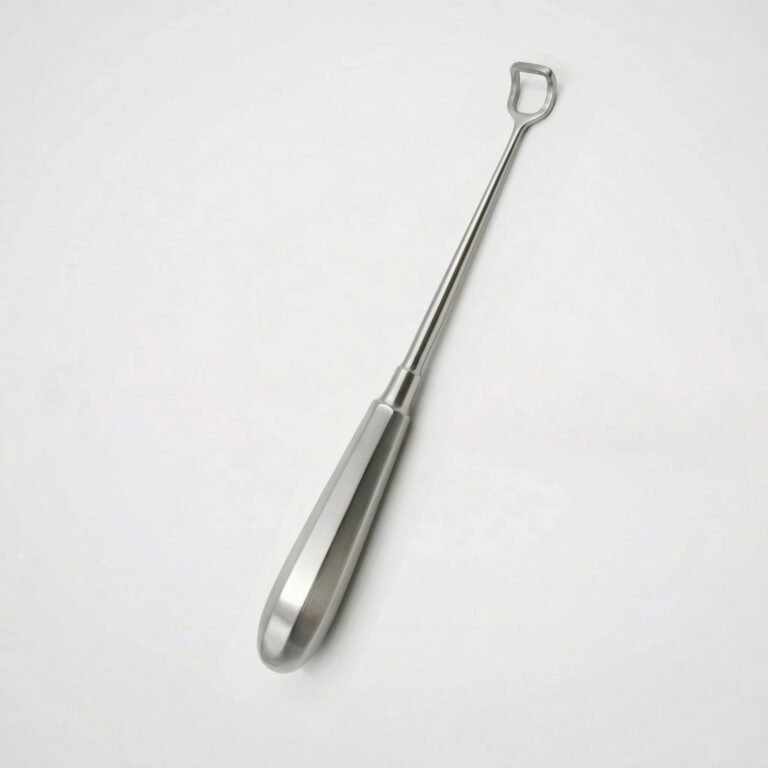
Beckmann / Barnhill Adenoid Curette
In stock
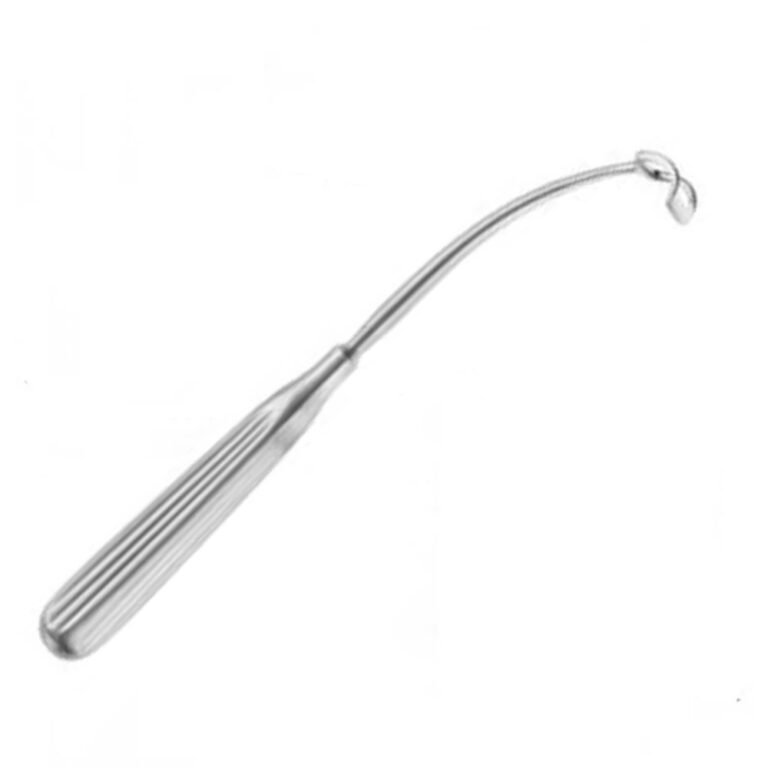
Shambaugh Adenoid Curette – Curved Backwards, Stainless Steel | NJ Medical Instruments
In stock
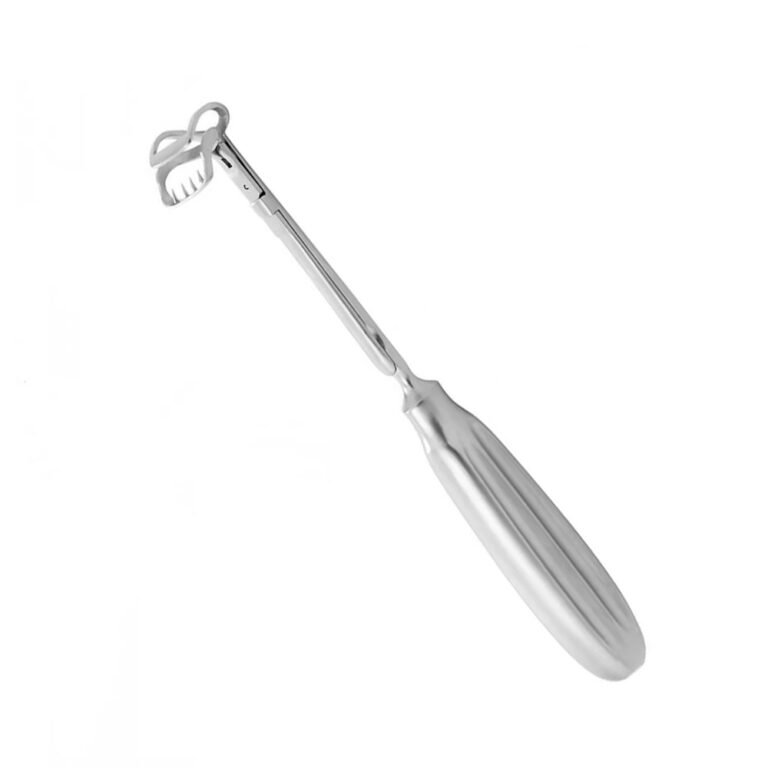
St.Clair Thomson Adenoid Curette, Stainless Steel | NJ Medical Instruments
In stock
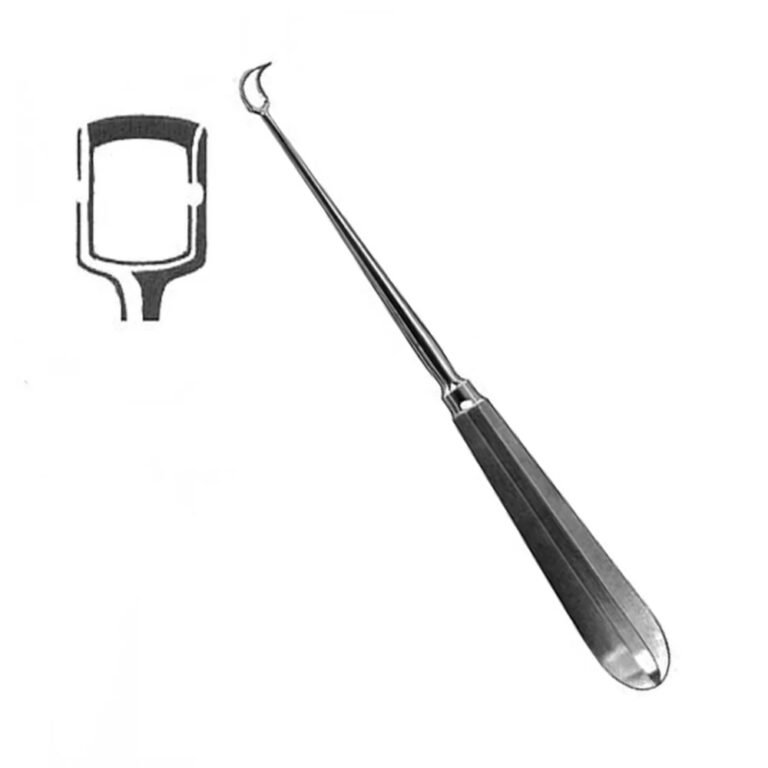
Vogel Adenoid Curette, 21.5 cm, 8 mm, Stainless Steel | NJ Medical Instruments
In stock
Adenoid Curettes: Working Behind the Palate Without Direct Vision
The adenoid curette is used in a space the surgeon cannot see into directly, which makes it one of the few instruments where the shape of the tool is doing the work that sight would otherwise do. The target sits above and behind the soft palate, reached through the mouth, around a corner. The instrument therefore has to travel through one opening, turn, seat itself accurately against a surface it is not being watched against, and then remove tissue in a controlled way — all judged largely by feel and by the fit of the instrument to the anatomy.
Why the blade is set at an angle to the handle
A straight instrument cannot reach the target at all. The blade of an adenoid curette is angled sharply relative to the shaft so that when the handle is held in a natural position outside the mouth, the cutting edge presents flat against the surface behind the palate. That geometry is fixed and specific — it is the reason patterns are supplied in defined sizes rather than being adjustable, and why substituting a general curette does not work here.
Blade width as an anatomical fit
Blade width is chosen to match the width of the space being worked in. A blade that is too wide will not seat properly and contacts at its corners; one that is too narrow requires more passes and makes uniform removal harder. Because the anatomy varies considerably with age and build, this category is stocked as a graded family — sizes are selected to fit the patient rather than by operator preference, and having the range available is what makes correct selection possible.
Guarded and cage patterns
Some designs add a cage or guard attached behind the blade, which captures tissue as it is removed rather than allowing it to fall free in a space where it cannot be seen. This addresses a specific practical problem of working out of sight. Unguarded patterns are simpler, slimmer and give a clearer feel of the surface; guarded patterns trade some of that for retention of what has been removed. Both are in common use and the choice is a working preference rather than a hierarchy.
Edge condition and controlled removal
As with any curette, a sharp edge removes tissue at a predictable rate under light, controlled pressure. A dulled edge requires force, and force applied in a space the operator cannot see is precisely what should be avoided. Because these instruments are used in a confined field and judged by feel, edge condition affects control here more than it affects speed, and it deserves checking before use rather than after.
Which adenoid curette do you need?
| Requirement | Pattern | Blade | Notes |
|---|---|---|---|
| Standard removal | Unguarded, angled blade | Graded widths | Slimmer, clearer feel of the surface |
| Retaining removed tissue | Guarded / cage pattern | Graded widths | Captures rather than releasing into the space |
| Smaller anatomy | Narrow blade | Reduced width | Seats correctly where a wide blade cannot |
| Larger anatomy | Wide blade | Increased width | Fewer passes, more uniform removal |
| Set provision | Graded family | Full width range | Selection by fit requires the range on hand |
Related instruments in this range
- ENT Diagnostic — ENT diagnostic and examination instruments
- Bone Curettes — scraping with tactile feedback
- Surgical Loops — closed-wire retrieval and removal
- Forceps — tissue handling
- Surgical Instruments — the wider instrument catalogue
Wholesale, OEM and private-label supply
NJ Medical Instruments manufactures adenoid curettes in Sialkot, Pakistan, supplying single instruments through this shop and graded sets in bulk to hospitals, ENT departments, clinics and distributors. As the manufacturer we produce to specification — blade width and angle, guarded or unguarded construction, cage design, shaft length, handle form, marking and private-label packaging. Because these are selected by anatomical fit, ENT departments usually order the full graded family; we can quote for a complete set. Email info@njmedicalinstruments.com or message +92-333-8733922.
Frequently asked questions
Why is the blade angled so sharply to the handle?
Because the target is reached through the mouth and lies around a corner, above and behind the soft palate. The angle is what lets the cutting edge sit flat against that surface while the handle is held in a natural position outside the mouth. A straight instrument cannot reach the area at all.
What blade width should I order?
Width is matched to the anatomy, not chosen by preference — too wide and the blade contacts only at its corners instead of seating, too narrow and more passes are needed for uniform removal. Since anatomy varies considerably with age and build, departments normally hold the full graded range.
What is a guarded or cage curette for?
It captures tissue as it is removed instead of releasing it into a space the operator cannot see. Unguarded patterns are slimmer and give a clearer feel of the surface; guarded ones trade some of that for retention. Both are widely used and the choice is a working preference.
How much does edge condition matter?
A great deal. A sharp edge removes at a predictable rate under light pressure; a dull one has to be forced, and applying force in a field that cannot be seen is exactly what the technique is designed to avoid. Check the edge before use rather than discovering it during.
What are your adenoid curettes made from?
They are manufactured from surgical-grade stainless steel, with blade edges ground and blade-to-shaft geometry checked before dispatch. Both reusable and single-use options exist across our ENT range — specify which you need when ordering, or ask for the material specification of a particular pattern.
Can I order a graded set or custom specification?
Yes. As an OEM manufacturer we supply retail quantities through this shop and bulk orders direct from the factory, including complete graded sets. Custom blade widths and angles, guarded or unguarded construction, shaft lengths, handle forms, laser marking and private-label packaging are available. Send your specification and quantity for a quotation.