


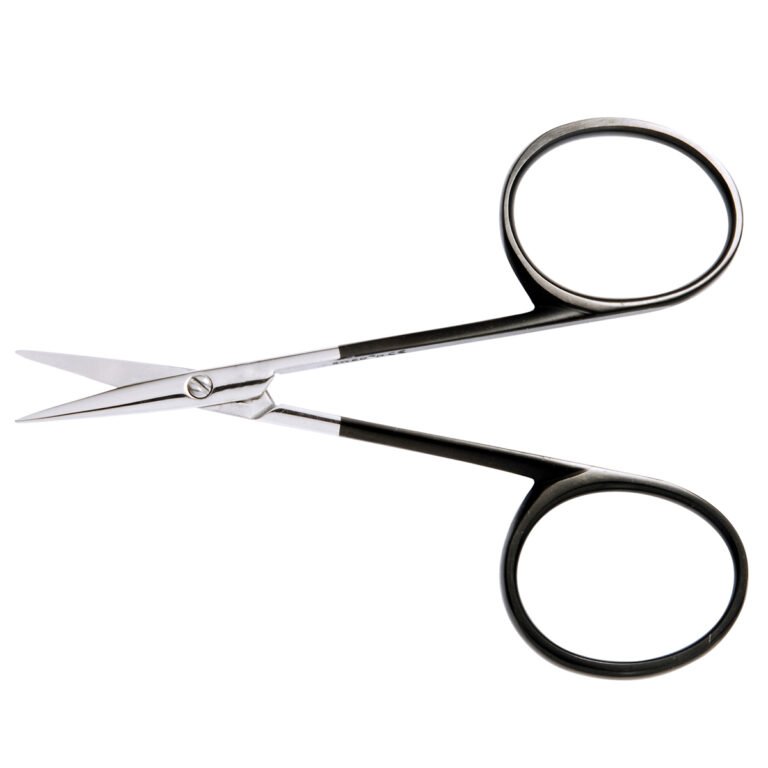
Supercut Blepharoplasty Scissors | NJ Medical Instruments
In stock
Blepharoplasty Scissors: Trimming Skin You Cannot Put Back
Eyelid surgery is unforgiving in a specific way — the skin removed cannot be replaced, and removing a millimetre too much can leave the eye unable to close fully. That single risk shapes the instrument. Blepharoplasty scissors are short-bladed so the surgeon cuts only the marked strip and nothing beyond it, sharp-tipped so thin skin divides cleanly instead of tearing, and light enough that the hand can work at the scale eyelid tissue demands. They also do double duty: the same pair opens the orbital septum when fat is being addressed, which is why blunt-tipped versions sit alongside sharp ones on most trays. NJ Medical Instruments manufactures the range in surgical-grade stainless steel, supplied worldwide direct from the factory for individual purchase and for bulk, wholesale, and OEM/private-label supply.
Why the blades are short
Blade length limits how far a cut can travel in a single closure. On the eyelid that is protective — a long blade cuts past the end of the marked strip before the surgeon can stop, and there is no way to undo that. Short blades mean the excision proceeds in controlled increments, each one visible before the next is made.
Sharp tips for skin, blunt tips for septum
Sharp-tipped scissors divide the thin skin of the lid cleanly. Thin skin tears rather than cuts under a dull edge, and a torn edge closes less neatly than a cut one on a surface where the scar must be invisible.
Blunt-tipped scissors are used once the dissection moves deeper. Opening the orbital septum and working around orbital fat is done by spreading rather than cutting, since the structures beyond include muscle and, further back, the globe itself.
Curved or straight
Curved blades follow the natural arc of the lid crease and let the surgeon see past the instrument to the tips. Straight blades give a direct line for the initial skin excision along a marked line. Most surgeons keep both, since the two stages of the procedure favour different geometry.
Which scissors do you need?
| Pattern | Tips and blades | Stage |
|---|---|---|
| Sharp-tipped, curved | Fine sharp points | Excising the marked skin strip |
| Sharp-tipped, straight | Direct cutting line | Initial incision along the marking |
| Blunt-tipped, curved | Rounded points | Opening septum, working near fat |
| Westcott pattern | Spring handle, fine blades | Very fine lid and conjunctival work |
| Tenotomy pattern | Short blades, long shanks | Refining cuts at scale |
| Tungsten carbide | TC inserts, gold rings | Longer edge life in frequent use |
Explore related instruments
- Tenotomy Scissors and Eye Scissors
- All Surgical Scissors
- Blepharoplasty Sets
- Measuring & Marking Instruments for planning the excision
All manufactured in surgical-grade stainless steel to international standards, reusable and autoclavable, with worldwide shipping.
Bulk, wholesale & OEM supply
As a direct manufacturer, NJ Medical Instruments supplies blepharoplasty scissors in bulk and wholesale quantities to hospitals, oculoplastic and aesthetic clinics, and distributors, and produces OEM / private-label scissors to custom specifications and laser marking. Contact us by email at info@njmedicalinstruments.com or by WhatsApp for volume pricing — no minimum-order barriers, no middlemen.
Frequently asked questions
What are blepharoplasty scissors used for?
They excise the marked strip of eyelid skin and, in blunt-tipped form, open the orbital septum when fat is being addressed. Both stages need instruments scaled to lid tissue rather than general facial surgery.
Why are the blades so short?
Blade length limits how far a single closure can cut. On the eyelid that is protective — a long blade would cut past the end of the marked strip before the surgeon could stop, and removed skin cannot be replaced.
When are blunt tips used instead of sharp?
Once the dissection goes deeper. Opening the septum and working around orbital fat is done by spreading rather than cutting, because the structures beyond include muscle and the globe.
Why do sharp tips matter on eyelid skin?
Thin skin tears rather than cuts under a dull edge, and a torn edge closes less neatly than a cut one — which shows on a surface where the scar is meant to be invisible.
Should they be curved or straight?
Curved blades follow the arc of the lid crease and keep the tips visible. Straight blades give a direct line for the initial excision along a marked line. Most trays carry both.
Do you supply blepharoplasty scissors in bulk or for OEM / private label?
Yes. As a direct manufacturer we supply blepharoplasty scissors in bulk and wholesale quantities and offer OEM / private-label production to custom specifications. Contact us by email or WhatsApp for volume pricing.