



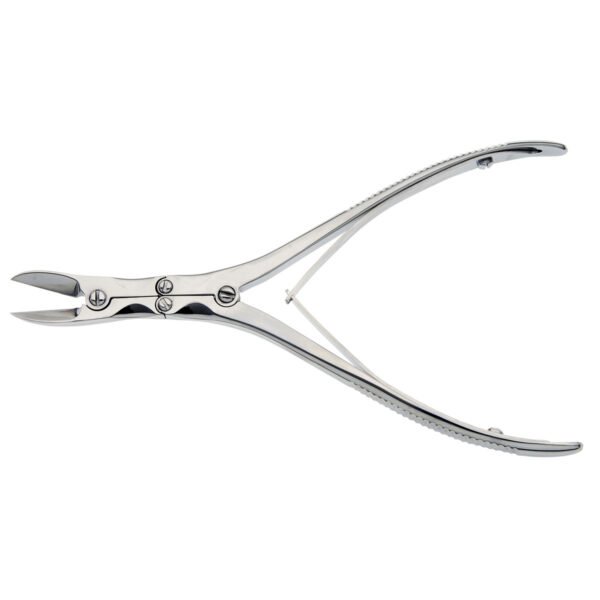
Bone Cutting Forceps Angled | NJ Medical Instruments
SKU:
NJM-26497
Original price was: $ 47.$ 40Current price is: $ 40.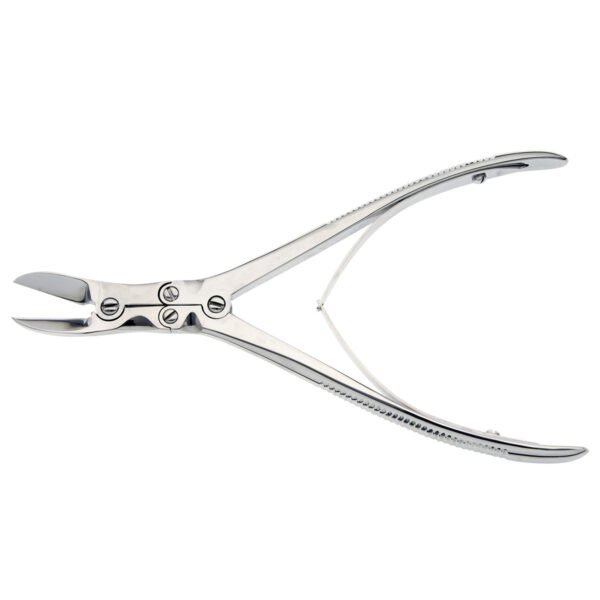
Bone Cutting Forceps Curved | NJ Medical Instruments
SKU:
NJM-26498
Original price was: $ 47.$ 40Current price is: $ 40.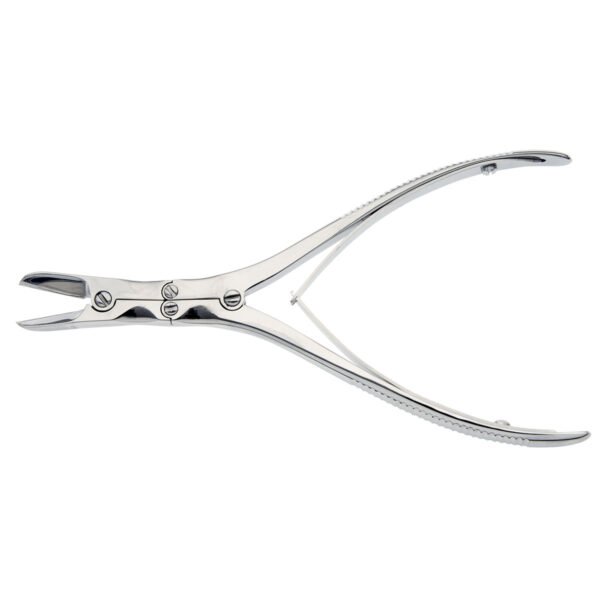
Bone Cutting Forceps Straight | NJ Medical Instruments
SKU:
NJM-26499
Original price was: $ 47.$ 40Current price is: $ 40.Bone Cutting Forceps for Sale - Straight, Curved and Angled Configurations for Orthopaedic and General Surgery
Bone cutting forceps work through a mechanism that is mechanically distinct from the bite-and-remove action of rongeurs or the single-impact approach of osteotomes and chisels. The double-action jaw applies shearing force through opposing cutting edges, and the leverage of the handle mechanism concentrates force at the jaw tips sufficient to cut through cortical bone cleanly in a single closing motion. This makes bone cutting forceps the instrument of choice for situations where controlled bone section is needed without the fragmenting tendency of a mallet-driven instrument or the incremental nibbling of a rongeur.
The three jaw configurations available in this subcategory - straight, curved, and angled - are not simply stylistic variants of the same instrument. Each suits a different operative geometry, and the choice between them changes what anatomical sites the instrument can reach, how the cutting force is directed relative to the bone surface, and how the surgeon's hand position relates to the operative field during the cut.
All three bone cutting forceps at NJ Medical Instruments are manufactured from surgical-grade stainless steel at the company's Sialkot facility, CE-certified, and autoclavable.
How Jaw Configuration Changes What the Forceps Can Do
The relationship between jaw axis, handle axis, and bone surface determines the efficiency and safety of each bone cutting forceps configuration. When the jaw meets the bone surface perpendicularly, the cutting force is distributed evenly across both cutting edges and the section is clean. When the approach geometry is suboptimal - the jaw meeting the bone at an oblique angle because the handle position forces it - the cut is less controlled and more force is needed.
This is precisely why straight, curved, and angled configurations exist as separate instruments rather than as a single adjustable tool. The access corridor to the bone in a given procedure determines which jaw geometry produces the perpendicular engagement needed for a clean, controlled cut.
Straight Bone Cutting Forceps - Direct Axial Access
The straight configuration is the baseline - jaw axis and handle axis in the same plane. It delivers the most mechanically direct transfer of handle force to jaw tip, and suits bone surfaces that are approached directly in line with the handle - exposed diaphyseal bone ends, rib segments with clear dorsal access, bone ends during amputation, and cortical bone preparation in sites where the operative field is open enough to align handle and bone surface in the same axis.
The Bone Cutting Forceps Straight is the appropriate instrument when the bone surface to be cut faces directly toward the surgeon's approach without obstruction. CE-certified, surgical stainless, autoclavable.
Curved Bone Cutting Forceps - Around-Corner Access
The curved jaw allows the cutting tips to engage bone surfaces that the handle cannot be aimed directly at - the curve navigates the jaw around anatomical obstacles to reach bone in partially obscured or laterally positioned sites. In rib surgery, the chest wall curve makes the rib's lateral and inferior surfaces inaccessible to a straight instrument without repositioning the patient; a curved bone cutter reaches them naturally. In hip and shoulder procedures, curved forceps address posterior cortical surfaces without the access that a straight instrument would require.
The Bone Cutting Forceps Curved is the instrument for these geometrically obstructed bone surfaces. The curve angle is calibrated to maintain adequate jaw-to-handle force transfer while providing the angular displacement needed for access. CE-certified, autoclavable.
Angled Bone Cutting Forceps - Oblique Approach Geometry
The angled configuration takes the jaw-to-handle relationship to a sharper departure than a gentle curve - the jaw meets the bone from a different plane than the handle entirely. This suits situations where the approach corridor runs parallel to a bone surface that needs to be cut perpendicular to its own axis - in foot and hand surgery where phalanges and metatarsals are approached from the side, in dental and maxillofacial procedures, and in any tight anatomical site where the handle must be held at an angle that a curved instrument cannot fully accommodate.
The Bone Cutting Forceps Angled provides this oblique jaw geometry in the same robust surgical stainless construction. CE-certified, autoclavable.
Ordering and Supply
NJ Medical Instruments ships bone cutting forceps in all three configurations worldwide with ISO and CE certification. Bulk pricing is available for orthopaedic, trauma, thoracic, and general surgery units. Contact info@njmedicalinstruments.com or WhatsApp +92-333-8733922.