


- Plastic Surgery Instruments
- Electrosurgical Instruments
- Surgical Instruments
- Dental Instruments
- Adenoid Curettes
- Aspirating and Irrigating Instruments
- Blepharoplasty Sets
- Breast Surgery Sets
- Chisels
- Dental Instruments
- Amalgam Pluggers Condensers, Burnishers
- Artery Forceps
- COMPSITE PLACEMENT, PLASTIC FILLING INSTRUMENTS
- ELEVATORS
- Ear Catheters and Excavators
- Ear Forceps
- Ear Hooks
- Ear Scissors and Ear Snares
- Ear Specula & Tuning Forks
- Electrosurgical Instruments
- Bipolar Artery Sealer
- Bipolar Cables
- Bipolar Electrodes
- Conization Electrodes
- Diathermy Instruments
- Electrodes (2.4 mm)
- Electrodes (4.0 mm)
- Electrosurgical Instruments for Gynecology
- ENT Diagnostic
- Conventional Laryngoscopes
- Ear Instruments
- ENT Complete Sets
- ENT Instruments
- Anastomosis Clamps
- Aortic-Aneurysm Clamps
- Carotid Clamps
- Colon Clamps
- Artery and Ligature Clamps
- Artery Forceps
- Artery Forceps and Ligature Clamps
- Bone Cutters & Rongeurs
- Curettes, Raspatories, Elevators etc.
- Blepharoplasty Scissors
- Dissecting Scissors
- Bone Curettes
- Dissectors
- Elevators
- Bone Cutting Forceps
- Bone Holding Forceps
- Bone Rongeurs
- Chisels
- Clamps
- Dissectors & Elevators
- Endoscopic Face & Forehead Lift
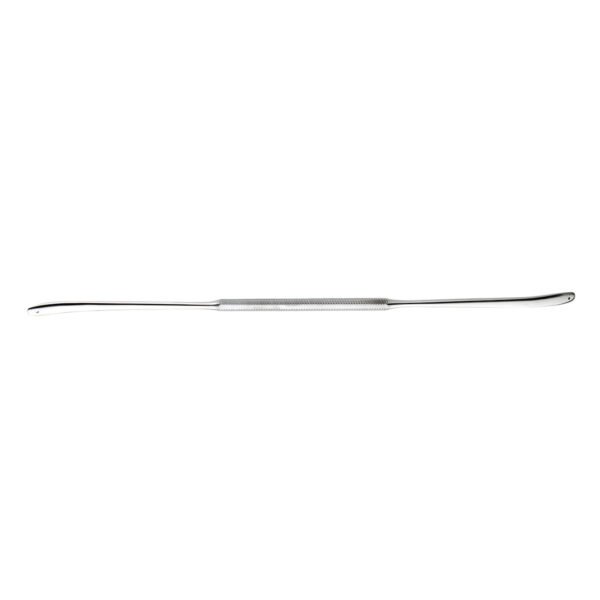
Dissector | NJ Medical Instruments
Original price was: $ 30.$ 20Current price is: $ 20.Surgical Dissectors for Sale - Blunt Tissue Dissectors for General, Abdominal and Thoracic Surgery
Dissection is the act of separating tissue planes - and the instrument used to do it changes the character of the dissection entirely. Sharp dissection with scissors or a scalpel divides tissue by cutting, which is precise and efficient but commits to a path. Blunt dissection with a dissector separates tissue by following natural planes, pushing structures apart rather than dividing them, and allowing the anatomy to guide the instrument rather than the instrument deciding where the boundary is. In most surgical fields, experienced surgeons use both techniques in sequence - sharp dissection to open a plane and blunt dissection to develop it.
The dissector is the instrument for that development phase. Its tip shape - typically a rounded, spatula-like, or tapered blunt profile - allows it to be advanced along fascial planes, between tissue layers, and around anatomical structures without cutting. The amount of force the surgeon applies, and whether they use a sweeping or pushing motion, determines how aggressively the plane is developed, but the instrument itself does not create injury unless technique is poor.
The Dissector in this subcategory at NJ Medical Instruments is manufactured from surgical-grade stainless steel at the company's Sialkot facility, CE-certified, and autoclavable.
What Distinguishes Blunt Dissection from Sharp Dissection - and When Each Applies
The choice between sharp and blunt dissection at any given moment in a procedure reflects the relationship between the target plane and the surrounding structures. Sharp dissection is used where the plane is well-defined and the adjacent structures can be positively identified and avoided - cutting into a tissue layer that you can see clearly. Blunt dissection is used where the anatomy is less clear, where the correct plane is identified by feel rather than vision, or where adjacent structures are close enough to the plane that a cutting instrument would risk them.
In thyroid surgery, for example, the superior thyroid pedicle is approached by sharp dissection when the anatomy is clean, but the delicate tissue plane between the thyroid capsule and the parathyroid glands is developed by blunt dissection to avoid inadvertent parathyroidectomy. In thoracic surgery, the pleural plane is entered sharply and then the lung is separated from chest wall adhesions bluntly. In gynaecological procedures, the bladder is swept off the lower uterine segment using blunt dissection to avoid bladder injury that sharp scissors would risk in a heavily adherent case.
Applications of the Surgical Dissector Across Specialties
General Abdominal Surgery
In open abdominal procedures - colectomy, hepatic resection, pancreatectomy, hernia repair - the dissector develops the tissue planes that expose the operative field before the major resection steps. The retro-peritoneal plane is often developed bluntly by feel; the plane between bowel mesentery and retroperitoneal fat follows the same principle. The dissector's rounded tip allows it to be swept along these planes rapidly once the correct layer is found.
Thoracic Surgery
Adhesion dissection in redo thoracotomy, pleural plane development, and pericardial fat pad dissection all benefit from blunt instrument technique. A dissector in these applications reduces the risk of inadvertent lung parenchyma injury, phrenic nerve damage, or vascular injury that sharp dissection would carry in an adherent field.
Thyroid and Parathyroid Surgery
The capsular plane of the thyroid gland, the parathyroid identification and preservation, and the nerve plane dissection during recurrent laryngeal nerve identification all use blunt dissection technique. The dissector here works in a very confined space with critical structures - the tip profile needs to be fine enough to work in the narrow plane without disturbing the nerve.
Vascular and Retroperitoneal Surgery
Isolating vascular structures from surrounding connective tissue before clamping or anastomosis is typically done by combining sharp incision of the overlying adventitia with blunt development of the circumferential plane around the vessel. The dissector handles this circumferential plane development.
The Surgical Dissector at NJ Medical Instruments
The Dissector available here is a general-purpose blunt surgical dissector in CE-certified surgical-grade stainless steel - autoclavable, reusable, and suited to the tissue plane development applications described above across general, abdominal, thoracic, and other open surgical procedures. For surgical units equipping a standard general surgery tray, a reliable dissector is not a specialist procurement - it is a basic requirement alongside haemostats, retractors, and scissors.
Ordering and Supply
NJ Medical Instruments ships surgical dissectors and instruments worldwide with ISO and CE certification. Bulk pricing is available for general surgery units and distributors. Contact info@njmedicalinstruments.com or WhatsApp +92-333-8733922.