


- Plastic Surgery Instruments
- Electrosurgical Instruments
- Surgical Instruments
- Dental Instruments
- Adenoid Curettes
- Aspirating and Irrigating Instruments
- Blepharoplasty Sets
- Breast Surgery Sets
- Chisels
- Dental Instruments
- Amalgam Pluggers Condensers, Burnishers
- Artery Forceps
- COMPSITE PLACEMENT, PLASTIC FILLING INSTRUMENTS
- ELEVATORS
- Ear Catheters and Excavators
- Ear Forceps
- Ear Hooks
- Ear Scissors and Ear Snares
- Ear Specula & Tuning Forks
- Electrosurgical Instruments
- Bipolar Artery Sealer
- Bipolar Cables
- Bipolar Electrodes
- Conization Electrodes
- Diathermy Instruments
- Electrodes (2.4 mm)
- Electrodes (4.0 mm)
- Electrosurgical Instruments for Gynecology
- ENT Diagnostic
- Conventional Laryngoscopes
- Ear Instruments
- ENT Complete Sets
- ENT Instruments
- Anastomosis Clamps
- Aortic-Aneurysm Clamps
- Carotid Clamps
- Colon Clamps
- Artery and Ligature Clamps
- Artery Forceps
- Artery Forceps and Ligature Clamps
- Bone Cutters & Rongeurs
- Curettes, Raspatories, Elevators etc.
- Blepharoplasty Scissors
- Dissecting Scissors
- Bone Curettes
- Dissectors
- Elevators
- Bone Cutting Forceps
- Bone Holding Forceps
- Bone Rongeurs
- Chisels
- Clamps
- Dissectors & Elevators
- Endoscopic Face & Forehead Lift
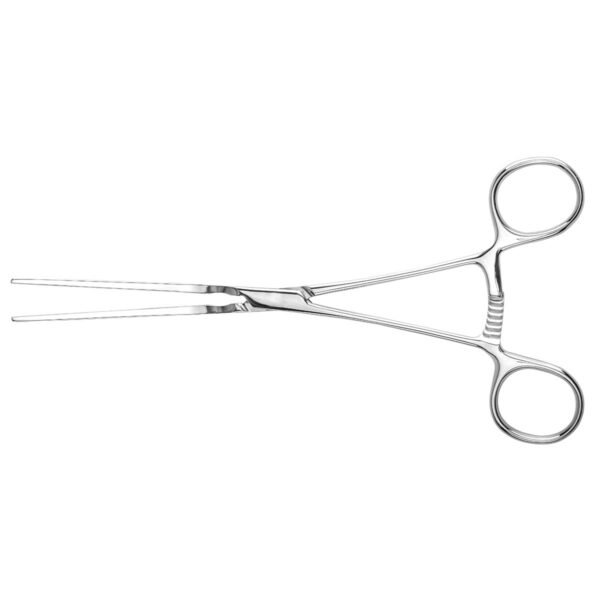
Peripheral Vascular Clamp | NJ Medical Instruments
SKU:
NJM-26578
Original price was: $ 27.$ 20Current price is: $ 20.Peripheral Vascular Clamps for Sale - Temporary Artery Clamps for Reconstructive and Vascular Surgery
Peripheral vascular surgery and reconstructive plastic surgery meet more often than either specialty's textbooks reflect. Free flap reconstruction - the standard of care for complex defects of the head and neck, breast, lower limb, and trunk - involves a microvascular anastomosis at its core. The recipient artery and vein have to be clamped, divided, and reconnected to the flap pedicle. That clamping step is where peripheral vascular clamps earn their place on a plastic surgery instrument tray.
But the use case extends beyond free tissue transfer. Perforator flap dissection often requires temporary proximal control at the source artery while the perforator is raised. Limb replantation involves clamping at multiple levels. Any reconstructive procedure that unexpectedly encounters a vessel injury needs vascular control capabilities immediately available. And for plastic surgeons working in units where a vascular surgeon is not always present, having reliable peripheral vascular clamps on the tray is not a precaution - it's standard preparation.
The peripheral vascular clamp available in this category at NJ Medical Instruments is manufactured from surgical-grade stainless steel at the company's Sialkot facility, CE-certified, and autoclavable.
What Makes a Peripheral Vascular Clamp Different from a Standard Haemostat
The distinction between a haemostat and a vascular clamp comes down to what happens to the vessel after the instrument is removed. A haemostat is designed for terminal control - the vessel will be ligated, cauterised, or clipped. The jaw crushes the lumen closed and the serrations prevent slippage. Endothelial injury from this type of jaw contact is irrelevant because the vessel isn't being preserved.
A peripheral vascular clamp has to stop blood flow temporarily while protecting the vessel wall. When the clamp is removed, the vessel must be patent, free from intimal damage, and capable of resuming normal flow without spasm or thrombosis at the clamp site. These requirements drive every aspect of the clamp's design: the jaw must apply enough compressive force to occlude the lumen without generating enough pressure to cause endothelial disruption or intimal tearing, the jaw surface should be smooth or very finely serrated to distribute pressure evenly, and the ratchet mechanism must allow the surgeon to set the appropriate closure level for the vessel diameter encountered.
Peripheral Artery Clamping in Free Flap Surgery
In the anastomosis phase of free flap reconstruction, both the recipient artery and the flap pedicle artery need to be clamped before division and preparation of the vessel ends. The clamp has to hold without slipping - any movement during the preparation step contaminates the field - but must not damage the vessel wall that will form the anastomosis site. Post-anastomosis patency rates are directly affected by the quality of the vessel preparation, which in turn depends on the quality of the clamping.
Peripheral vessels used as recipient sites in free flap surgery typically range from 1.5 to 4 mm in diameter - the facial artery, superficial temporal artery, internal mammary artery, thoracodorsal artery, and anterior tibial artery being among the most commonly used. A peripheral vascular clamp in the appropriate size range for these vessels needs to be selected and maintained as part of the standard free flap tray.
The Peripheral Vascular Clamp at NJ Medical Instruments
The Peripheral Vascular Clamp available here is a general-purpose peripheral artery and vein clamp suited for the vessel diameter range encountered in reconstructive and peripheral vascular surgery. The jaw design applies controlled compressive force appropriate for temporary occlusion - firm enough to stop flow, calibrated to avoid the crushing injury that haemostats would produce on a vessel being preserved for anastomosis or repair.
The instrument is manufactured from CE-certified surgical-grade stainless steel, fully autoclavable, and reusable across multiple cases. For reconstructive surgery units performing free tissue transfer, this clamp belongs on the standard anastomosis tray alongside microvascular forceps, needle holders, and approximating clamps.
Ordering and Supply
NJ Medical Instruments ships peripheral vascular clamps and plastic surgery instruments worldwide with ISO and CE certification. Bulk pricing is available for reconstructive surgery units, vascular departments, and distributors. Contact info@njmedicalinstruments.com or WhatsApp +92-333-8733922 for wholesale enquiries.