


- Plastic Surgery Instruments
- Electrosurgical Instruments
- Surgical Instruments
- Dental Instruments
- Adenoid Curettes
- Aspirating and Irrigating Instruments
- Blepharoplasty Sets
- Breast Surgery Sets
- Chisels
- Dental Instruments
- Amalgam Pluggers Condensers, Burnishers
- Artery Forceps
- COMPSITE PLACEMENT, PLASTIC FILLING INSTRUMENTS
- ELEVATORS
- Ear Catheters and Excavators
- Ear Forceps
- Ear Hooks
- Ear Scissors and Ear Snares
- Ear Specula & Tuning Forks
- Electrosurgical Instruments
- Bipolar Artery Sealer
- Bipolar Cables
- Bipolar Electrodes
- Conization Electrodes
- Diathermy Instruments
- Electrodes (2.4 mm)
- Electrodes (4.0 mm)
- Electrosurgical Instruments for Gynecology
- ENT Diagnostic
- Conventional Laryngoscopes
- Ear Instruments
- ENT Complete Sets
- ENT Instruments
- Anastomosis Clamps
- Aortic-Aneurysm Clamps
- Carotid Clamps
- Colon Clamps
- Artery and Ligature Clamps
- Artery Forceps
- Artery Forceps and Ligature Clamps
- Bone Cutters & Rongeurs
- Curettes, Raspatories, Elevators etc.
- Blepharoplasty Scissors
- Dissecting Scissors
- Bone Curettes
- Dissectors
- Elevators
- Bone Cutting Forceps
- Bone Holding Forceps
- Bone Rongeurs
- Chisels
- Clamps
- Dissectors & Elevators
- Endoscopic Face & Forehead Lift
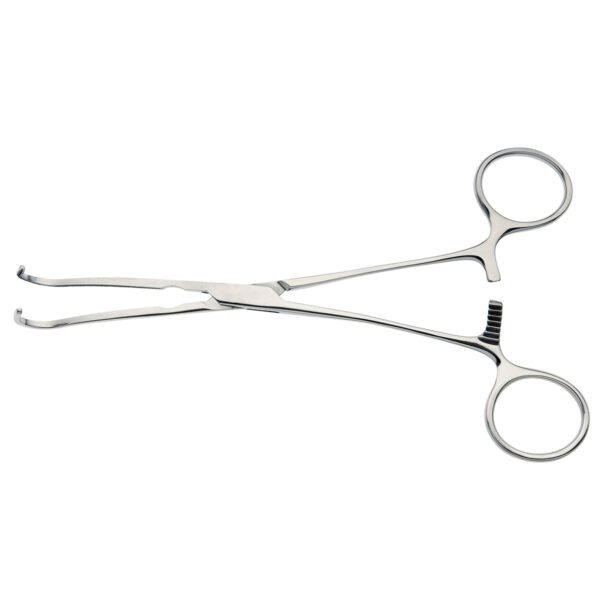
Lambert-kay Aortic Anastomosis Clamp | NJ Medical Instruments
SKU:
NJM-26552
Original price was: $ 27.$ 20Current price is: $ 20.Anastomosis Clamps for Sale - General and Aortic Anastomosis Instruments for Reconstructive Surgery
Anastomosis is the technical heart of both vascular and reconstructive surgery. Whether joining two bowel ends after resection, connecting a prosthetic graft to the aorta, or performing a microvascular anastomosis as part of free tissue transfer, the step where two structures are joined depends on a field that is controlled, isolated, and held in the right position. Anastomosis clamps create that controlled field - occluding flow, stabilising the vessel or structure being joined, and staying out of the way while sutures are placed.
The demands on an anastomosis clamp are distinct from those on a simple haemostat or tissue forceps. It needs to occlude without damaging the tissue that will form the anastomotic junction - because that junction is where healing needs to occur without stricture, leak, or thrombosis. It needs to hold its position without slipping during the critical suturing phase. And it needs to be removable without causing additional injury to the structure it was holding. These requirements produce instruments that look deceptively simple but are calibrated carefully for their specific mechanical function.
The anastomosis clamps in this category at NJ Medical Instruments cover both general and aortic anastomosis applications, manufactured from CE-certified surgical-grade stainless steel at the company's Sialkot facility, and autoclavable.
Two Types of Anastomosis Clamps for Different Surgical Contexts
General Anastomosis Clamp
The Anastomosis Clamp is configured for general anastomosis applications - bowel anastomosis in colorectal and abdominal surgery, vessel isolation in peripheral vascular procedures, and control of pedicle vessels during free flap surgery. The jaw profile distributes compressive force broadly and evenly, avoiding the point pressure concentrations that cause intimal injury or serosal damage. The ratchet mechanism holds the jaw at the set closure level without the surgeon maintaining hand pressure, which frees both hands for suturing.
In reconstructive plastic surgery, this clamp appears as a standard component in the free flap anastomosis setup - applied to the recipient artery or vein to occlude it during preparation of the vessel end before the microscope is brought in. The jaw must be short enough not to obstruct the microsurgical field but adequate to fully occlude the vessel calibre encountered in the recipient site. CE-certified, autoclavable.
Lambert-Kay Aortic Anastomosis Clamp
The Lambert-Kay design is a side-biting or partial-occlusion clamp - its jaws are configured to grasp and exclude a portion of the aortic wall while leaving the central lumen patent for continued flow. This is the instrument used when constructing a prosthetic graft anastomosis to the aorta in a partial-flow technique, or when creating a proximal anastomosis to the aorta for a bypass procedure where completely cross-clamping the aorta is either unnecessary or clinically undesirable.
The partial occlusion technique using a Lambert-Kay-style clamp allows the anastomosis to be performed with ongoing distal perfusion, which reduces the ischaemic time for the territory served by the vessel. In abdominal aortic bypass, renal artery reconstruction, and mesenteric vessel reimplantation, this approach is frequently preferred over complete cross-clamping when anatomy and disease extent permit.
The Lambert-Kay Aortic Anastomosis Clamp available here provides this partial-occlusion capability. The jaw length and curvature suit application to the aortic wall at the anastomosis site, and the jaw surface profile achieves wall occlusion without cutting through an atherosclerotic wall under the compressive force of the ratchet. CE-certified, surgical stainless, autoclavable.
Anastomosis Clamps in Reconstructive Surgery Context
Both instruments appear in the plastic surgery instrument catalogue because reconstructive surgery regularly involves anastomotic work at various scales and tissue types. Free flap breast reconstruction involves microvascular anastomosis at the internal mammary, thoracodorsal, or lateral thoracic vessels. Abdominal wall reconstruction after oncological resection may involve proximity to aortic-level vessels and require the Lambert-Kay's partial-occlusion capability. Lower limb reconstruction and replantation involve peripheral vessel anastomosis at the tibial and femoral levels.
Having anastomosis clamps available as part of the plastic surgery instrument set - rather than borrowing from general surgery or vascular surgery trays - reflects the reality that modern reconstructive plastic surgery operates across these anatomical territories routinely.
Ordering and Supply
NJ Medical Instruments ships anastomosis clamps and surgical instruments worldwide with ISO and CE certification. Bulk pricing is available for reconstructive surgery units and distributors. Contact info@njmedicalinstruments.com or WhatsApp +92-333-8733922 for wholesale enquiries.