


- Plastic Surgery Instruments
- Electrosurgical Instruments
- Surgical Instruments
- Dental Instruments
- Adenoid Curettes
- Aspirating and Irrigating Instruments
- Blepharoplasty Sets
- Breast Surgery Sets
- Chisels
- Dental Instruments
- Amalgam Pluggers Condensers, Burnishers
- Artery Forceps
- COMPSITE PLACEMENT, PLASTIC FILLING INSTRUMENTS
- ELEVATORS
- Ear Catheters and Excavators
- Ear Forceps
- Ear Hooks
- Ear Scissors and Ear Snares
- Ear Specula & Tuning Forks
- Electrosurgical Instruments
- Bipolar Artery Sealer
- Bipolar Cables
- Bipolar Electrodes
- Conization Electrodes
- Diathermy Instruments
- Electrodes (2.4 mm)
- Electrodes (4.0 mm)
- Electrosurgical Instruments for Gynecology
- ENT Diagnostic
- Conventional Laryngoscopes
- Ear Instruments
- ENT Complete Sets
- ENT Instruments
- Anastomosis Clamps
- Aortic-Aneurysm Clamps
- Carotid Clamps
- Colon Clamps
- Artery and Ligature Clamps
- Artery Forceps
- Artery Forceps and Ligature Clamps
- Bone Cutters & Rongeurs
- Curettes, Raspatories, Elevators etc.
- Blepharoplasty Scissors
- Dissecting Scissors
- Bone Curettes
- Dissectors
- Elevators
- Bone Cutting Forceps
- Bone Holding Forceps
- Bone Rongeurs
- Chisels
- Clamps
- Dissectors & Elevators
- Endoscopic Face & Forehead Lift

Ballenger Septum Chisel v-Shaped Edge | NJ Medical Instruments
Original price was: $ 24.$ 19Current price is: $ 19.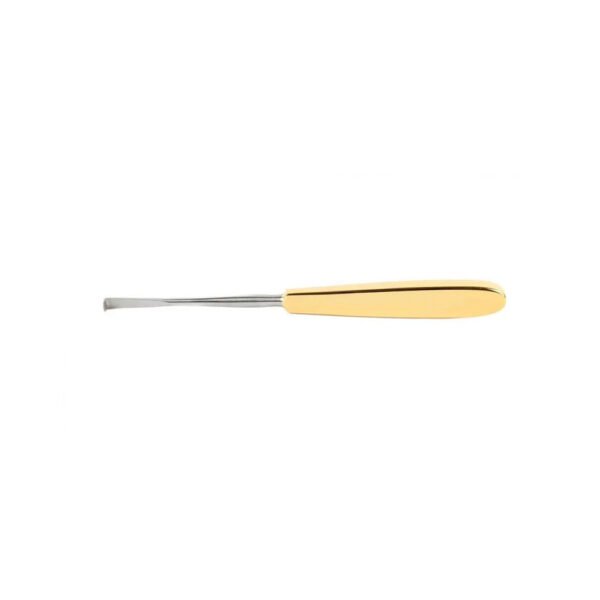
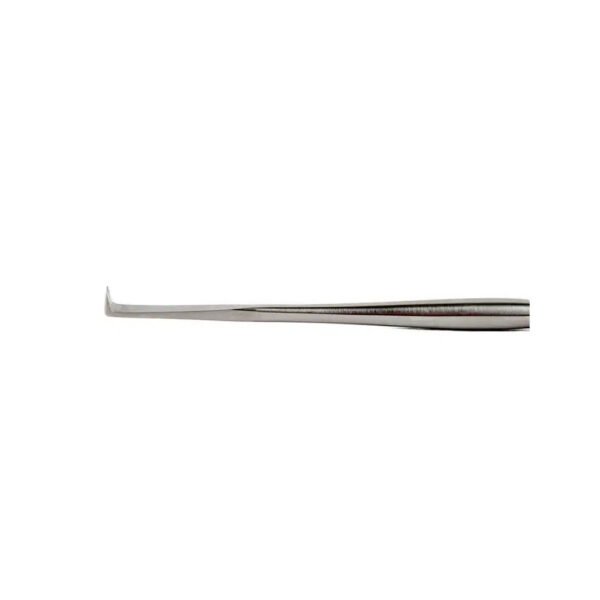
Cakir Nasal Chisel 90 Degree | NJ Medical Instruments
Original price was: $ 40.$ 35Current price is: $ 35.
Cottle Chisel – Curved w/ depth markings | NJ Medical Instruments
SKU:
NJM-1416
Original price was: $ 30.$ 20Current price is: $ 20.
Cottle Chisel – Curved w/ depth markings | NJ Medical Instruments
SKU:
NJM-1417
Original price was: $ 30.$ 20Current price is: $ 20.
Cottle T-Shaped Chisel – Cross Bar Graduated | NJ Medical Instruments
SKU:
NJM-1421
Original price was: $ 32.$ 27Current price is: $ 27.
Fomon Bone Chisel Guarded point | NJ Medical Instruments
SKU:
NJM-1423
Original price was: $ 28.$ 23Current price is: $ 23.
Freer Septum Chisel & Gouge – Straight | NJ Medical Instruments
SKU:
NJM-1425
Original price was: $ 23.$ 18Current price is: $ 18.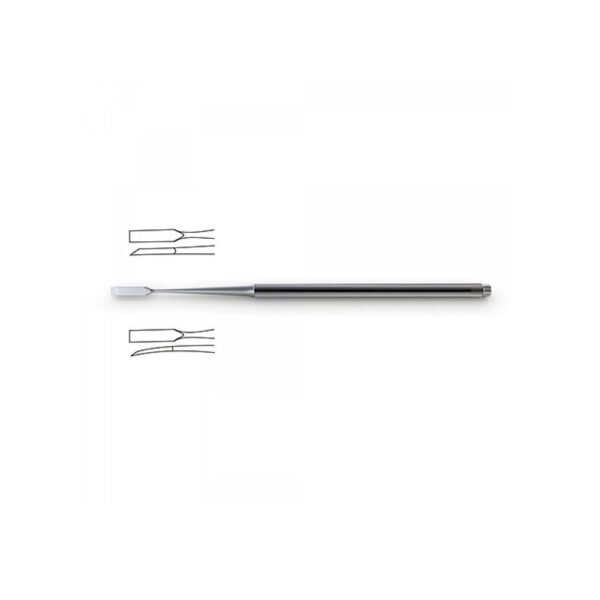
Freer Septum Chisel | NJ Medical Instruments
SKU:
NJM-1424
Original price was: $ 24.$ 19Current price is: $ 19.
McIndoe Chisel – Mushroom head | NJ Medical Instruments
SKU:
NJM-1435
Original price was: $ 33.$ 28Current price is: $ 28.
McIndoe Nasal Chisel | NJ Medical Instruments
SKU:
NJM-1436
Original price was: $ 29.$ 24Current price is: $ 24.
Moberg chisel – Stainless Steel | NJ Medical Instruments
SKU:
NJM-1439
Original price was: $ 29.$ 24Current price is: $ 24.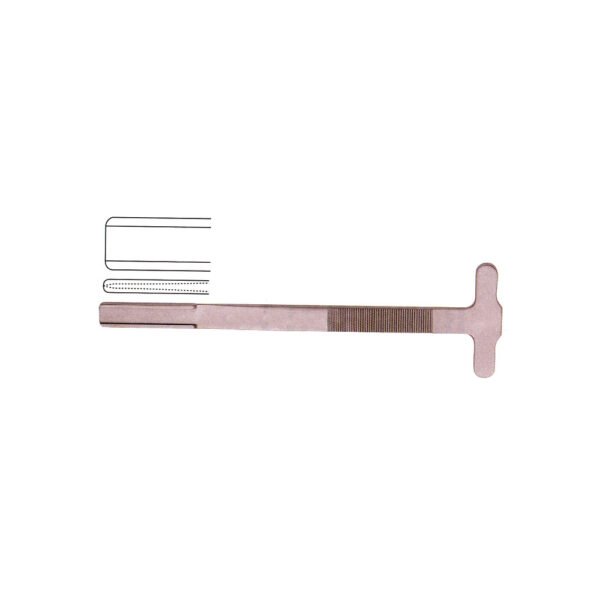
Rubin Edged Bone Chisel T-Shaped | NJ Medical Instruments
Original price was: $ 27.$ 22Current price is: $ 22.Chisels for Rhinoplasty and Plastic Surgery - Septum Chisels, Nasal Bone Chisels and More for Sale
The chisel occupies a specific position in the rhinoplasty tray that no other instrument fully replaces. Osteotomes fracture and redirect bone through wedging action. Rasps and files abrade gradually. The chisel splits bone along a planned line through direct impact, and the precision of that split depends entirely on the quality of the cutting edge, the geometry of the bevel, and how consistently the instrument tracks through the bone under mallet force.
In septoplasty the chisel is used for bony septum division and vomer resection - removing the bony septal spur that deviates into the airway. In rhinoplasty it handles medial osteotomies, dorsal bony hump reduction, and fine bone shaping at the radix and sidewall. These are not interchangeable uses: the bevel angle, blade width, and handle geometry that work well for a dorsal hump reduction are different from what suits a septal V-cut or a controlled nasal bone split. This is why rhinoplasty surgeons with a high case volume tend to carry several chisel patterns rather than relying on a single instrument.
The chisels in this category at NJ Medical Instruments cover the principal patterns used in septoplasty and rhinoplasty - from the Ballenger V-edge septum chisel to the Cottle T-bar and the McIndoe nasal chisel. All are manufactured from surgical-grade stainless steel at the company's Sialkot facility, CE-certified, and autoclavable.
Chisel Bevel Geometry - Why It Determines Where the Cut Goes
A chisel cuts by wedging into bone along its bevel. A straight-bevel chisel (ground on one side only) follows the flat back face as a reference - it tends to track slightly toward the bevelled side under mallet force, which has to be compensated for during osteotomy. A symmetric bevel cuts more predictably along the blade axis. Understanding this helps explain why specific chisel patterns exist for specific cuts.
V-Shaped Bevel for Septal Work
The V-shaped edge on the Ballenger chisel creates a midline cutting point that divides bone symmetrically from the centre rather than splitting from an angled edge. In septal work - particularly making a through-and-through cut across the vomer or dividing a bony ridge at the nasal floor - the V-edge engages the bone centrally and reduces the tendency to deflect laterally during the cut. It's a more controlled cut in dense, irregular septal bone than a standard flat bevel would produce.
The Ballenger Septum Chisel with V-Shaped Edge is the instrument of choice for this specific septal bone application. CE-certified, surgical stainless, autoclavable.
Cottle Pattern Chisels - Two Configurations for Different Applications
The Cottle chisel range reflects Cottle's systematic approach to septal and nasal bone surgery - each instrument in the set is designed for a specific step in a logical operative sequence.
Cottle Chisel - Curved with Depth Markings
The curved blade follows the contour of the nasal septum more naturally than a straight chisel, reducing the contact pressure on the surrounding mucoperichondrium as the instrument advances. The depth markings on the shaft allow the surgeon to monitor penetration visually during the cut, which is particularly useful when working near the skull base superiorly where depth control matters.
The Cottle Chisel - Curved with Depth Markings is appropriate for controlled septal bone cuts with visual depth feedback. CE-certified, autoclavable.
Cottle T-Shaped Chisel - Cross Bar Graduated
The T-bar configuration on the handle changes how the instrument responds to mallet force. The cross-bar gives a wider, more stable impact surface, and the graduated markings provide depth reference during use. This chisel is typically used for the transverse septal cut and for resecting the bony-cartilaginous junction in submucous resection work.
The Cottle T-Shaped Chisel - Cross Bar Graduated is the specific instrument for this cut. CE-certified, autoclavable.
Nasal Bone Chisels for Rhinoplasty
McIndoe Nasal Chisel
Archibald McIndoe's contributions to reconstructive surgery were broad, and the chisel bearing his name has remained in use in rhinoplasty for medial osteotomy and dorsal bone work. The McIndoe pattern has a relatively narrow blade suited for controlled nasal bone cuts without the wider contact area of a general osteotome.
The McIndoe Nasal Chisel is available here in surgical stainless, CE-certified, autoclavable.
Moberg Chisel
The Moberg Chisel in Stainless Steel suits nasal bone and septal work where a clean, controlled split through the bony structure is the goal. The Moberg pattern has a blade profile that allows precise guided placement before the mallet strike, giving the surgeon control over exactly where the fracture initiates. CE-certified, autoclavable.
Ordering and Supply
NJ Medical Instruments ships chisels and rhinoplasty instruments worldwide with ISO and CE certification. Bulk pricing is available for plastic surgery units and distributors. Contact info@njmedicalinstruments.com or WhatsApp +92-333-8733922 for wholesale enquiries.