


- Plastic Surgery Instruments
- Electrosurgical Instruments
- Surgical Instruments
- Dental Instruments
- Adenoid Curettes
- Aspirating and Irrigating Instruments
- Blepharoplasty Sets
- Breast Surgery Sets
- Chisels
- Dental Instruments
- Amalgam Pluggers Condensers, Burnishers
- Artery Forceps
- COMPSITE PLACEMENT, PLASTIC FILLING INSTRUMENTS
- ELEVATORS
- Ear Catheters and Excavators
- Ear Forceps
- Ear Hooks
- Ear Scissors and Ear Snares
- Ear Specula & Tuning Forks
- Electrosurgical Instruments
- Bipolar Artery Sealer
- Bipolar Cables
- Bipolar Electrodes
- Conization Electrodes
- Diathermy Instruments
- Electrodes (2.4 mm)
- Electrodes (4.0 mm)
- Electrosurgical Instruments for Gynecology
- ENT Diagnostic
- Conventional Laryngoscopes
- Ear Instruments
- ENT Complete Sets
- ENT Instruments
- Anastomosis Clamps
- Aortic-Aneurysm Clamps
- Carotid Clamps
- Colon Clamps
- Artery and Ligature Clamps
- Artery Forceps
- Artery Forceps and Ligature Clamps
- Bone Cutters & Rongeurs
- Curettes, Raspatories, Elevators etc.
- Blepharoplasty Scissors
- Dissecting Scissors
- Bone Curettes
- Dissectors
- Elevators
- Bone Cutting Forceps
- Bone Holding Forceps
- Bone Rongeurs
- Chisels
- Clamps
- Dissectors & Elevators
- Endoscopic Face & Forehead Lift
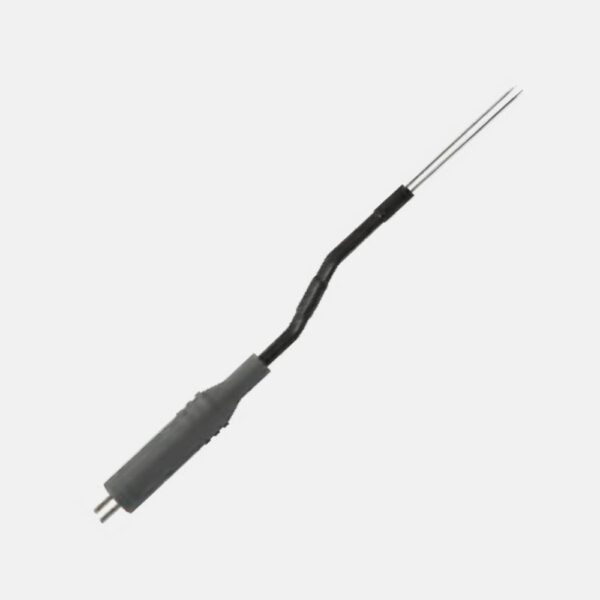
Bi-turbinate Probe 17.5cm | NJ Medical Instruments
SKU:
NJM-1318
Original price was: $ 39.$ 32Current price is: $ 32.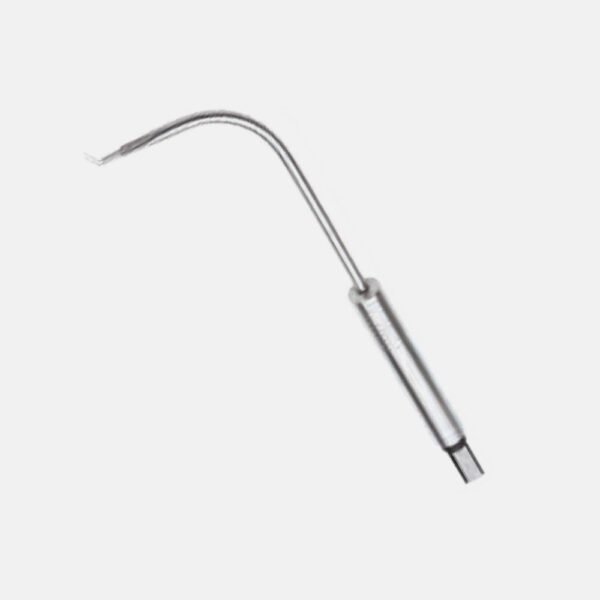
Bipolar Electrodes Angled 90° | NJ Medical Instruments
SKU:
NJM-1317
Original price was: $ 57.$ 48Current price is: $ 48.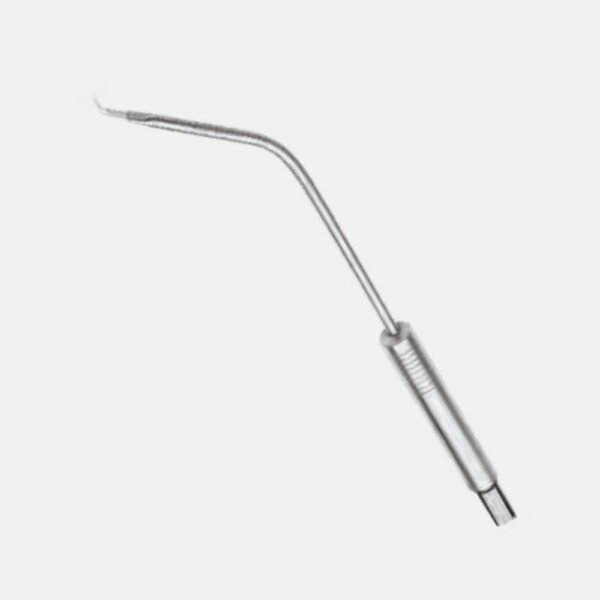
Bipolar Electrodes Angled 45° | NJ Medical Instruments
SKU:
NJM-1316
Original price was: $ 57.$ 48Current price is: $ 48.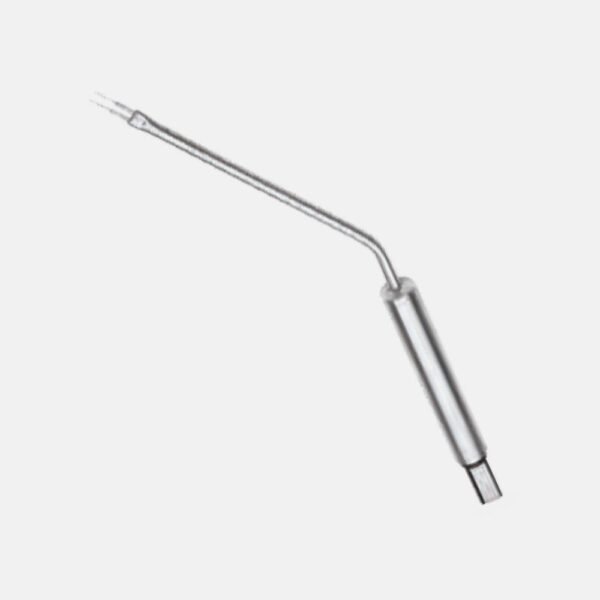
Bipolar Electrodes Angled NJ Medical Instruments
SKU:
NJM-1315
Original price was: $ 57.$ 48Current price is: $ 48.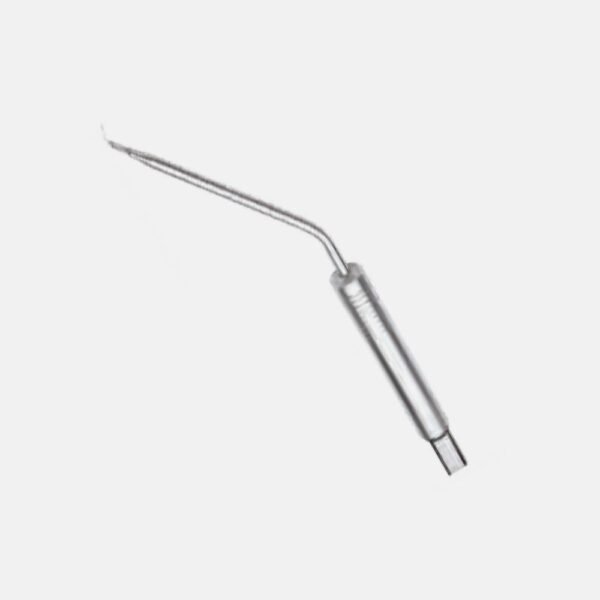
Bipolar Electrodes Angled | NJ Medical Instruments
SKU:
NJM-1314
Original price was: $ 57.$ 48Current price is: $ 48.
Straight Bipolar Electrodes | NJ Medical Instruments
SKU:
NJM-1313
Original price was: $ 57.$ 48Current price is: $ 48.Bipolar Electrodes for Sale - Turbinate Probes, Angled and 90 Degree Bipolar Instruments
Bipolar electrodes are a distinct instrument category from bipolar forceps. Forceps handle tissue - they grasp, hold, and coagulate through clamped structures. Electrodes apply bipolar energy to tissue through a probe tip without the grasping function, which makes them the appropriate tool when the clinical goal is targeted energy delivery to a specific tissue volume rather than vascular haemostasis. The most common applications are turbinate reduction in ENT surgery, submucosal tissue treatment, and specific soft tissue coagulation tasks where a forceps geometry does not match the anatomical access requirement.
The bipolar electrodes in this category at NJ Medical Instruments cover the main configurations used in ENT and general surgical bipolar electrode practice: the turbinate probe for nasal surgery, and angled bipolar electrodes in standard and 90-degree configurations for different access geometries. All are CE-certified and manufactured from surgical-grade stainless steel at the company's Sialkot facility.
Bipolar Electrodes vs Bipolar Forceps - When to Use Each
The distinction is worth being precise about because the two instrument types are sometimes confused in procurement. Bipolar forceps deliver energy between two jaw electrodes and require tissue to be placed between those jaws - the current path runs through the grasped tissue. Bipolar electrodes deliver energy from a probe tip to adjacent tissue, typically with both electrode contacts at the probe tip itself, either as two parallel surfaces or a tip and a concentric ring.
For vessel haemostasis and tissue coaptation, forceps are the appropriate instrument. For volumetric tissue treatment - shrinking turbinate mucosa, treating submucosal tissue without surface excision, or applying controlled bipolar energy to a tissue plane - probe electrodes are better matched to the task. Using forceps for turbinate reduction, for example, requires grasping and tearing that causes more trauma than a probe delivering energy to the submucosal tissue layer without disrupting the mucosa significantly.
Bipolar Turbinate Reduction - What the Bi-Turbinate Probe Does
Inferior turbinate hypertrophy is one of the most common causes of chronic nasal obstruction. Conservative treatment options include medical management, but surgical reduction is frequently required for patients who don't respond. Bipolar turbinate reduction using a probe delivers radiofrequency or bipolar energy to the submucosal tissue, causing controlled thermal damage and subsequent fibrosis and shrinkage of the turbinate bulk without major surface mucosal disruption. Compared to turbinectomy or laser ablation, the bipolar probe approach typically produces less bleeding and a faster recovery, with the mucosal surface remaining largely intact.
The probe has to be inserted into the submucosal plane - this requires a specific probe geometry with a tip that can be introduced at the anterior face of the turbinate and advanced submucosally without tearing through the mucosa. The 17.5 cm shaft length provides adequate reach into the nasal cavity from a comfortable hand position outside the nares.
Angled Electrode Configurations - Access to Difficult Fields
Standard straight electrodes work well in accessible anatomical locations. Where the tissue target is around a corner - behind a bony prominence, in the posterior nasal space, or in a cavity where the direct approach requires the shaft to travel through a corridor that doesn't permit a straight instrument to meet the tissue at the correct angle - angled electrode configurations are needed. The angle redirects the working tip while the shaft remains on the approach axis, allowing energy delivery to tissue that is geometrically inaccessible to a straight instrument.
A 90-degree tip deflection is the most extreme configuration and addresses the most awkward access angles - essentially, tissue that is positioned perpendicular to the approach corridor. This is less frequently needed than a moderate angle, but for certain posterior nasal and deep ENT applications, the 90-degree configuration is the only way to reach the target without changing the approach entirely.
Featured Bipolar Electrodes at NJ Medical Instruments
Bi-Turbinate Probe 17.5 cm
The Bi-Turbinate Probe 17.5 cm is designed for submucosal bipolar turbinate reduction - probe tip geometry suited for submucosal insertion at the inferior turbinate face, 17.5 cm shaft for nasal cavity access, CE-certified. This is the standard instrument for bipolar turbinate reduction procedures in rhinology and ENT practice, used with bipolar generators that output appropriate radiofrequency energy for submucosal tissue treatment.
Bipolar Electrodes Angled
The Bipolar Electrodes Angled provides a moderately angled tip for tissue access at angles that a straight probe cannot efficiently reach. CE-certified, compatible with standard bipolar generator connections. Suited for ENT and general surgical applications where moderate tip deflection is needed for specific anatomical access requirements.
Bipolar Electrodes Angled 90 Degrees
The Bipolar Electrodes Angled 90 Degrees takes the tip deflection to perpendicular - the working tip points directly sideways from the shaft axis. This is the configuration for the most restricted access scenarios in ENT and deep surgical fields where the target tissue is positioned at a right angle to the approach corridor. CE-certified.
Ordering and Supply
NJ Medical Instruments ships bipolar electrodes worldwide, with bulk pricing available for ENT units, hospitals, and distributors. Contact info@njmedicalinstruments.com for wholesale enquiries.