


- Plastic Surgery Instruments
- Electrosurgical Instruments
- Surgical Instruments
- Dental Instruments
- Adenoid Curettes
- Aspirating and Irrigating Instruments
- Blepharoplasty Sets
- Breast Surgery Sets
- Chisels
- Dental Instruments
- Amalgam Pluggers Condensers, Burnishers
- Artery Forceps
- COMPSITE PLACEMENT, PLASTIC FILLING INSTRUMENTS
- ELEVATORS
- Ear Catheters and Excavators
- Ear Forceps
- Ear Hooks
- Ear Scissors and Ear Snares
- Ear Specula & Tuning Forks
- Electrosurgical Instruments
- Bipolar Artery Sealer
- Bipolar Cables
- Bipolar Electrodes
- Conization Electrodes
- Diathermy Instruments
- Electrodes (2.4 mm)
- Electrodes (4.0 mm)
- Electrosurgical Instruments for Gynecology
- ENT Diagnostic
- Conventional Laryngoscopes
- Ear Instruments
- ENT Complete Sets
- ENT Instruments
- Anastomosis Clamps
- Aortic-Aneurysm Clamps
- Carotid Clamps
- Colon Clamps
- Artery and Ligature Clamps
- Artery Forceps
- Artery Forceps and Ligature Clamps
- Bone Cutters & Rongeurs
- Curettes, Raspatories, Elevators etc.
- Blepharoplasty Scissors
- Dissecting Scissors
- Bone Curettes
- Dissectors
- Elevators
- Bone Cutting Forceps
- Bone Holding Forceps
- Bone Rongeurs
- Chisels
- Clamps
- Dissectors & Elevators
- Endoscopic Face & Forehead Lift
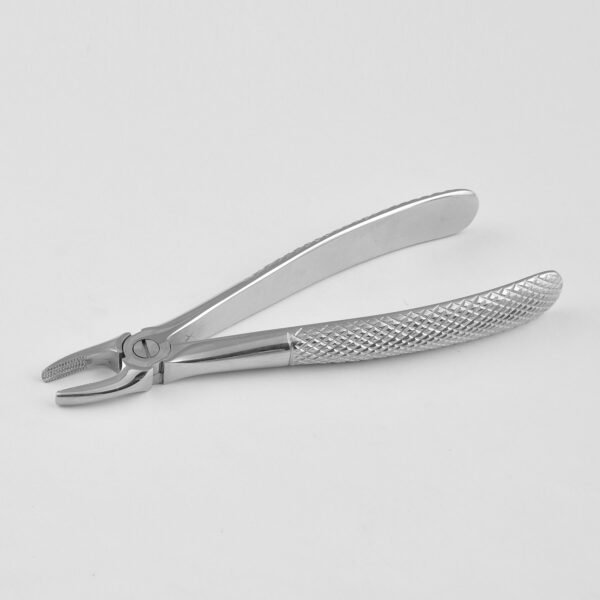
Pedodontic Extraction Forceps For Children | NJ Medical Instruments
SKU:
NJM-26032
Original price was: $ 30.$ 20Current price is: $ 20.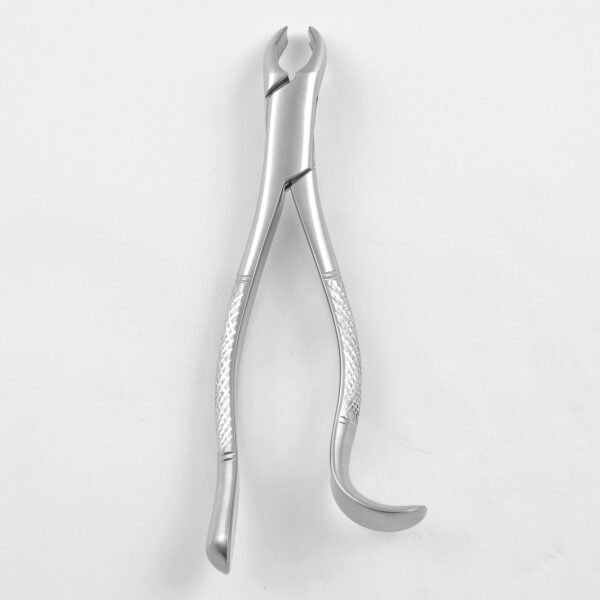
Harris Upper Molars Right Side, American Pattern, Extracting Forceps | NJ Medical Instruments
SKU:
NJM-26031
Original price was: $ 30.$ 20Current price is: $ 20.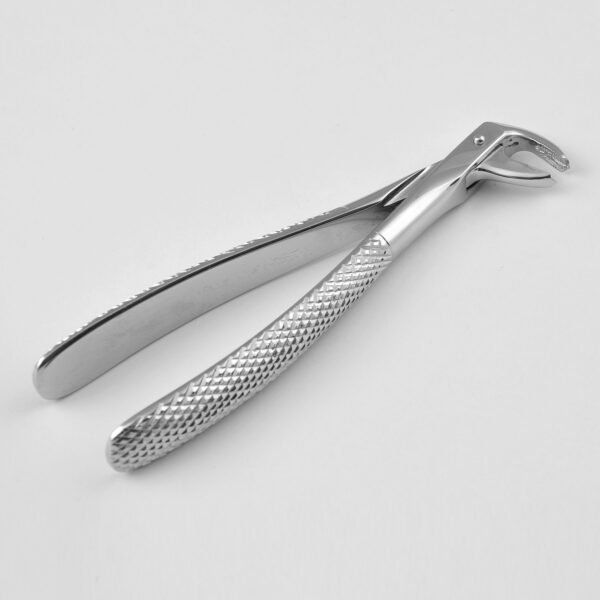
Extraction Forceps English Pattern | NJ Medical Instruments
SKU:
NJM-26030
Original price was: $ 30.$ 20Current price is: $ 20.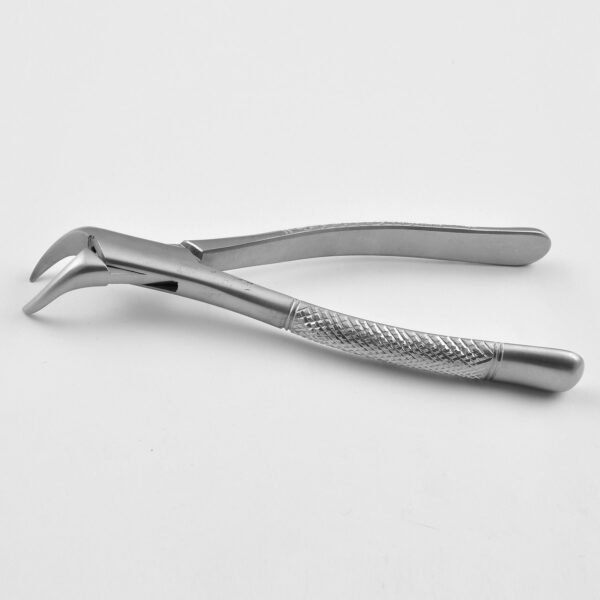
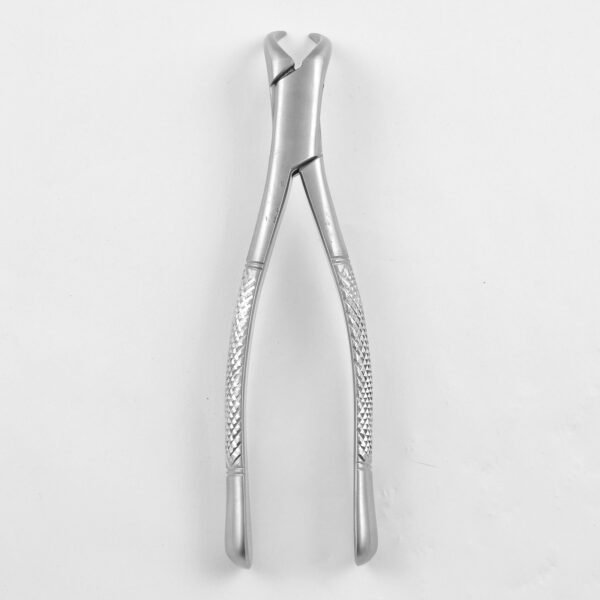
Extracting Forceps Universal Cow Horn No 23 | NJ Medical Instruments
SKU:
NJM-26029
Original price was: $ 30.$ 20Current price is: $ 20.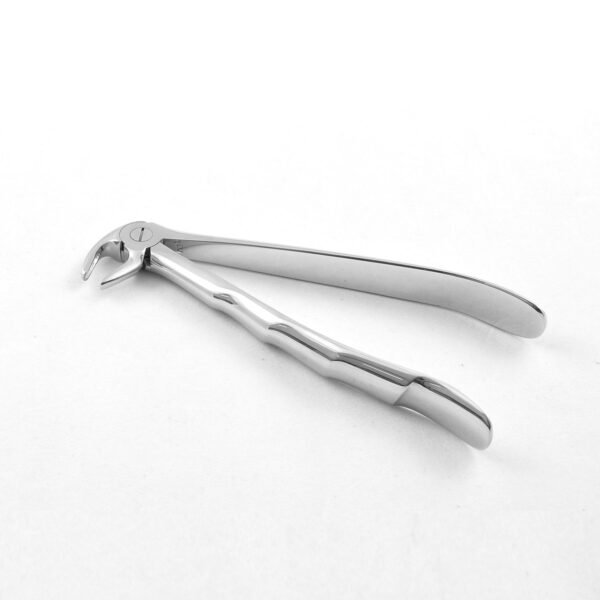
Extracting Forceps Fingerform, Lower Jaws | NJ Medical Instruments
SKU:
NJM-26028
Original price was: $ 30.$ 20Current price is: $ 20.
English Pattern Lowar Molars, Extracting Forceps | NJ Medical Instruments
SKU:
NJM-26027
Original price was: $ 30.$ 20Current price is: $ 20.

53R 1st & 2nd Upper Molar Right | NJ Medical Instruments
SKU:
NJM-26026
Original price was: $ 30.$ 20Current price is: $ 20.
18R Harris 1st & 2nd Upper Molar Right | NJ Medical Instruments
SKU:
NJM-26025
Original price was: $ 30.$ 20Current price is: $ 20.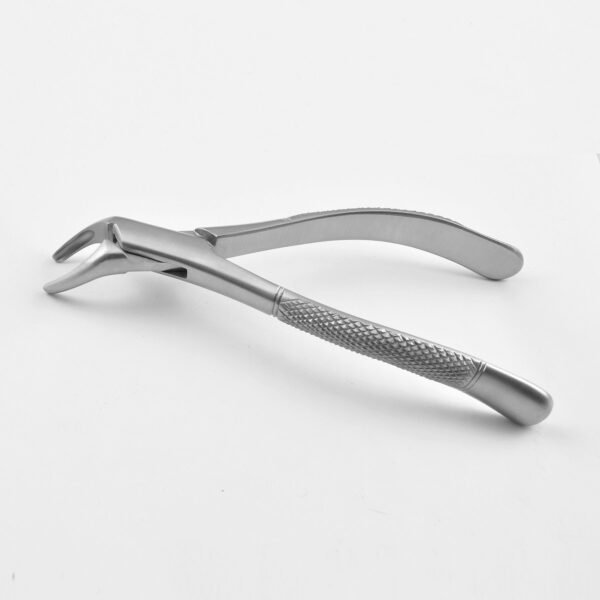

151 Lower Incisors Cuspids Bicuspids | NJ Medical Instruments
SKU:
NJM-26024
Original price was: $ 30.$ 20Current price is: $ 20.
Fig. 18A Upper Molars | NJ Medical Instruments
SKU:
NJM-20013
Original price was: $ 25.$ 20Current price is: $ 20.
Fig. 18 Upper Molars, Left | NJ Medical Instruments
SKU:
NJM-20012
Original price was: $ 25.$ 20Current price is: $ 20.
Fig. 17 Upper Molars, Right | NJ Medical Instruments
SKU:
NJM-20011
Original price was: $ 30.$ 20Current price is: $ 20.Dental Extracting Forceps for Sale - Upper, Lower and Molar Tooth Extraction Instruments
Tooth extraction looks straightforward until the wrong forceps is on the tray. The wrong beak width slips off the root instead of seating at the cemento-enamel junction. The wrong angulation puts the operator's wrist at an awkward angle that reduces control and increases hand fatigue over a full day of extractions. And in a procedure that relies almost entirely on mechanical advantage - the controlled combination of pressure, rotation, and luxation - an instrument that doesn't fit the anatomy properly turns a routine extraction into an unnecessarily difficult one.
Dental extracting forceps are position-specific instruments. The catalogue at NJ Medical Instruments covers the standard range used across general dental and oral surgical practice: upper anterior, upper premolar, upper molar left and right, lower anterior, lower premolar, lower molar, and specialist root forceps. All are manufactured from surgical-grade stainless steel at the company's Sialkot facility, CE-certified, and autoclavable.
How Extraction Forceps Are Specified - and Why It Matters
Understanding the specification system saves time when ordering and avoids having instruments on the tray that don't serve the procedure.
Upper vs Lower Jaw Forceps
Upper jaw forceps have handles and beaks that align to allow downward extraction force - the direction the arm naturally applies when the patient is reclined. The beak angulation is designed to seat on the root surface while the handle remains outside the mouth at a comfortable operating angle. Lower jaw forceps have a different handle-to-beak geometry that accommodates upward extraction movement, and the beaks sit at a more acute angle to the handle to reach lower teeth efficiently.
Using upper jaw forceps on a lower tooth - or vice versa - doesn't just feel awkward; it reduces the seating force you can apply and changes the direction of luxation in a way that can fracture roots rather than remove them cleanly.
Molar Forceps - Left, Right, and the Beak Bifurcation Issue
Upper molar forceps are side-specific because upper molars have three roots arranged in a trifurcation - two buccal roots and one palatal. The beak on the buccal side of a proper upper molar forceps has a pointed projection that engages the bifurcation between the two buccal roots for secure grip. The left and right designations determine which side the pointed beak sits on. Using a right-side forceps on a left upper molar means the bifurcation projection is on the wrong side - the instrument won't seat properly and grip will be unpredictable.
Lower molar forceps are generally universal (no left-right distinction) because lower molars have two roots arranged in a more accessible mesio-distal orientation, and both beaks are designed to seat symmetrically.
English Pattern vs American Pattern Forceps
The two main design traditions in extracting forceps differ primarily in handle style. English pattern forceps have a longer handle with a slight curve and are held with the thumb inside the handle ring - a grip that suits a rotational extraction motion. American pattern forceps have a shorter, wider handle held without a ring grip, which some operators find gives better control during vertical extraction movements. Neither is universally superior; it comes down to training background and personal technique. Most practices carry both patterns for different practitioners and procedural preferences.
Featured Extracting Forceps at NJ Medical Instruments
English Pattern Lower Molars Extracting Forceps
The English Pattern Lower Molars Extracting Forceps follows the classic English handle design - longer grip, thumb-ring hold, suited to the rotational technique most commonly taught in UK-trained and Commonwealth dental schools. The beaks are configured for lower molar anatomy: broad enough to engage the furcation area, with a beak spread that seats firmly at the CEJ without slipping onto crown enamel. Surgical-grade stainless steel, CE-certified.
Extracting Forcep - General Pattern
The Extracting Forcep in the general range is a versatile addition for anterior and premolar work - a straightforward, well-balanced instrument suited to routine single-rooted extractions where anatomy is uncomplicated and the procedure is primarily about efficient luxation and controlled removal.
Fig. 18 Upper Molars, Left
The Fig. 18 Upper Molars Left is the standard upper left molar forceps, with the pointed buccal beak projection on the correct side for engaging the upper left first and second molar bifurcation. Fig. 18 is one of the most frequently requested upper molar patterns - it pairs with Fig. 17 for the right side and between the two instruments covers the full upper molar quadrant.
Ordering and Supply
NJ Medical Instruments supplies individual instruments and bulk orders to dental practices, oral surgery units, dental schools, and distributors worldwide. ISO and CE certification documentation is available on request. For wholesale pricing or custom specifications, contact info@njmedicalinstruments.com or via WhatsApp at +92-333-8733922.