





Backhaus Towel Forceps, Standard, 13NJM, CVD Tips | NJ Medical Instruments
SKU:
NJM-S1011
Original price was: $ 30.$ 20Current price is: $ 20.

Metzenbaum-Fino Scissors, Straight | NJ Medical Instruments
SKU:
NJM-S1010
Original price was: $ 30.$ 20Current price is: $ 20.

Crown Scissors, 4.5″ Straight | NJ Medical Instruments
SKU:
NJM-S1009
Original price was: $ 30.$ 20Current price is: $ 20.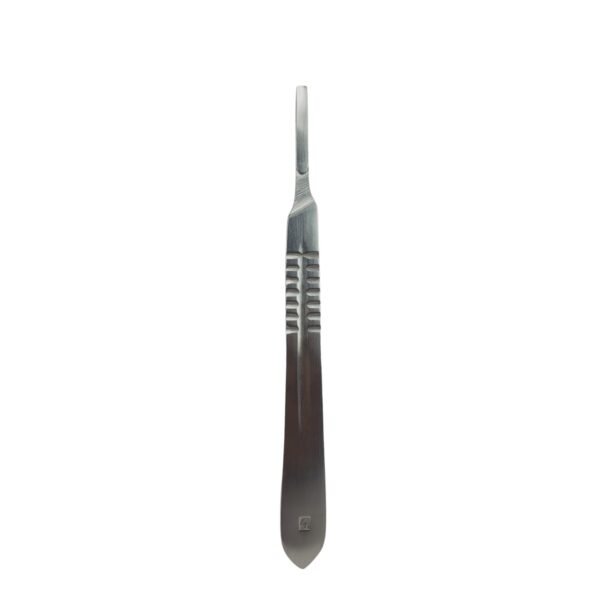
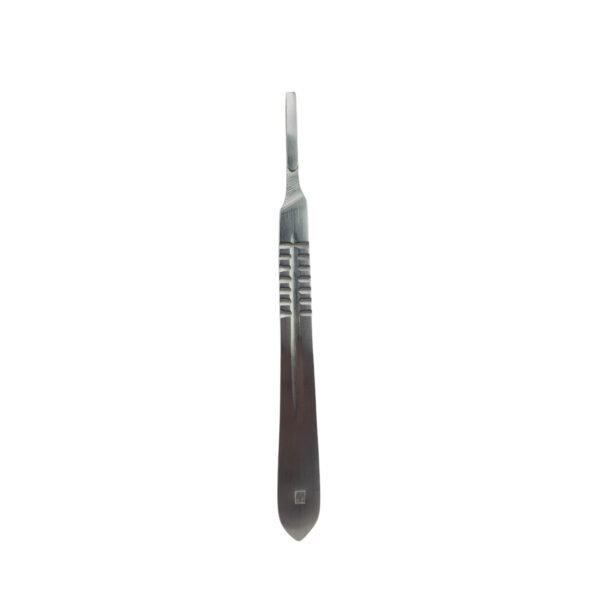
Scalpel Handle #4 | NJ Medical Instruments
SKU:
NJM-S1007
Original price was: $ 30.$ 20Current price is: $ 20.

Sponge Holding Forceps 9.5″ Straight Smooth Jaws | NJ Medical Instruments
SKU:
NJM-S1006
Original price was: $ 30.$ 20Current price is: $ 20.

Kelly Hemostat Forceps Straight | NJ Medical Instruments
SKU:
NJM-S1005
Original price was: $ 30.$ 20Current price is: $ 20.

Hemostatic Mosquito Needle Holder | NJ Medical Instruments
SKU:
NJM-S1004
Original price was: $ 30.$ 20Current price is: $ 20.

Scalpel Handle #3 | NJ Medical Instruments
SKU:
NJM-S1003
Original price was: $ 30.$ 20Current price is: $ 20.General Surgical Instruments for Sale - Scissors, Forceps, Hooks and More
Every surgical procedure, regardless of specialty, depends on a core set of general instruments that appear in tray after tray across different OR contexts. Scissors for dissection and tissue cutting, forceps for tissue handling, retractors and hooks for exposure - these are the workhorses of surgery. They don't attract the attention that specialty instruments do, but they're in use from incision to closure, and their quality shapes the experience of every procedure.
The general surgical instruments in this category at NJ Medical Instruments cover that core range: operating scissors, skin hooks, tissue forceps, and additional instruments suited to soft tissue and open surgical work across multiple specialties. All are manufactured from surgical-grade stainless steel at the company's Sialkot facility, CE-certified, and autoclavable.
The Instruments Every Surgical Tray Needs
General surgical instruments are named and designed with specific biomechanical purposes in mind. Understanding what separates one scissors pattern from another, or why a particular forceps design suits certain tissue better, helps procurement decisions make more clinical sense.
Operating Scissors - Cutting Geometry and Blade Configuration
Surgical scissors come in a wider range of configurations than most people outside the OR appreciate. Blade length, tip shape (sharp-sharp, sharp-blunt, blunt-blunt), straight vs curved shaft, and cutting edge serration all change what the instrument does and where it performs best. Deaver-pattern operating scissors have a longer, more angled blade that gives access in deeper operative fields without the handle obstructing the surgeon's line of sight. They cut with a shearing action well-suited to dense connective tissue and fascial layers where shorter scissors would require repositioning.
The Deaver Operating Medical Scissors available here follow this classic design in surgical-grade stainless steel. The blade geometry and hinge quality hold up to repeated autoclave cycles - hinge loosening after sterilisation is one of the most common failure points in lower-quality scissors, and it creates a scissors that no longer cuts cleanly but instead pushes tissue aside. These are built to maintain their action.
Skin Hooks - Retraction without Crushing
The distinction between a skin hook and a handheld retractor is not just size - it's the tissue response to each. Retractors press against tissue with a broad surface; skin hooks engage the dermis or subcutaneous layer at a point and lift, allowing the wound edge to follow the hook without the compression and ischaemia that blade retractors can produce. For procedures where wound edge perfusion matters - plastic and reconstructive surgery, skin excisions, fine wound closures - a skin hook is the better choice for flap elevation and exposure.
The 3 Pronged Skin Hook distributes the lifting force across three tines rather than one, which reduces the chance of the hook tearing through thin or fragile tissue during retraction. Three-prong hooks are particularly useful for wound edge retraction in skin graft harvesting, excision closures, and any procedure where a single-tine hook would create a focal point of pressure that the tissue can't sustain. Surgical-grade steel, CE-certified.
Tissue Forceps - Grip Pattern and Jaw Design
Tissue forceps are one of those instruments where the jaw design genuinely changes the outcome. Toothed forceps grip securely but penetrate the tissue - appropriate for skin and denser structures, inappropriate for bowel or parenchymal organs. Smooth jaw forceps grip by friction alone - safer for delicate tissue but more likely to slip under tension. The Russian model sits in an interesting middle position: its broad, serrated circular tip grip gives secure hold on tissue with less penetration than a standard toothed design, making it a popular choice in abdominal and gynaecological surgery for handling peritoneum, omentum, and softer visceral structures.
The Russian Model Tissue Forceps here follow the classic design with the characteristic wide-fenestrated jaw tip. The grip is secure enough for tissue traction without the point trauma of standard tissue forceps, and the handle length and balance suit both open abdominal work and laparoscopic-assist procedures. CE-certified, surgical stainless steel, autoclavable.
Why NJ Medical Instruments for General Surgical Supplies
NJ Medical Instruments has manufactured and supplied surgical instruments from Sialkot since 1990. Sialkot's instrument manufacturing tradition runs deep - it's one of the world's established hubs for precision surgical tooling - and NJ Medical instruments reflect that background with documented quality inspection before dispatch and ISO and CE certification across the range. The company supplies individual practitioners, hospitals, and wholesale distributors worldwide.
For bulk orders, custom specifications, or wholesale pricing, contact the team at info@njmedicalinstruments.com or via WhatsApp at +92-333-8733922.