


- Plastic Surgery Instruments
- Electrosurgical Instruments
- Surgical Instruments
- Dental Instruments
- Adenoid Curettes
- Aspirating and Irrigating Instruments
- Blepharoplasty Sets
- Breast Surgery Sets
- Chisels
- Dental Instruments
- Amalgam Pluggers Condensers, Burnishers
- Artery Forceps
- COMPSITE PLACEMENT, PLASTIC FILLING INSTRUMENTS
- ELEVATORS
- Ear Catheters and Excavators
- Ear Forceps
- Ear Hooks
- Ear Scissors and Ear Snares
- Ear Specula & Tuning Forks
- Electrosurgical Instruments
- Bipolar Artery Sealer
- Bipolar Cables
- Bipolar Electrodes
- Conization Electrodes
- Diathermy Instruments
- Electrodes (2.4 mm)
- Electrodes (4.0 mm)
- Electrosurgical Instruments for Gynecology
- ENT Diagnostic
- Conventional Laryngoscopes
- Ear Instruments
- ENT Complete Sets
- ENT Instruments
- Anastomosis Clamps
- Aortic-Aneurysm Clamps
- Carotid Clamps
- Colon Clamps
- Artery and Ligature Clamps
- Artery Forceps
- Artery Forceps and Ligature Clamps
- Bone Cutters & Rongeurs
- Curettes, Raspatories, Elevators etc.
- Blepharoplasty Scissors
- Dissecting Scissors
- Bone Curettes
- Dissectors
- Elevators
- Bone Cutting Forceps
- Bone Holding Forceps
- Bone Rongeurs
- Chisels
- Clamps
- Dissectors & Elevators
- Endoscopic Face & Forehead Lift


Composite Placement | NJ Medical Instruments
SKU:
NJM-20945
Original price was: $ 30.$ 20Current price is: $ 20.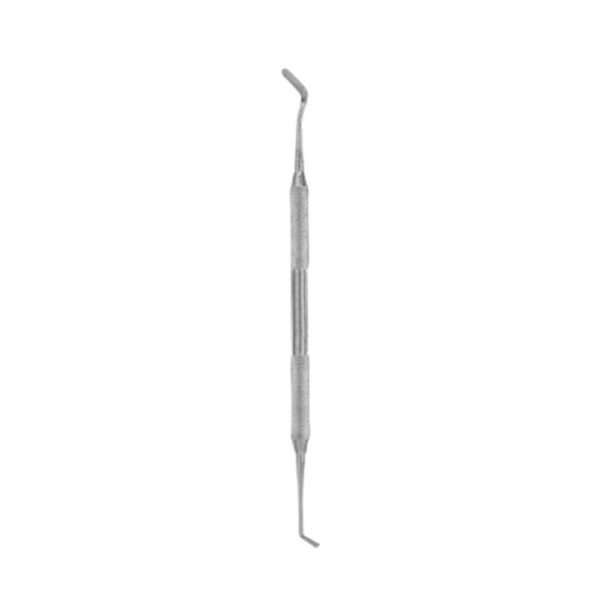
Composite Placement | NJ Medical Instruments
SKU:
NJM-20944
Original price was: $ 30.$ 20Current price is: $ 20.
Composite Placement | NJ Medical Instruments
SKU:
NJM-20943
Original price was: $ 30.$ 20Current price is: $ 20.
Composite Placement | NJ Medical Instruments
SKU:
NJM-20942
Original price was: $ 30.$ 20Current price is: $ 20.
Composite Placement | NJ Medical Instruments
SKU:
NJM-20941
Original price was: $ 30.$ 20Current price is: $ 20.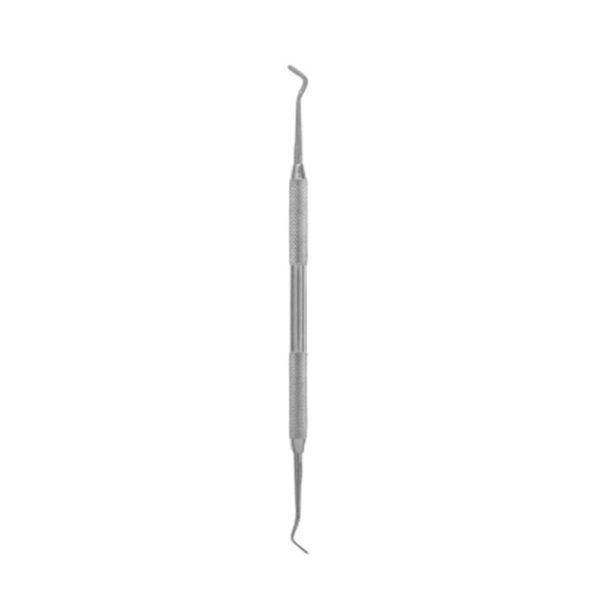
Composite Placement | NJ Medical Instruments
SKU:
NJM-20940
Original price was: $ 30.$ 20Current price is: $ 20.Composite Placement and Plastic Filling Instruments - Professional Dental Tools for Sale
Composite resin restorations are deceptively technique-sensitive. The material behaves well when it's handled correctly - placed in manageable increments, adapted properly to the cavity walls, contoured before curing, and finished without dragging. When the instruments are the problem, every one of those steps gets harder. A composite placement instrument that sticks pulls the uncured resin out of position. One that's too rigid for the geometry of the cavity leaves voids at the margins. One with a poorly finished working end tears rather than glides through the material.
Composite placement instruments and plastic filling tools are not instruments that get talked about much compared to scalers or extraction forceps, but they're in use multiple times a day in any restorative practice - and the difference between a well-made instrument and a cheap one is noticed every single time.
What Composite Placement Instruments Actually Do
The category covers a group of related tools - composite condensers, placement spatulas, interproximal carvers, and ball-tipped or paddle-ended instruments - each addressing a specific stage or geometry in resin placement.
Placement and Condensing
The first job after dispensing composite from the syringe is getting it into the cavity preparation in the right position and at the right volume. Placement spatulas have a flat or slightly curved working tip that picks up material from the pad or compile tip and delivers it to the cavity. The surface finish on the tip matters here - any micro-roughness causes the uncured resin to stick and string, which pulls previously placed material out of position when you withdraw the instrument. Good composite placement tools have a smooth, polished working surface that releases cleanly.
Condensers follow placement, packing the material into corners and against the cavity walls to eliminate voids. Unlike amalgam condensers, composite condensers need to be used more gently because resin doesn't flow like amalgam under pressure - it deforms, and over-condensing changes the increment geometry in ways that affect polymerisation depth. A well-weighted condenser with the right tip diameter makes incremental placement faster and more predictable.
Carving and Contouring Before Cure
Before curing, uncured composite can be shaped - and this is when the anatomy of the restoration is established. Interproximal carvers and ball-ended instruments define the contact area, marginal ridges, and occlusal anatomy in the window before the light is applied. This is less work than carving amalgam post-set, but only if the instruments are responsive. Stiffer, heavier instruments are harder to use with subtlety in this stage. The ideal tool for pre-cure contouring has a lighter feel and a fine working end that adapts to the surfaces without dragging bulk material around.
Non-Stick Surfaces and Material Compatibility
There is ongoing debate about the best surface treatment for composite instruments - titanium-nitride coating, PTFE-coated options, and highly polished uncoated stainless all have their advocates. The practical reality is that polished surgical-grade stainless steel, maintained properly and replaced before the surface finish degrades, performs reliably throughout its service life. The instruments available here are manufactured from CE-certified surgical steel with working surfaces finished to reduce material adhesion during placement.
Products Available in This Category
Composite Placement Instrument - Option 4
The Composite Placement instrument (variant 4) from NJ Medical Instruments is a stainless steel placement tool designed for resin composite and plastic filling procedures. Autoclavable, CE-certified, manufactured at the company's Sialkot facility to surgical instrument standards. The working tip geometry suits incremental placement in posterior cavities as well as anterior Class III and IV restorations.
Composite Placement Instrument - Option 3
The Composite Placement instrument (variant 3) offers a different working end configuration within the same quality standard - surgical-grade steel, smooth tip finish, autoclavable. Having more than one tip geometry in the tray is practical for clinicians who handle a range of cavity classes, since anterior and posterior preparations call for different instrument angulations and tip profiles.
Ordering and Supply
NJ Medical Instruments manufactures and supplies dental and surgical instruments directly from Sialkot, with ISO and CE certification across the range. Individual instruments and bulk orders both ship worldwide. For wholesale enquiries or custom specifications, contact info@njmedicalinstruments.com.