


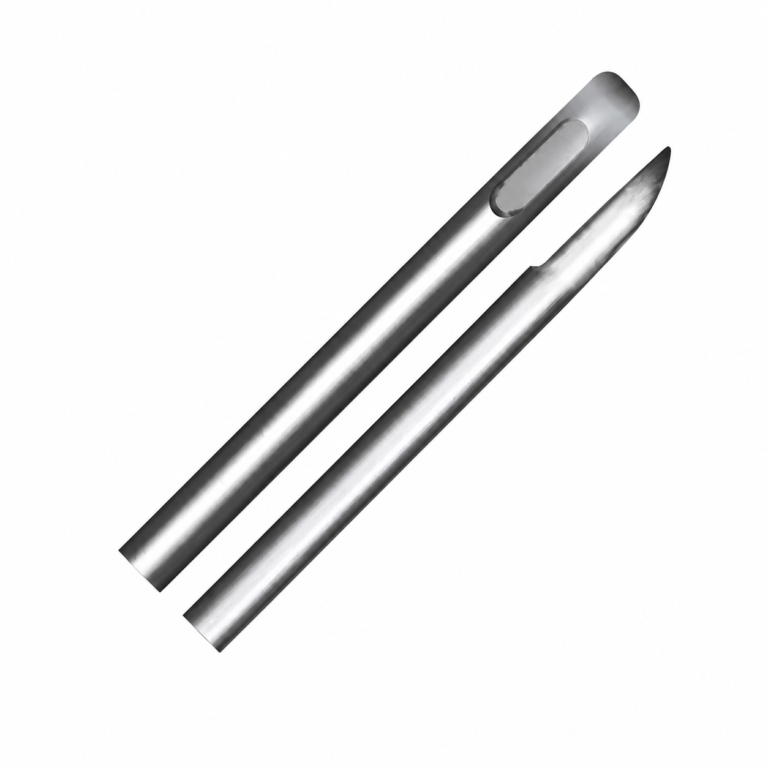
Field Flap | NJ Medical Instruments
In stock
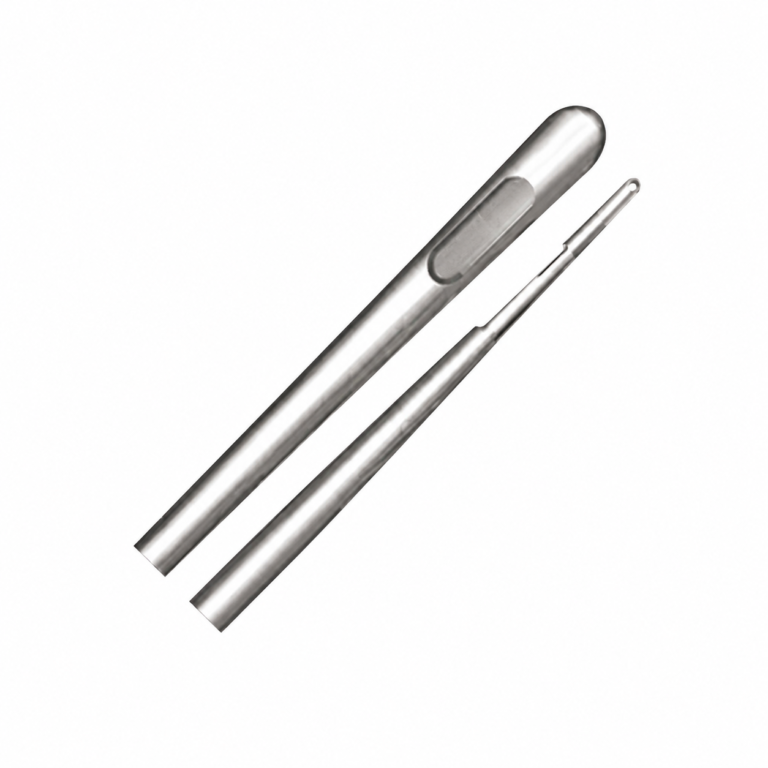
Flap | NJ Medical Instruments
In stock
V-Dissector | NJ Medical Instruments
In stock
Specialty Cannulas: When the Standard Shapes Do Not Fit the Job
This category exists for the cannulas whose shape was decided by a specific problem rather than by a general principle. The standard families — harvesting, infiltration, general suction — cover work where the requirement can be described in terms of collecting, delivering or aspirating. Specialty patterns begin where some other constraint dominates: an approach that is not straight, an area too small for a standard shaft, a task needing two functions in one instrument, or a working action a conventional side port cannot produce. Selecting from this group means starting with the constraint, not the category name.
Curved and angled shafts
A straight shaft can only work along the line it is introduced on. Curved and angled patterns follow a contour or reach around a structure, so the working portion can be brought parallel to a surface that the entry point does not face. The curve also changes handling — force applied at the handle no longer travels straight to the tip, so a curved cannula requires a different sense of where the working end actually is, and that is worth accounting for when introducing one for the first time.
Sub-millimetre and fine-gauge patterns
Below a certain diameter, cannulas stop being smaller versions of standard ones and become their own class. Flow through a tube falls steeply as the bore narrows, so very fine cannulas move material far more slowly for the same pressure and are used where precision, not throughput, is the objective. They also flex more readily, which at fine scale translates directly into placement error — so shaft rigidity becomes a leading specification rather than an afterthought.
Dual-function and combination designs
Some patterns combine two roles in one instrument — delivering and aspirating through separate channels, or providing more than one port arrangement along a single shaft. The advantage is fewer instrument changes and fewer entries. The cost is a larger cross-section and a more complex internal geometry, which has consequences for reprocessing: any instrument with more than one internal channel needs both channels reachable, and that should be confirmed before it enters routine use.
Task-specific tips and port geometries
Beyond the standard blunt and bullet forms, specialty patterns use spatulated, flattened, spoon-shaped and other profiles designed for a particular action against tissue. Port geometry varies just as widely — slots instead of round holes, apertures set at an angle, single large openings placed away from the tip. In each case the shape encodes an intent, which is why these are ordered by pattern name or reference number rather than by dimension. A cannula described only as a diameter and a length has not been specified at all in this category.
Which specialty cannula do you need?
| Constraint | Feature | Trade-off | Notes |
|---|---|---|---|
| Approach is not straight | Curved or angled shaft | Different handling feel | Working portion brought parallel to the surface |
| Very small area | Fine or sub-millimetre gauge | Much slower flow | Shaft rigidity becomes critical |
| Two functions needed | Dual-channel design | Larger cross-section | Confirm both channels can be reprocessed |
| Specific action on tissue | Spatulated or shaped tip | Narrow applicability | Order by pattern name, not dimensions |
| Non-standard flow behaviour | Slots or angled apertures | Not interchangeable | Geometry encodes the intended action |
Related cannulas in this range
- Liposuction Cannulas & Accessories — the wider cannula range
- General Suction Cannulas — standard aspiration patterns
- Harvester Cannulas — aperture patterns for collection
- Infiltration Cannulas — even delivery along a working length
- Cannula Hubs & Connections — handles, hubs and fittings
Wholesale, OEM and private-label supply
NJ Medical Instruments manufactures specialty cannulas to specification in Sialkot, Pakistan, supplying single instruments through this shop and custom patterns in bulk to hospitals, plastic surgery and aesthetic clinics, and distributors. Because this category is defined by non-standard requirements, it is the part of our range where OEM work is most common — send a drawing, a sample or a description of the constraint and we will produce to it. Shaft curvature, gauge, port geometry, tip profile, channel configuration, hub type, marking and private-label packaging are all specifiable. Email info@njmedicalinstruments.com or message +92-333-8733922.
Frequently asked questions
What counts as a specialty cannula?
Any pattern whose shape was determined by a specific constraint rather than a general function — a non-straight approach, an area too small for a standard shaft, a need for two functions in one instrument, or an action a conventional side port cannot produce. Start from the constraint rather than the category name.
Why order by pattern name instead of dimensions?
Because in this category the geometry encodes the intent. Two cannulas with identical diameter and length can have entirely different tip profiles and port arrangements and be unsuitable for each other's tasks. A specification of only a bore and a length has not really specified anything here.
Do fine-gauge cannulas just work more slowly?
They move material considerably more slowly — flow falls steeply as bore narrows — but the more important difference is flex. At fine gauges a small deflection becomes a large proportional placement error, so shaft rigidity moves from a detail to a leading specification.
Are dual-channel cannulas worth it?
They save instrument changes and entries, which is a real benefit. The costs are a larger cross-section and a more complex interior — and any instrument with two internal channels needs both to be reachable during reprocessing. Confirm that before adopting one into routine use.
What are your specialty cannulas made from?
Surgical-grade stainless steel, with ports, tips and hub connections finished and inspected before dispatch, and shaft temper controlled so fine or curved shafts hold their intended geometry. Both reusable and single-use options exist — specify which you need, or ask for the material specification of a pattern.
Can you manufacture to our own design?
Yes, and this is the category where we do it most. Send a drawing, a sample, or simply a description of the constraint you are working around, together with quantities, and we will quote. Custom curvatures, gauges, port geometries, tip profiles, channel configurations, hubs, laser marking and private-label packaging are all available.