


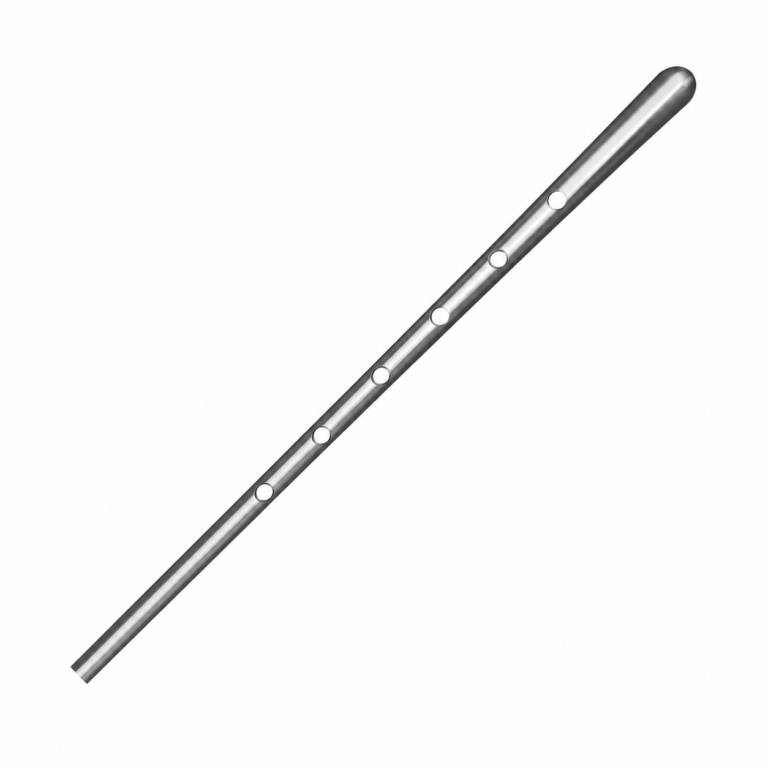
Facelift Infiltration Cannula | NJ Medical Instruments
In stock
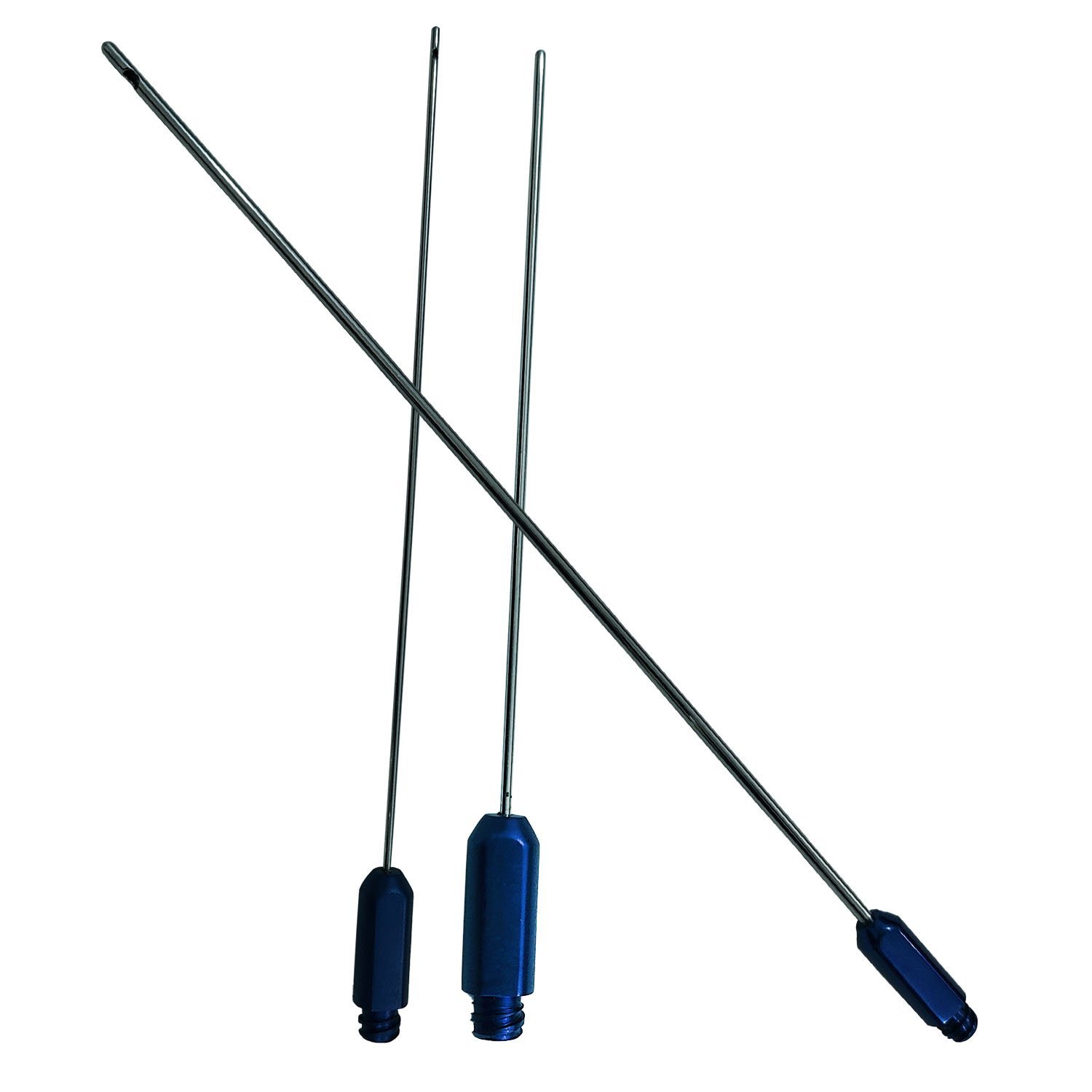
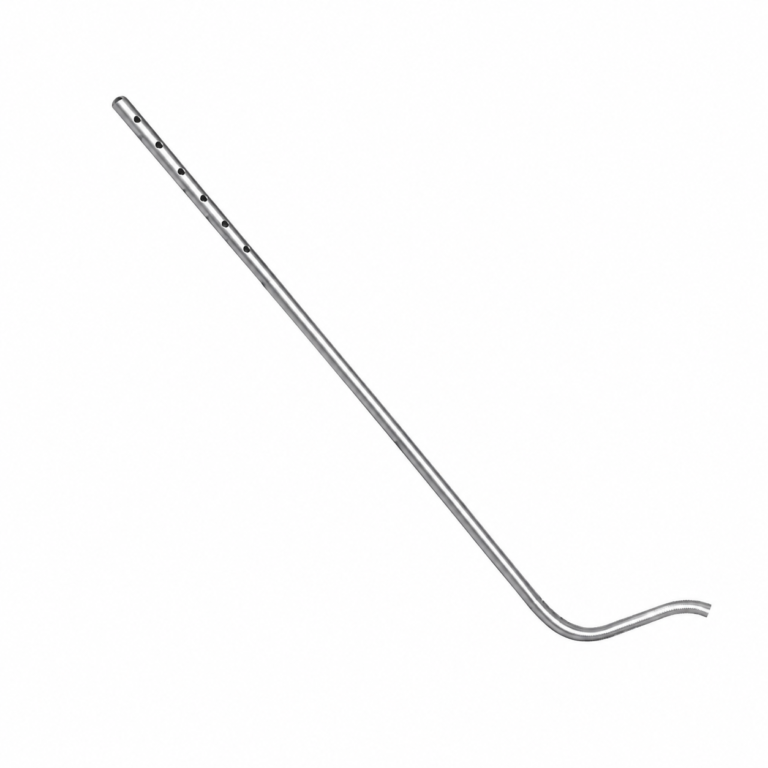
Tumescent Bayonet Infiltrator Cannula | NJ Medical Instruments
In stock
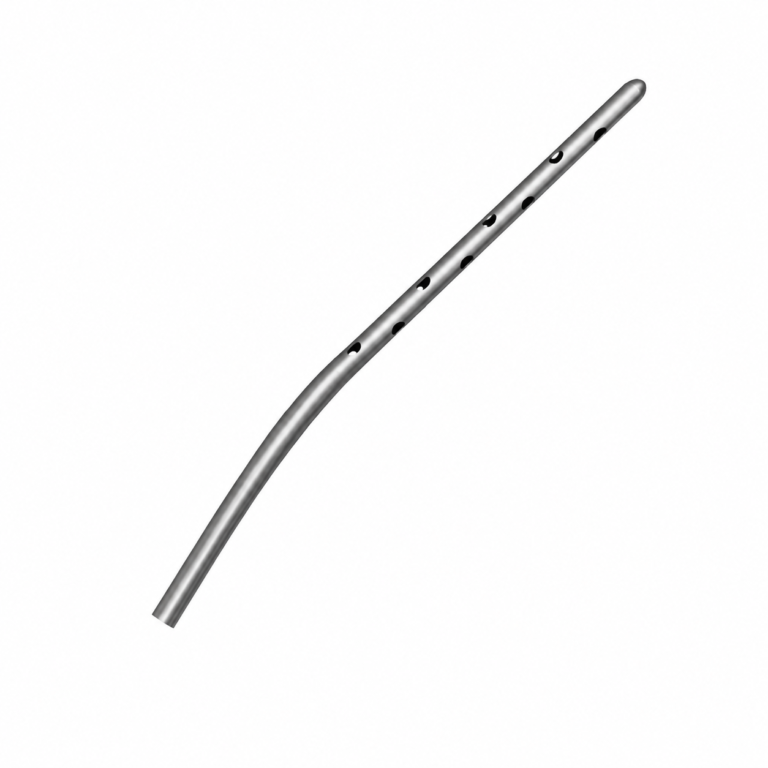
Tumescent Infiltrator Angled Cannula | NJ Medical Instruments
In stock
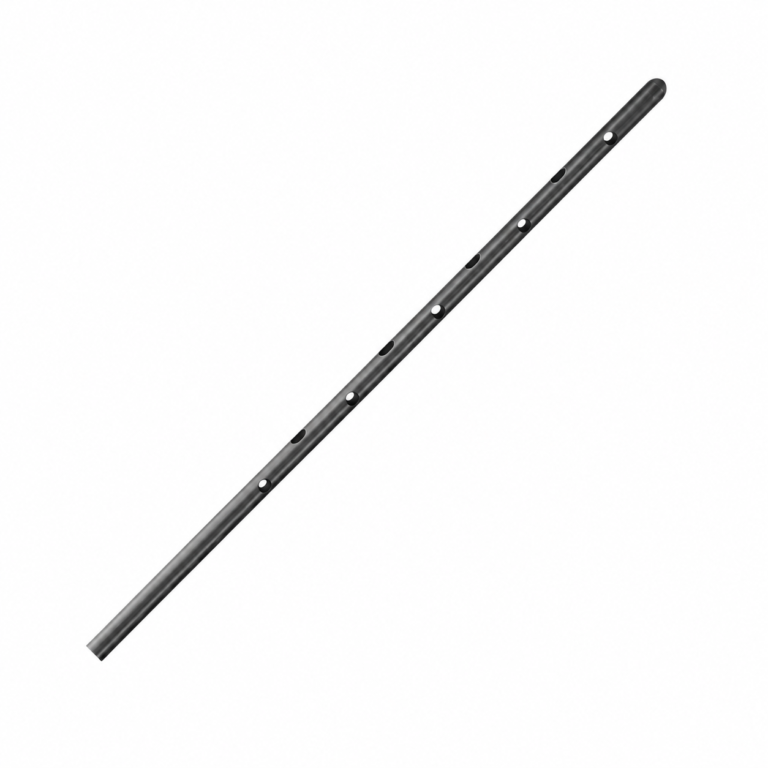
Tumescent Infiltrator Cannula
In stock
Infiltration Cannulas: Spreading Fluid Evenly Instead of Delivering It Somewhere
An infiltration cannula has the opposite job to every other cannula in this range — fluid travels outward through it rather than tissue travelling in — and the design problem that creates is evenness. A tube with one opening delivers everything at one point. A tube with many openings does not automatically deliver equally through all of them, because fluid, like suction, follows the easiest path. Getting an even spread along the working length is what these cannulas are engineered for, and it is why port pattern rather than bore size is the specification that matters most.
Why the ports nearest the hub tend to win
Pressure inside the cannula drops along its length as fluid escapes through each opening. Without design compensation, the earliest ports discharge disproportionately and the distal end delivers noticeably less. Manufacturers address this by varying port size along the shaft, by spacing openings unevenly, or by restricting the earlier ports so pressure is preserved further down. When a cannula is described as giving even distribution, this is the problem being solved — and it is worth asking how, because the approaches differ.
Port count and spacing across the working length
More ports spread delivery over more points and reduce the volume leaving any single opening, which lowers the local force of each stream. Fewer, larger ports deliver faster with more concentrated flow at each point. Spacing determines how much of the shaft is actually delivering: a cannula with ports clustered near the tip behaves almost like a single-point instrument regardless of how many it has.
Blunt tips and travelling along a plane
These cannulas are advanced through tissue before and during delivery, so the tip is closed and rounded to separate rather than divide as it travels. All delivery therefore happens through the side ports. As with harvesting patterns, the tip governs how the instrument moves and the ports govern what it does — two independent choices that are often conflated in product listings.
Bore, length and the effort of delivery
Bore diameter sets how much fluid can move for a given pressure. A bore that is too narrow for the intended volume requires sustained force at the syringe or pump and makes smooth, controlled delivery harder; an unnecessarily wide bore is bulkier to introduce than the task requires. Length is chosen so the whole intended area can be covered without repositioning the entry more often than necessary — the practical constraint being how far the working portion can reach while the hand stays in a controllable position.
Which infiltration cannula do you need?
| Priority | Port pattern | Bore | Notes |
|---|---|---|---|
| Even spread along the length | Many ports, compensated sizing | Medium | Ask how distal delivery is maintained |
| Faster delivery | Fewer, larger ports | Wider | More concentrated flow at each point |
| Gentle local delivery | Many small ports | Medium | Lower force from each individual stream |
| Broad area coverage | Ports spread along a long active span | Medium to wide | Fewer entry repositionings |
| Confined or fine work | Short active length | Fine | Control where a long span cannot be used |
Related cannulas in this range
- Liposuction Cannulas & Accessories — the full range this category sits within
- Harvester Cannulas — aperture patterns for collection
- General Suction Cannulas — general aspiration patterns
- Cannula Hubs & Connections — handles, hubs and fittings
- Plastic Surgery Instruments — the wider plastic surgery range
Wholesale, OEM and private-label supply
NJ Medical Instruments manufactures infiltration cannulas in Sialkot, Pakistan, supplying single instruments through this shop and graded sets in bulk to hospitals, plastic surgery and aesthetic clinics, and distributors. As the manufacturer we produce to specification — bore and shaft length, port size, count and spacing, distribution compensation along the shaft, tip form, hub and connection type, marking and private-label packaging. For volume pricing or an OEM quotation, email info@njmedicalinstruments.com or message +92-333-8733922.
Frequently asked questions
How is an infiltration cannula different from a suction cannula?
Direction of flow, and everything that follows from it. Fluid moves outward through an infiltration cannula, so the design problem is achieving even delivery along the shaft rather than efficient collection into it. Port patterns that work well for aspiration are not automatically right for delivery.
Why doesn't fluid come out equally from all the ports?
Because pressure inside the cannula falls along its length as fluid escapes, so the ports nearest the hub discharge more unless the design compensates. Makers address this by grading port sizes, spacing openings unevenly, or restricting earlier ports to preserve pressure further along.
More ports or fewer, larger ones?
More ports spread delivery across more points and reduce the force of each individual stream. Fewer, larger ports deliver faster with more concentrated flow. Also check spacing — ports clustered near the tip make a multi-port cannula behave much like a single-point one.
What bore should I choose?
Wide enough that the intended volume moves without sustained force at the syringe, since fighting a narrow bore makes controlled delivery harder. But no wider than needed, as a larger shaft is bulkier to introduce than the task requires.
What are your infiltration cannulas made from?
They are manufactured from surgical-grade stainless steel, with ports finished and the shaft and hub connection inspected before dispatch. Both reusable and single-use options exist across this range — specify which you need, or ask for the material specification of a particular pattern.
Can I order a custom port pattern or a graded set?
Yes. As an OEM manufacturer we supply retail quantities through this shop and bulk orders direct from the factory, including graded sets across bores and lengths. Custom port sizes, counts, spacing and distribution compensation, tip forms, hubs, laser marking and private-label packaging are available. Send your specification and quantity for a quotation.