


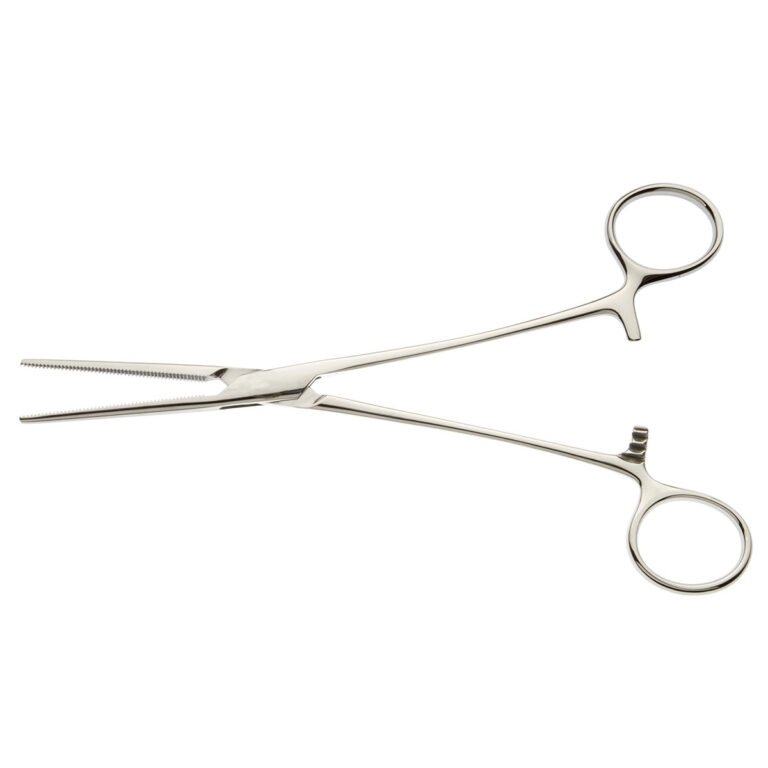
Rochester-péan Delicate Artery Forceps | NJ Medical Instruments
In stock
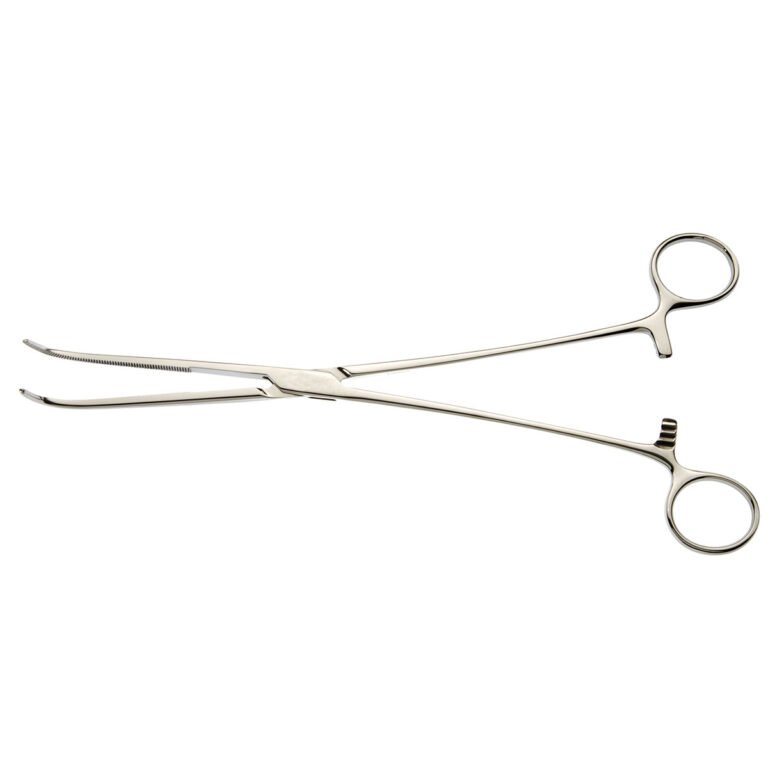
Sawtell Artery Forceps | NJ Medical Instruments
In stock
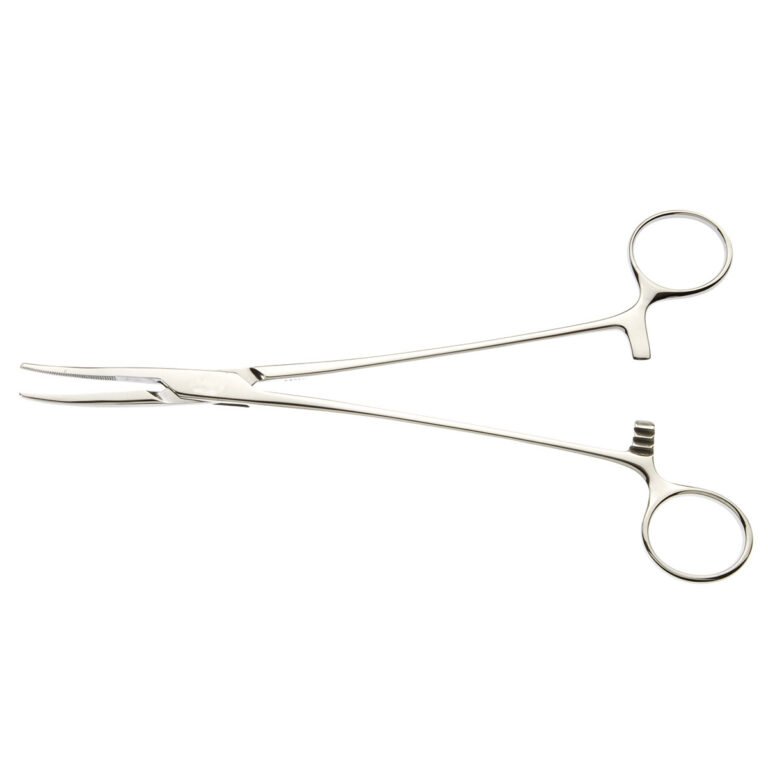
Schnidt Artery Forceps | NJ Medical Instruments
In stock
Artery Forceps & Ligature Clamps: Mosquito, Crile, Kelly & Kocher
Artery forceps — also called haemostats or haemostatic forceps — clamp a bleeding vessel shut so it can be tied off or coagulated. A ratchet in the handle holds the jaws locked under constant pressure, so once the forceps are applied the surgeon can let go and move on. The serrations across the jaws stop the vessel slipping out. Which pattern you reach for depends on the size of the vessel and how much surrounding tissue you can afford to crush: fine mosquito forceps for small vessels in delicate tissue, heavy Kocher clamps for tough, slippery structures. NJ Medical Instruments manufactures the full range in surgical-grade stainless steel, straight and curved, supplied worldwide direct from the factory for individual purchase and for bulk, wholesale, and OEM/private-label supply. For a full pattern-by-pattern breakdown, see our artery forceps and ligature clamps guide.Traumatic vs atraumatic jaws
The practical division is between forceps that grip hard and forceps that grip gently. Traumatic patterns such as Kocher carry interlocking teeth at the tip and hold tough or slippery tissue securely — at the cost of crushing what they hold, so they are used on tissue that is being removed or tied off. Atraumatic patterns have finer serrations and no teeth, holding vessels firmly enough to stop flow without destroying the vessel wall, which matters when the vessel has to stay viable.The main patterns
Mosquito (Halsted) forceps are the smallest, with fine tips for small vessels in delicate tissue. Crile forceps are slightly larger with serrations along the full jaw. Kelly forceps are serrated only on the distal half, so the proximal jaw stays clear. Rochester-Pean are heavier for larger vessels, and Kocher (Oschner) add 1x2 teeth for the firmest grip. Mixter forceps have right-angled tips for passing ligatures behind a vessel.Types of artery forceps
The types of artery forceps in common use are separated by three things: the length and taper of the jaw, whether the serrations run the full jaw or only part of it, and whether the tip carries teeth. Everything else — the box joint, the ratchet, the ring handles — is broadly shared across the family. Because the patterns are eponyms named after the surgeons who specified them, the name tells you the geometry once you know the family, which is why the pattern name matters more when ordering than the length does.
| Pattern | Jaw | Typical length | Best suited to |
|---|---|---|---|
| Halstead Mosquito | Fine, fully serrated, delicate taper | 10–12.5 cm | The smallest vessels, where a standard jaw takes too much surrounding tissue |
| Crile | Fully serrated along the whole jaw | 14–16 cm | General haemostasis on small to medium vessels |
| Kelly | Serrated on the distal half only | 14–16 cm | Medium vessels where the proximal jaw should not grip |
| Rochester-Pean | Fully serrated, heavier and broader | 16–24 cm | Larger vessels and bulkier pedicles |
| Kocher (Ochsner) | Fully serrated with 1×2 teeth at the tip | 14–24 cm | Tough tissue that must not slip — deliberately traumatic |
| Spencer Wells | Fully serrated, straight or curved | 13–20 cm | General-purpose haemostasis; the common UK pattern |
| Rochester-Carmalt | Longitudinal serrations with cross-hatched tip | 16–24 cm | Vascular pedicles, where the grooves reduce slipping |
| Mixter | Right-angled fine jaw | 18–28 cm | Passing behind a vessel to place a tie around it |
| Adson | Fine, delicate, often 1×2 teeth | 12–18 cm | Superficial and precise work near the surface |
Straight jaws are placed on points the surgeon can approach directly. Curved jaws let the tip reach around and beneath a structure and lift the handles clear, which is why a tie is easier to pass around a curved forceps — and why curved patterns dominate wherever the vessel is going to be ligated rather than simply held.
Parts of an artery forceps and what each one does
Every pattern above shares the same five components, and each one governs a different part of the instrument’s behaviour. The tips do the finding, placed on a bleeding point often by feel as much as by sight. The jaws do the holding, and their serration direction is transverse rather than longitudinal — ridges run across the jaw so they resist the vessel being pulled out along its axis, which is exactly the force applied when a ligature is drawn around and tightened. The box joint carries that load in shear, and play developing there is what makes an old forceps slip long before the jaws themselves look worn. The shanks set reach and how far the handles project into the field. The ratchet holds the closure without attention — and releases it. That release matters more than it appears to: the instrument is removed while a knot is being tightened, so a ratchet that lets go with a jolt moves the tip at the moment the ligature is least secure.
Which artery forceps do you need?
| Pattern | Jaw | Best for |
|---|---|---|
| Mosquito (Halsted) | Fine, fully serrated | Small vessels, delicate tissue |
| Crile | Fully serrated | General haemostasis |
| Kelly | Serrated distal half only | Clamping with a clear proximal jaw |
| Rochester-Pean | Heavy, fully serrated | Larger vessels & pedicles |
| Kocher (Oschner) | Serrated + 1x2 teeth | Tough, slippery tissue |
| Mixter (right angle) | Right-angled tip | Passing ligatures behind vessels |
Explore related surgical instruments
- Artery Forceps Buying Guide — full pattern comparison
- Surgical Scissors & Bone Cutters & Rongeurs
- Clamps including vascular and intestinal patterns
- All Surgical Instruments
Bulk, wholesale & OEM supply
As a direct manufacturer, NJ Medical Instruments supplies artery forceps and ligature clamps in bulk and wholesale quantities to hospitals, surgical centres, and distributors, and produces OEM / private-label instruments to custom specifications and laser marking. Contact us by email at info@njmedicalinstruments.com or by WhatsApp for volume pricing — no minimum-order barriers, no middlemen.Frequently asked questions
What are artery forceps used for?
Artery forceps clamp a bleeding vessel shut so it can be tied off or coagulated. A ratchet locks the jaws closed under constant pressure, so the surgeon can apply the forceps and release their grip while the vessel stays clamped.What is the difference between mosquito and Crile forceps?
Mosquito (Halsted) forceps are the smaller and finer of the two, used on small vessels in delicate tissue. Crile forceps are slightly larger and heavier for general haemostasis. Both are serrated along the full length of the jaw.What is the difference between Kelly and Crile forceps?
The serrations. Crile forceps are serrated along the entire jaw, while Kelly forceps are serrated only on the distal half, leaving the proximal portion smooth. Kelly forceps are also generally slightly larger.What is a Kocher forceps used for?
Kocher forceps have longitudinal serrations ending in 1x2 interlocking teeth, giving the firmest grip on tough or slippery tissue such as fascia. Because they crush what they hold, they are used on tissue that will be removed or tied off.What are Mixter forceps used for?
Mixter forceps have a right-angled tip that allows the surgeon to pass around and behind a vessel or duct, so a ligature can be drawn through and tied before the structure is divided.Do you supply artery forceps in bulk or for OEM / private label?
Yes. As a direct manufacturer we supply all artery forceps and ligature clamps in bulk and wholesale quantities and offer OEM / private-label production to custom specifications. Contact us by email or WhatsApp for volume pricing.How many types of artery forceps are there?
There is no fixed number, because patterns are eponyms rather than a standardised series, but nine cover the great majority of surgical use: Halstead mosquito, Crile, Kelly, Rochester-Pean, Kocher, Spencer Wells, Rochester-Carmalt, Mixter and Adson. They differ mainly in jaw length, how far the serrations extend along the jaw, and whether the tip carries teeth.