


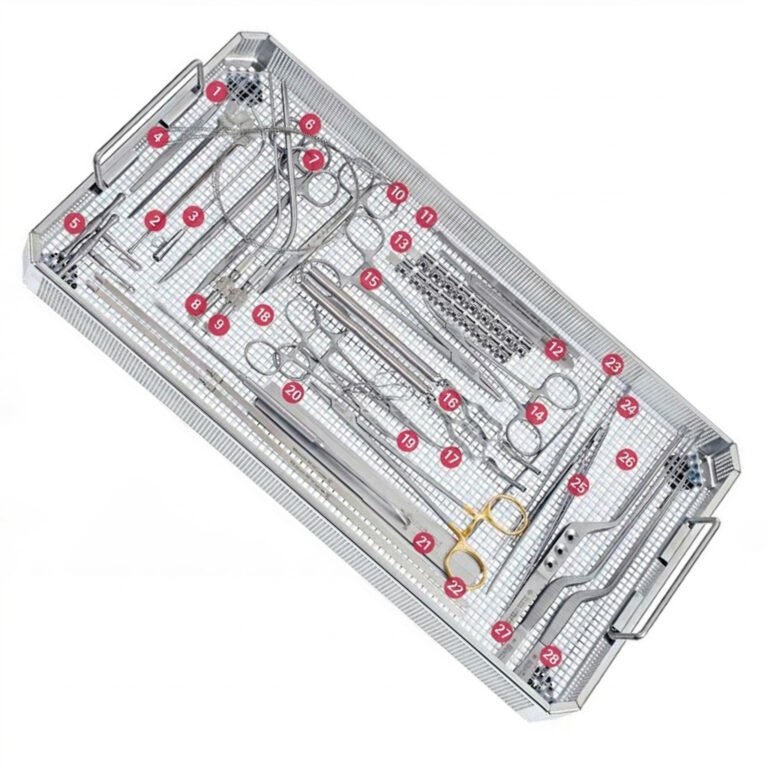
Cranial Neurosurgery Set | NJ Medical Instruments
In stock
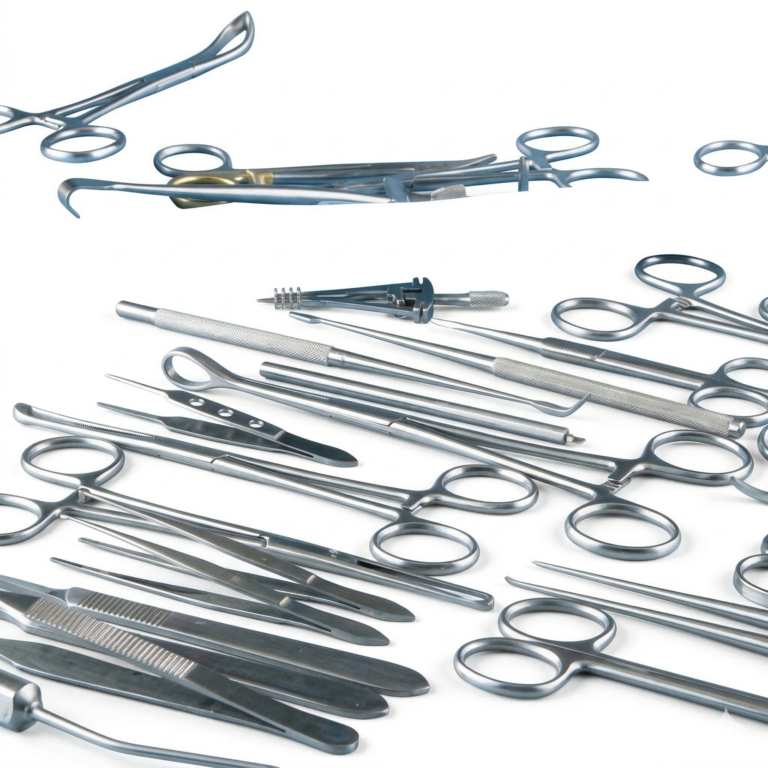
Craniotomy Surgical Instrument Set | NJ Medical Instruments
In stock
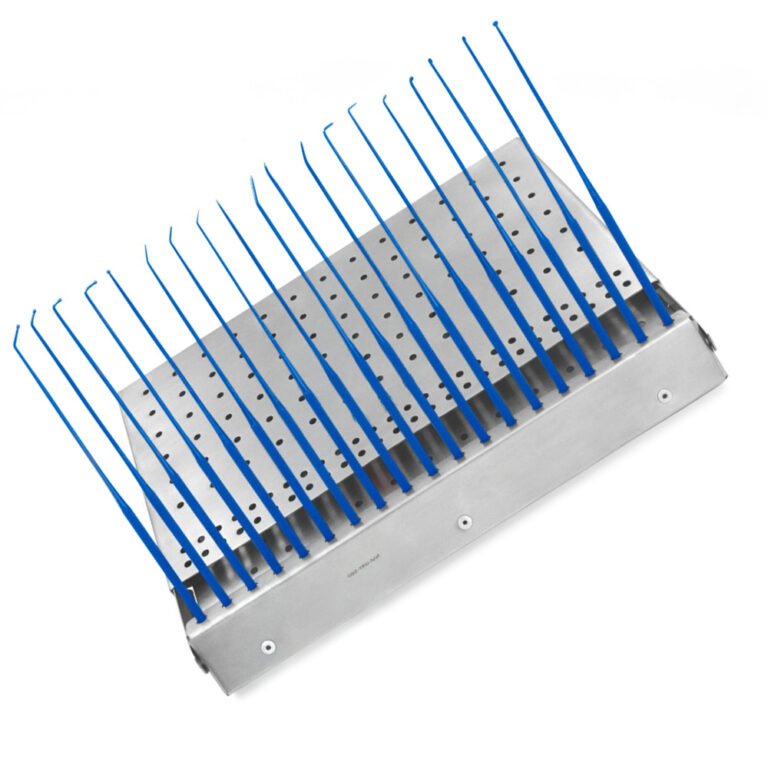
Rhoton Micro Dissector Set of 19 Pcs Titanium With Sterilizing Case | NJ Medical Instruments
In stock
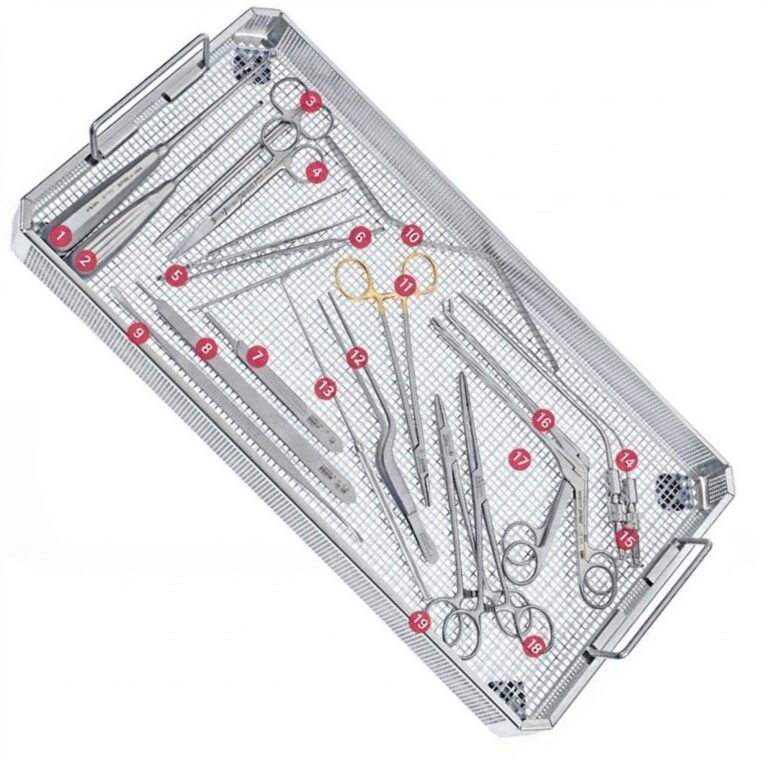
Spinal Neurosurgery Set | NJ Medical Instruments
In stock
Neurosurgery Sets: Instruments for Tissue That Does Not Regenerate
Neural tissue does not heal the way other tissue does — damage to it is generally permanent — and every design decision in a neurosurgical set follows from that. Elsewhere in surgery an instrument that bruises tissue is accepted because the tissue recovers. Here it is not. So neurosurgical instruments are finer, blunter at the working end, and gentler in action than their equivalents in any other specialty, and the set carries a striking number of instruments whose only purpose is to move something aside safely rather than to cut, hold, or remove. Add to that a working field several centimetres deep and often viewed through a microscope, and the characteristic shapes follow: long, bayonet-stepped, and fine-tipped. NJ Medical Instruments assembles neurosurgery sets in surgical-grade stainless steel, to standard configurations or to your own instrument list, supplied worldwide direct from the factory with OEM and private-label options.
Why bayonet shapes dominate
Almost every instrument in a neurosurgical set has a bayonet step in the shaft. Working down a narrow corridor under a microscope, a straight instrument places the surgeon's hand and the instrument body directly in the optical path — obscuring the very view the microscope provides. The bayonet offsets the shaft laterally so the hand sits outside the line of sight while the tip works at the far end. It is not a stylistic convention; it is what makes microscope work possible.
Blunt dissection near dura
Penfield and Woodson dissectors have deliberately blunt working ends. Separating dura from bone or nerve root from surrounding tissue is done by finding and following the natural plane, not by cutting one. A sharp instrument creates a tear, and a dural tear means a cerebrospinal fluid leak that must then be repaired. The bluntness is the safety feature.
Haemostasis without heat spread
Bleeding obscures a field where millimetres matter, but coagulating near cortex or cranial nerve risks thermal injury to the structure being protected. Bipolar forceps are therefore near-universal in neurosurgery, with irrigating patterns preferred because saline carries heat away as it is generated, keeping the effect confined to the vessel between the tips.
What a neurosurgery set contains
| Instrument | Character | Purpose |
|---|---|---|
| Penfield dissectors | Blunt, numbered set | Separating dura and nerve root |
| Woodson dissector | Blunt, dual-ended | Fine plane development |
| Bayonet bipolar forceps | Stepped shaft, fine tips | Haemostasis clear of the sightline |
| Irrigating bipolar forceps | Integrated saline channel | Reducing lateral thermal spread |
| Kerrison rongeurs | Footplate and punch | Removing bone away from dura |
| Micro scissors, bayonet | Fine blades | Cutting under the microscope |
| Nerve root retractor | Smooth contoured blade | Holding the root aside atraumatically |
| Micro suction | Fine bore, thumb port | Controlled suction near neural tissue |
Explore related instruments and sets
- Spinal Surgical Instrumentation
- European Irrigation Bipolar Forceps and SilverGlide Non-Stick Bipolar
- Bone Cutters & Rongeurs and Suction Tubes
- All Medical Instrument Sets and Orthopedic Sets
All instruments are manufactured in surgical-grade stainless steel to international standards, reusable and autoclavable, with worldwide shipping.
Custom, bulk & OEM set assembly
As a direct manufacturer, NJ Medical Instruments assembles neurosurgery sets to your own instrument list — your choice of dissector patterns, bipolar tip sizes, rongeur bite widths, and case — and supplies them in bulk to hospitals, neurosurgical units, and distributors. OEM and private-label sets with custom laser marking are available. Send us your list by email at info@njmedicalinstruments.com or by WhatsApp and we will quote the complete set — no minimum-order barriers, no middlemen.
Frequently asked questions
What instruments are in a neurosurgery set?
A neurosurgery set contains blunt Penfield and Woodson dissectors, bayonet bipolar forceps including irrigating patterns, Kerrison rongeurs, bayonet micro scissors, nerve root retractors, and fine suction — instruments built to move and protect tissue rather than to cut it.
Why are neurosurgical instruments bayonet shaped?
Working down a narrow corridor under a microscope, a straight instrument puts the surgeon's hand and the instrument body in the optical path. The bayonet step offsets the shaft so the hand stays outside the line of sight while the tip works at depth.
Why are the dissectors blunt?
Separating dura from bone, or nerve root from surrounding tissue, is done by following the natural plane. A sharp instrument creates a tear instead, and a dural tear means a cerebrospinal fluid leak requiring repair.
Why are irrigating bipolar forceps used in neurosurgery?
Saline flowing over the tips carries heat away as it is generated, so lateral thermal spread into adjacent tissue is reduced. That matters when coagulating millimetres from cortex or a cranial nerve.
What is a Kerrison rongeur used for in neurosurgery?
It removes bone during decompression. A thin footplate slides beneath the bone so the cutting edge stays physically separated from the dura underneath, allowing bone removal in controlled bites.
Can you build a custom neurosurgery set?
Yes. We assemble sets to your own instrument list, with your choice of dissector patterns, bipolar tip sizes, rongeur bite widths, and case, including OEM and private-label sets with custom laser marking.