

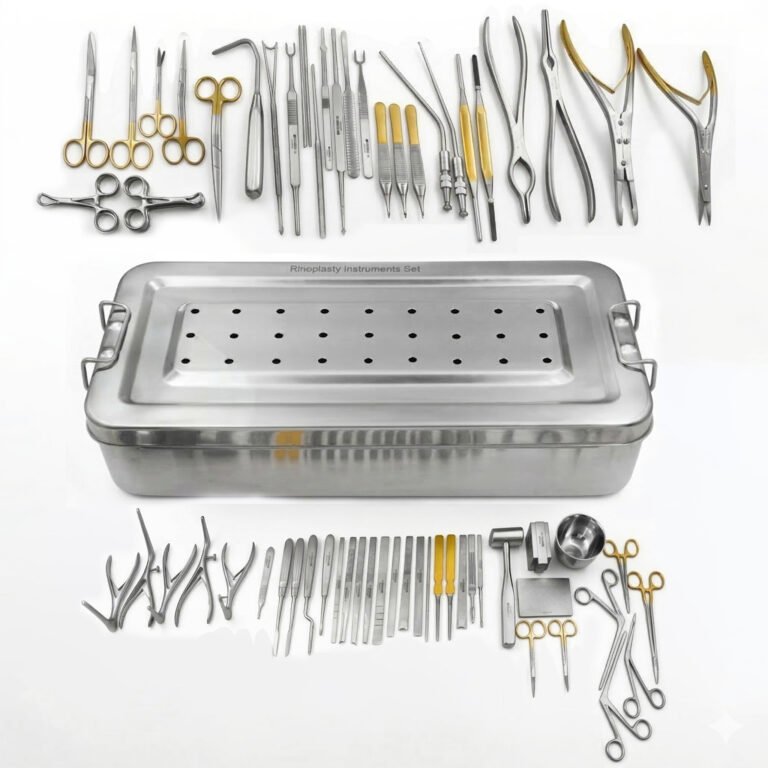
Complete Rhinoplasty Instruments Set of 69 Pcs ( Nose Job Surgery Kit ) | NJ Medical Instruments
In stock
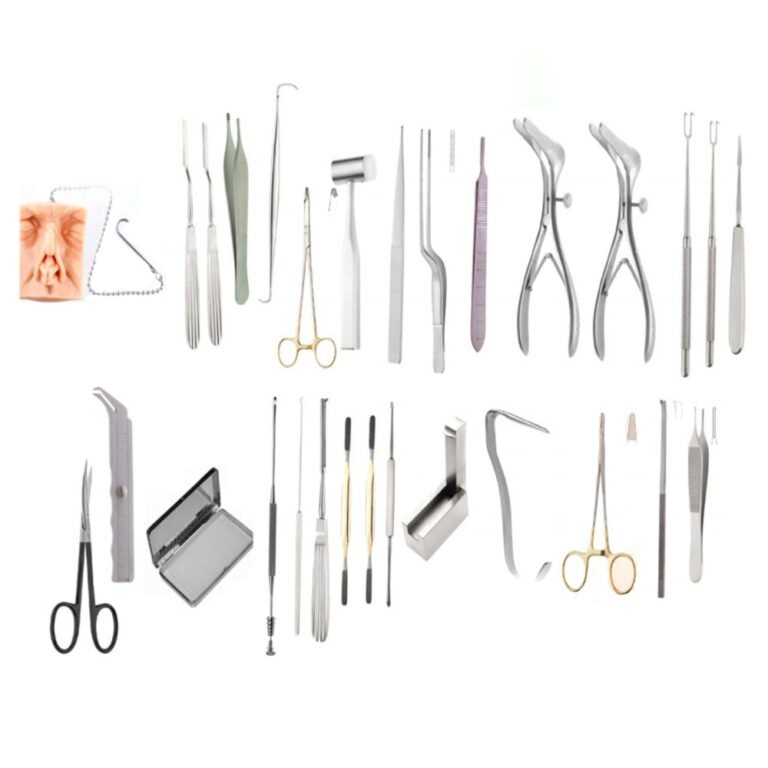
Gruber Rhinoplasty Procedure Set | NJ Medical Instruments
In stock
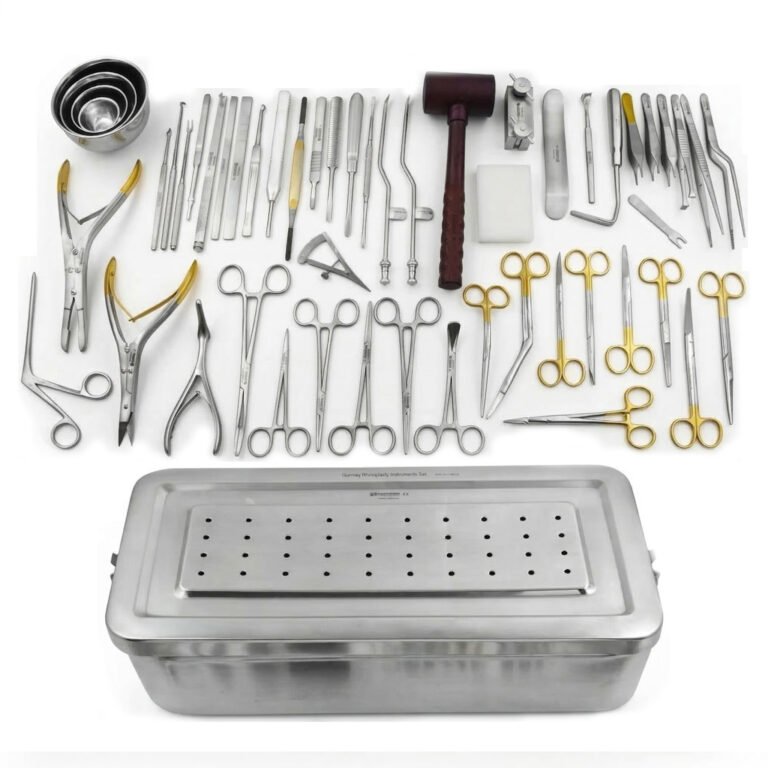
Gubisch Complete Rhinoplasty Instruments Set | NJ Medical Instruments
In stock
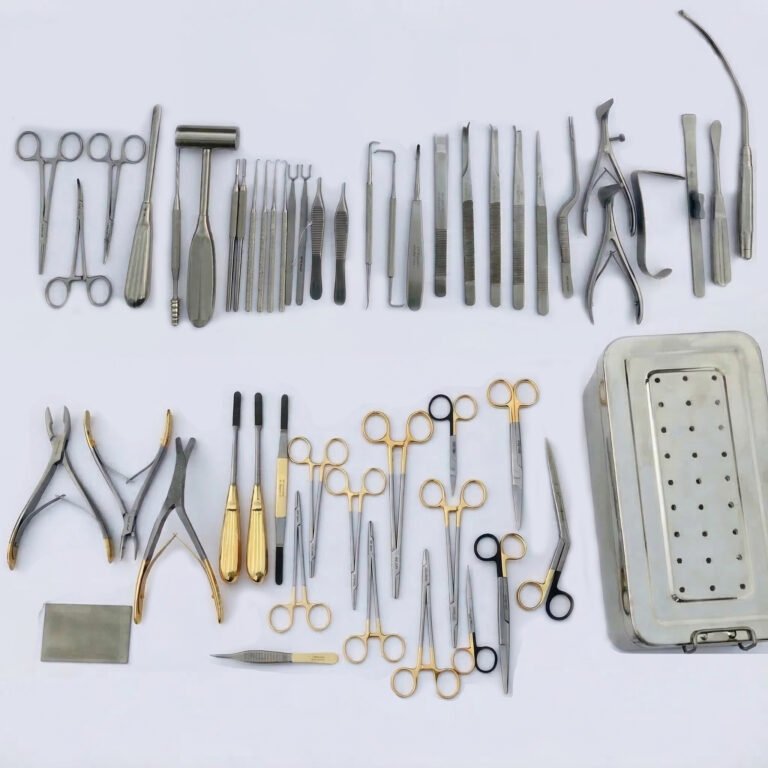
Gunter Rhinoplasty Instruments Set | NJ Medical Instruments
In stock
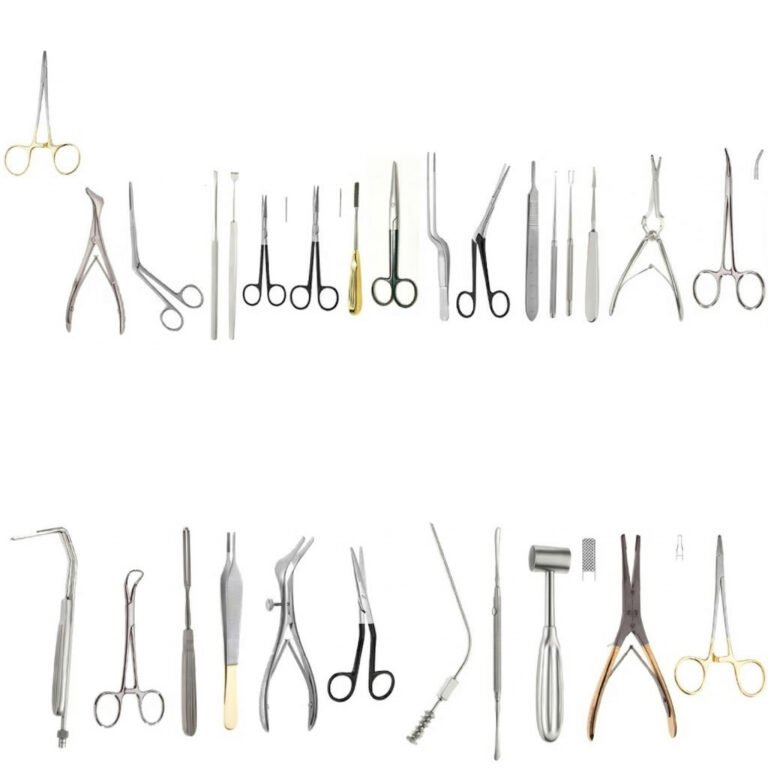
Peck Rhinoplasty Procedure Set | NJ Medical Instruments
In stock
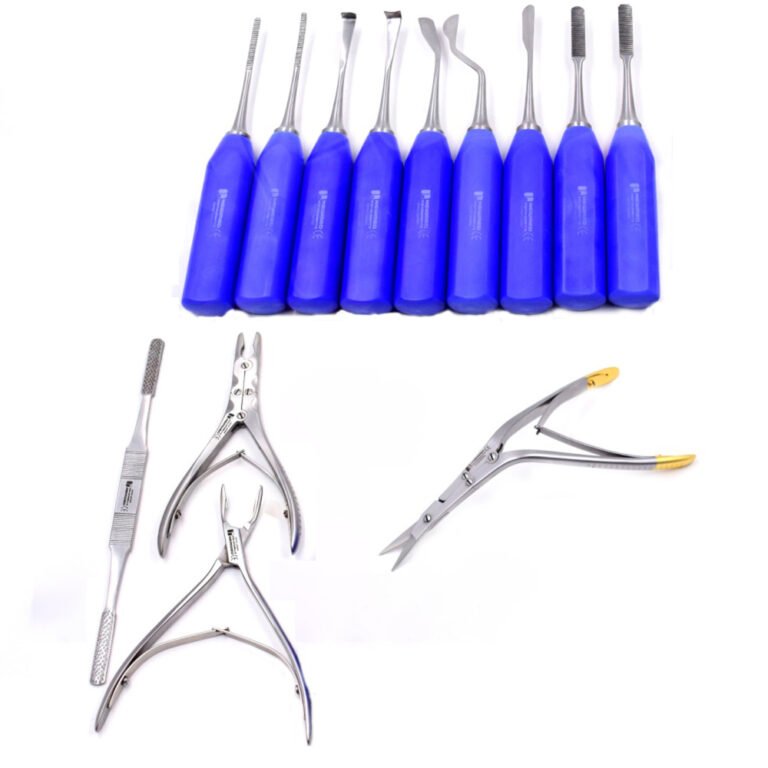
Preservation Rhinoplasty Instruments Set | NJ Medical Instruments
In stock
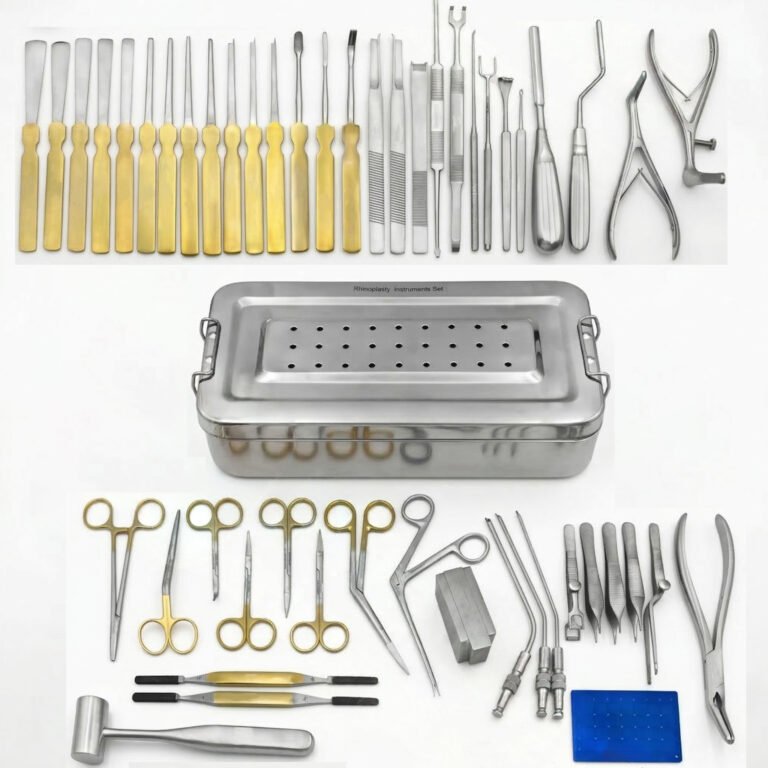
Rhinoplasty Instruments Set of 50 Pcs, Complete Set of Nasal Surgery Tools | NJ Medical Instruments
In stock
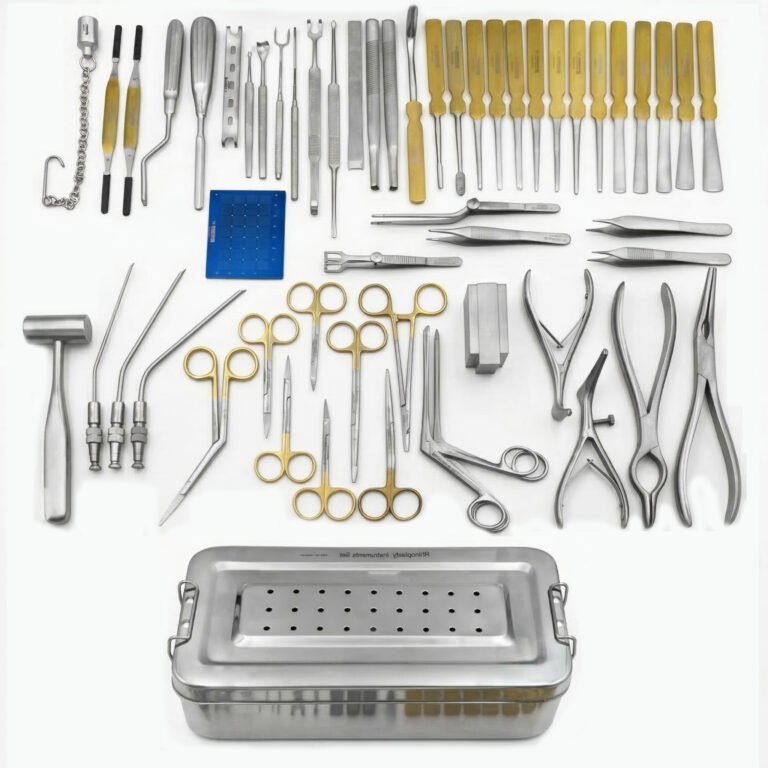
Rhinoplasty Instruments Set of 55 Pcs | NJ Medical Instruments
In stock
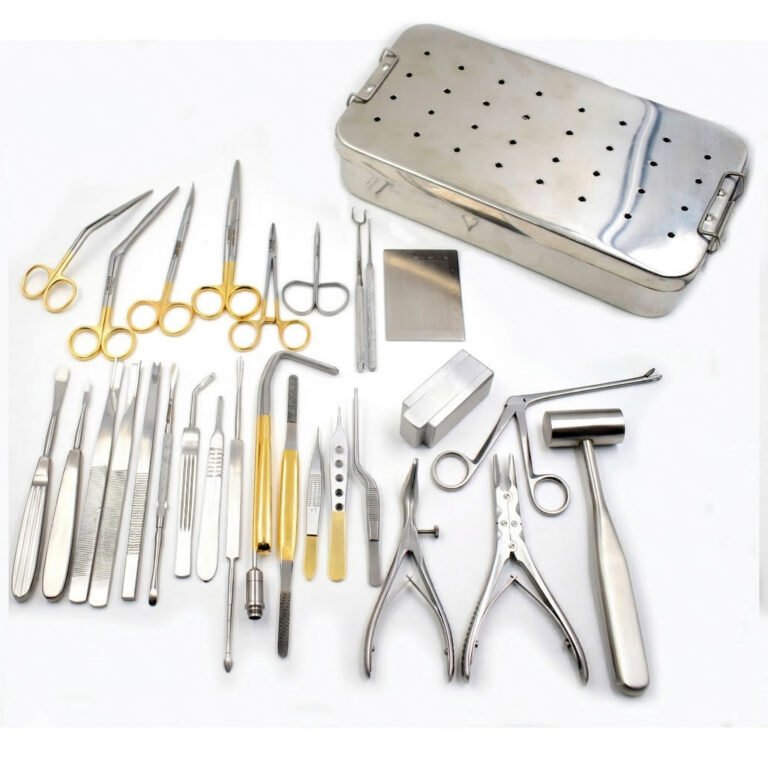
Sheen Rhinoplasty Instruments Set | NJ Medical Instruments
In stock
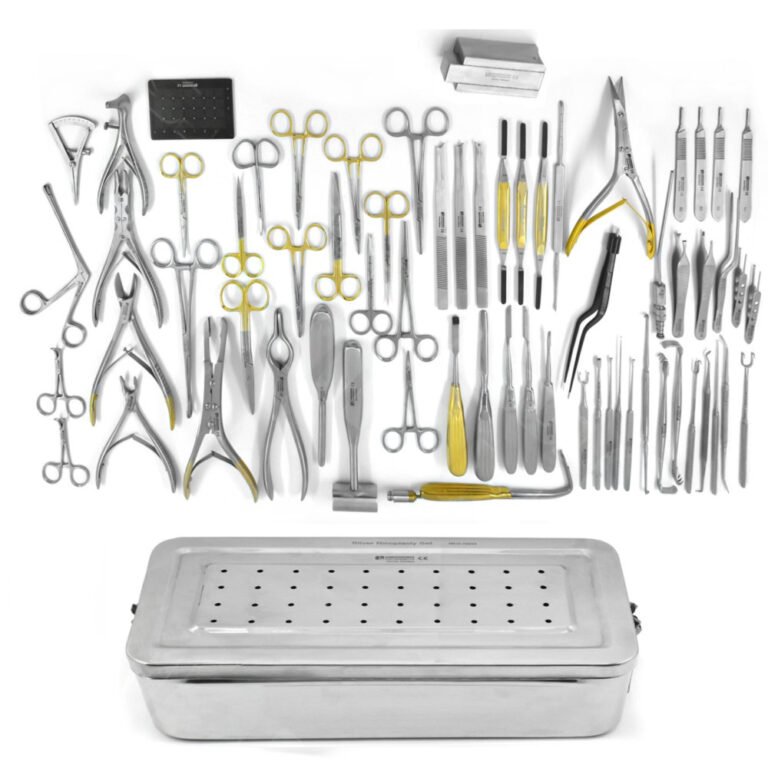
Silver Rhinoplasty Instruments Set | NJ Medical Instruments
In stock
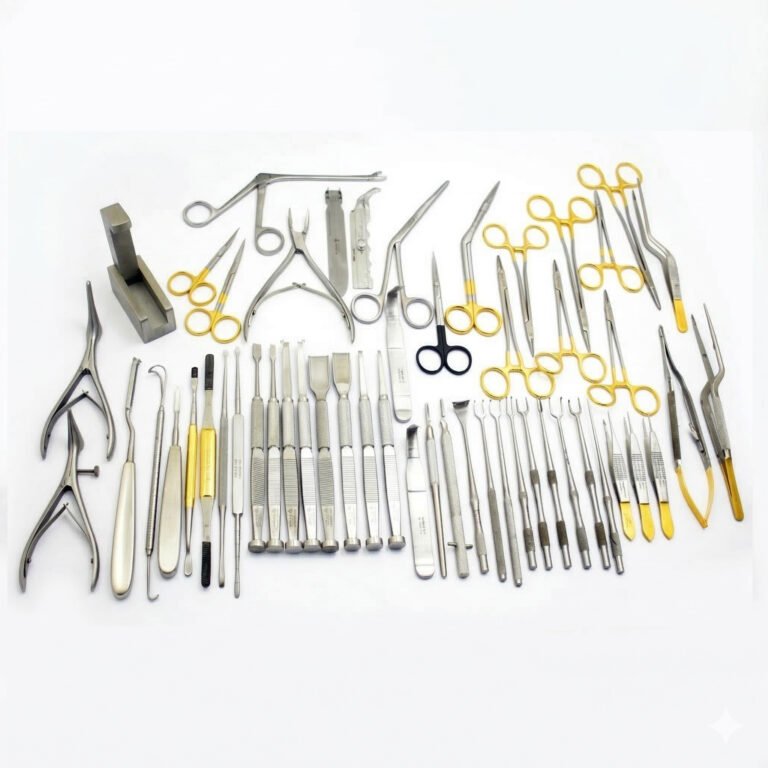
Tebbetts Rhinoplasty Instruments Set | NJ Medical Instruments
In stock
Rhinoplasty Sets: Instruments for Bone, Cartilage and Soft Tissue in One Tray
Rhinoplasty is unusual in asking a single tray to handle three quite different materials in the same operation — skin and mucosa, springy cartilage, and dense nasal bone. Most procedures work predominantly in one tissue type. Here the surgeon elevates soft tissue, trims and shapes cartilage that resists and rebounds, cuts and repositions bone with mallet-driven instruments, then returns to fine soft-tissue closure — all through nostril-sized access. A rhinoplasty set is therefore not a plastic surgery tray with extras added; it is a specific combination assembled around that sequence. NJ Medical Instruments assembles rhinoplasty sets in surgical-grade stainless steel, to standard configurations or to your own instrument list, supplied worldwide direct from the factory with OEM and private-label options.
Working through the sequence
Exposure. Cottle and Freer elevators lift mucoperichondrium and mucoperiosteum off the septum, developing the plane the rest of the operation works within. Nasal specula and fine retractors hold access open.
Cartilage. Cottle and Joseph knives incise, fine scissors trim, and cartilage crushers or morselisers soften grafts so they sit smoothly beneath thin skin without a visible edge.
Bone. Osteotomes make the lateral and medial cuts, guarded patterns protecting mucosa as they pass. Rasps then refine the dorsum in controlled strokes rather than a single irreversible cut. A mallet delivers the force, and its weight is chosen for control rather than power.
Why guarded and angled instruments recur
Two constraints repeat through the set. The working point is deep relative to the access, so shafts are long and often bayonet-shaped to keep the surgeon's hand out of the sightline. And mucosa sits immediately adjacent to bone being cut, so guarded osteotomes and chisels appear throughout — the flange is what separates a controlled osteotomy from a mucosal tear.
What a rhinoplasty set contains
| Stage | Instruments | Working on |
|---|---|---|
| Access | Nasal specula, fine retractors | Holding the field open |
| Elevation | Cottle and Freer elevators | Mucoperichondrium and periosteum |
| Incision | Cottle and Joseph knives | Septal cartilage and soft tissue |
| Cartilage shaping | Fine scissors, crushers, morselisers | Grafts and septal cartilage |
| Bone cutting | Guarded osteotomes, chisels, mallet | Nasal bones, lateral and medial cuts |
| Bone refining | Rasps, coarse to fine | Dorsum after hump reduction |
| Grasping | Blakesley and nasal forceps | Removing tissue and fragments |
| Closure | Fine needle holders, thumb forceps | Mucosa and skin |
Explore related instruments and sets
- Osteotomes, Chisels and Rasps
- Dissectors & Elevators and Knives and Handles
- Nasal Forceps and Mallets & Cartilage Instruments
- All Medical Instrument Sets and Plastic Surgery Sets
All instruments are manufactured in surgical-grade stainless steel to international standards, reusable and autoclavable, with worldwide shipping.
Custom, bulk & OEM set assembly
As a direct manufacturer, NJ Medical Instruments assembles rhinoplasty sets to your own instrument list — your choice of osteotome widths, rasp grades, elevator patterns, and case — and supplies them in bulk to hospitals, aesthetic and ENT clinics, and distributors. OEM and private-label sets with custom laser marking are available. Send us your list by email at info@njmedicalinstruments.com or by WhatsApp and we will quote the complete set — no minimum-order barriers, no middlemen.
Frequently asked questions
What instruments are in a rhinoplasty set?
A rhinoplasty set covers the full sequence: nasal specula and retractors for access, Cottle and Freer elevators for tissue elevation, Cottle and Joseph knives for incision, fine scissors and cartilage crushers for graft shaping, guarded osteotomes and a mallet for bone cuts, rasps for dorsal refinement, nasal forceps for grasping, and fine instruments for closure.
Why are guarded osteotomes used in rhinoplasty?
The nasal mucosa sits immediately against the bone being cut. The guard is a protective flange beside the cutting edge that shields mucosa and soft tissue during the osteotomy and helps keep the instrument on its intended line.
What is the difference between an osteotome and a rasp in rhinoplasty?
An osteotome makes a controlled cut through bone, used for lateral and medial osteotomies. A rasp abrades the surface in repeated strokes to refine the dorsum after the hump is taken down, letting the surgeon reassess the profile between passes.
What is a cartilage crusher used for?
A cartilage crusher softens and flattens a graft so it sits smoothly beneath thin nasal skin without a visible edge. The degree of crushing is a judgement, since over-crushing weakens the graft's structural support.
Why are rhinoplasty instruments long and bayonet-shaped?
The operative point is deep relative to nostril-sized access. Long shafts provide reach, and the bayonet step keeps the surgeon's hand and the instrument body out of the line of sight.
Can you build a custom rhinoplasty set?
Yes. We assemble sets to your own instrument list, with your choice of osteotome widths, rasp grades, elevator patterns, and case, including OEM and private-label sets with custom laser marking.