


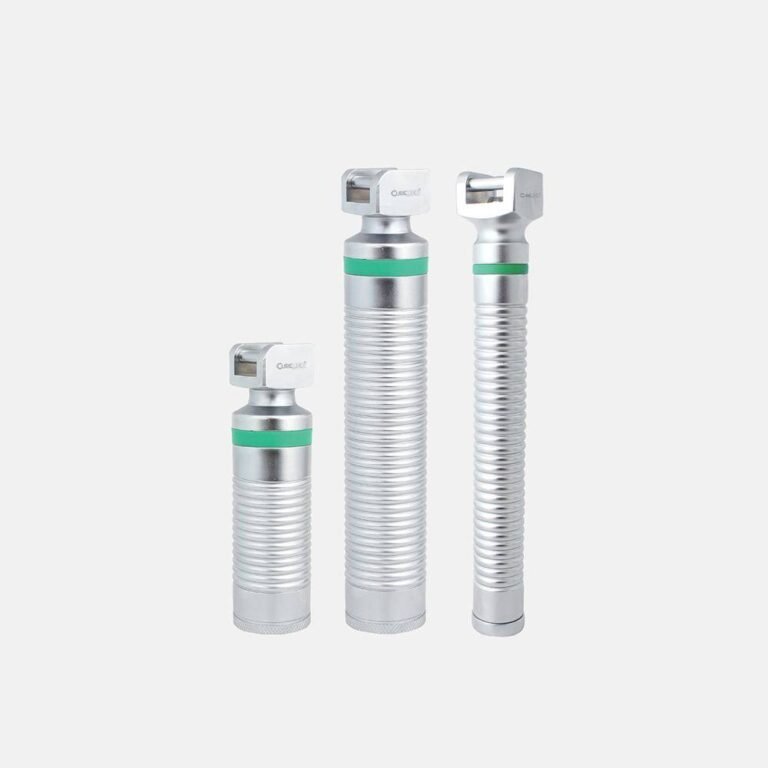
Fiber Optic Laryngoscope Handles | NJ Medical Instruments
In stock
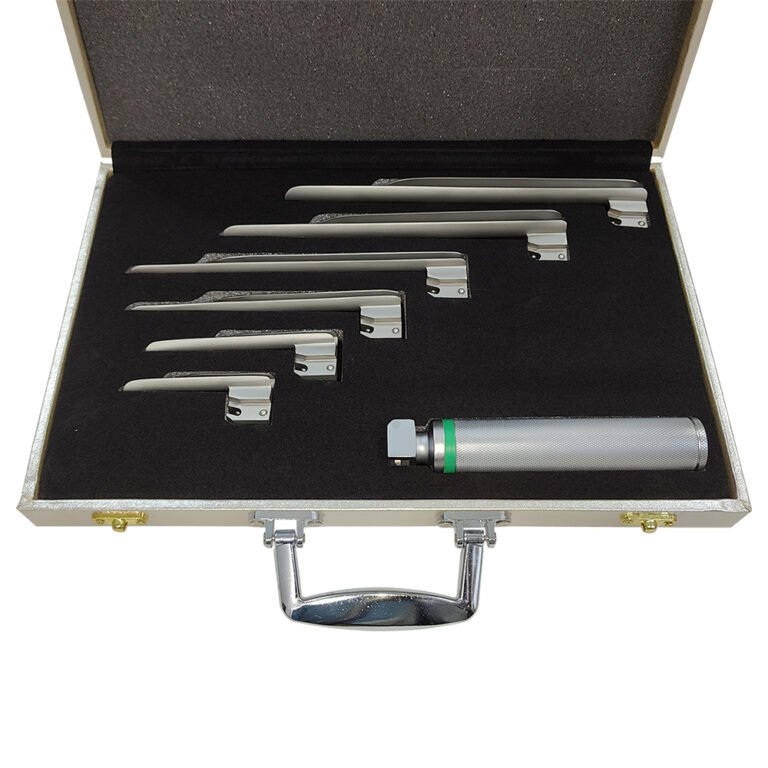
Fiber Optic Laryngoscope Miller Set | NJ Medical Instruments
In stock
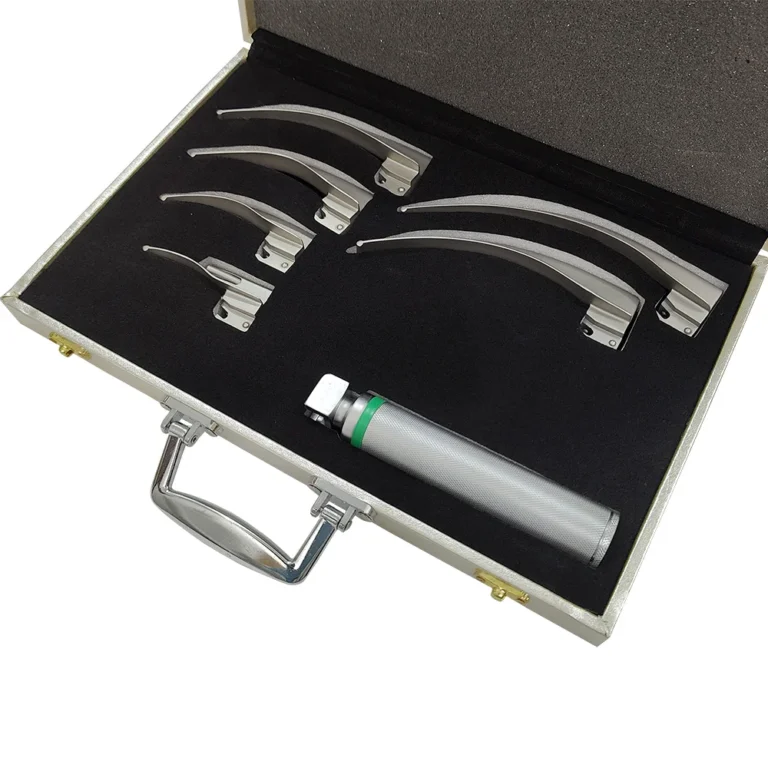
Fiber Optic Laryngoscope Set | NJ Medical Instruments
In stock
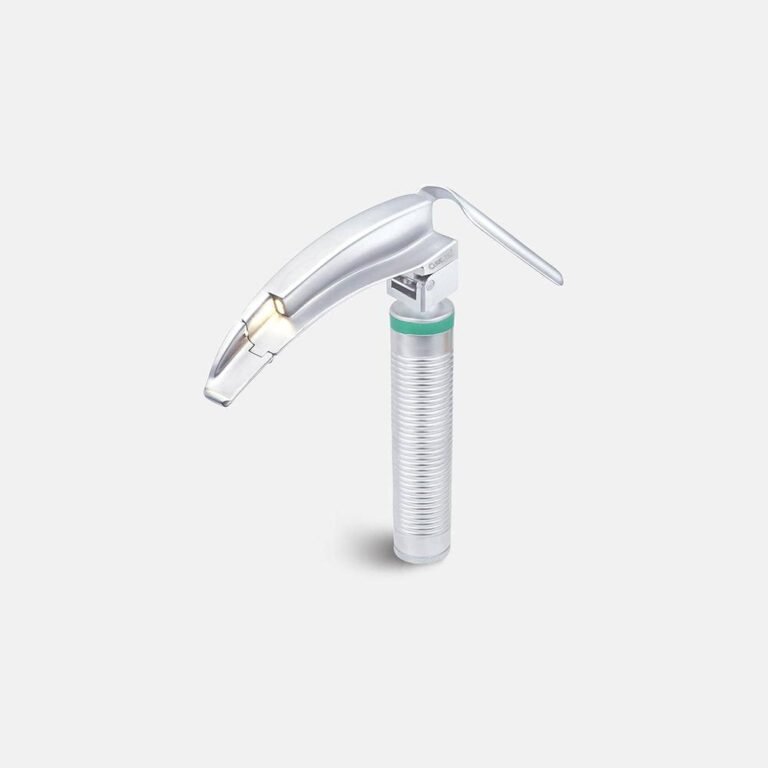
Reusable Mega Fiber Optic Laryngoscope McCoy | NJ Medical Instruments
In stock
Fiber Optic Laryngoscopes: Brighter, Cooler Light Where It Is Needed
A fiber optic laryngoscope carries light from the handle to the blade tip through a bundle of glass fibres, instead of using a bulb mounted on the blade itself. That single change fixes the three weaknesses of conventional blade-mounted illumination. The light is brighter and whiter, so the anatomy is easier to identify at the moment it matters. It is cooler at the tip, because the heat stays back in the handle rather than sitting next to mucosa. And there is no bulb on the blade to work loose — a blade-mounted bulb that unscrews during an intubation becomes a foreign body in an airway already being managed under pressure. NJ Medical Instruments supplies the full fiber optic range worldwide direct from the factory for individual purchase and for bulk, wholesale, and OEM/private-label supply.
Consistency across the set
There is a practical advantage that only shows up in a busy department. With blade-mounted bulbs, every blade has its own light source, so brightness varies across the set depending on bulb age and contact condition — and the dim blade tends to be discovered at the worst possible moment. With fiber optic, illumination comes from the handle, so any blade fitted to a good handle gives the same light. Standardising on one handle type across a department removes an entire class of equipment surprise.
Blade selection
Macintosh (curved) blades are placed in the vallecula and lift the epiglottis indirectly, the usual first choice in adults. Miller (straight) blades lift the epiglottis directly, commonly preferred in infants and small children where the epiglottis is longer and floppier. Sizes run 00 to 4; too short will not reach the vallecula, too long obstructs the view it was meant to open.
Caring for the fibre bundle
The fibre bundle determines light output over the instrument's life. Individual glass fibres fracture if a blade is dropped or handled roughly, and each broken fibre is light permanently lost — the decline is gradual rather than sudden, which is why it goes unnoticed until output is visibly poor. Blades should be handled and stored to avoid impact, and the light-transmitting surfaces at both ends kept clean, since residue there dims output as effectively as a damaged bundle does.
Fiber optic versus conventional
| Aspect | Fiber optic | Conventional (bulb on blade) |
|---|---|---|
| Light source | In the handle | Mounted on the blade |
| Brightness | Higher, whiter | Lower, warmer tone |
| Tip temperature | Cool | Warm at the bulb |
| Bulb loosening risk | None on the blade | Possible in the airway |
| Consistency across blades | Same handle, same light | Varies with each bulb |
| Main wear point | Fibre bundle over time | Bulb and electrical contacts |
Explore related ENT instruments
- Conventional Laryngoscopes
- Single Use Laryngoscopes
- All ENT Diagnostic Instruments and ENT Complete Sets
- ENT Instrument Sets
All supplied to international standards, with worldwide shipping.
Bulk, wholesale & OEM supply
As a direct manufacturer and supplier, NJ Medical Instruments provides fiber optic laryngoscopes, blades, and handles in bulk and wholesale quantities to hospitals, anaesthetic and emergency departments, and distributors, and produces OEM / private-label sets with custom branding. Complete sets with a handle and graded blade range are the usual departmental purchase. Contact us by email at info@njmedicalinstruments.com or by WhatsApp for volume pricing — no minimum-order barriers, no middlemen.
Frequently asked questions
What is a fiber optic laryngoscope?
It carries light from the handle to the blade tip through a bundle of glass fibres rather than using a bulb mounted on the blade, giving brighter, cooler, more consistent illumination of the airway.
What is the difference between fiber optic and conventional laryngoscopes?
A conventional laryngoscope has the bulb on the blade itself. A fiber optic instrument keeps the light source in the handle and transmits light through the blade, so the tip stays cool and there is no bulb on the blade that could work loose in the airway.
Why is consistent brightness an advantage?
With blade-mounted bulbs each blade has its own light source, so brightness varies across a set with bulb age and contact condition. With fiber optic, illumination comes from the handle, so any blade on a good handle gives the same light.
Which blade should be used, Macintosh or Miller?
Macintosh curved blades sit in the vallecula and lift the epiglottis indirectly, usually the first choice in adults. Miller straight blades lift the epiglottis directly and are commonly preferred in infants and small children.
Why does a fiber optic blade get dimmer over time?
Individual glass fibres fracture when a blade is dropped or handled roughly, and each broken fibre is light permanently lost. The decline is gradual, so it often goes unnoticed until output is visibly poor. Keeping the light-transmitting surfaces clean also matters.
Do you supply fiber optic laryngoscopes in bulk or for OEM / private label?
Yes. We supply fiber optic laryngoscopes, blades, and handles in bulk and wholesale quantities, commonly as complete sets with a graded blade range, and offer OEM / private-label production with custom branding. Contact us by email or WhatsApp for volume pricing.