


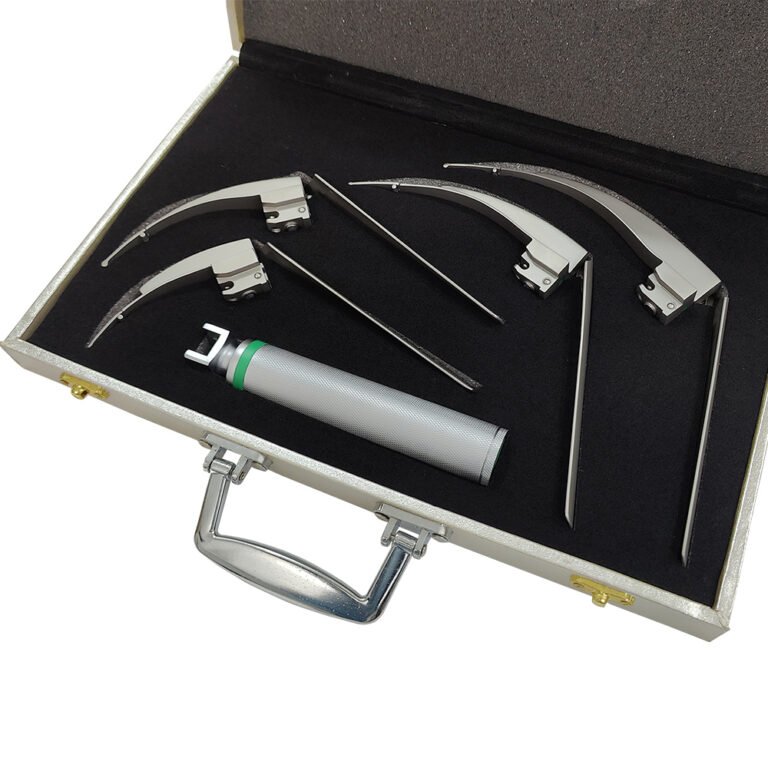
Conventional Curved Laryngoscope Set | NJ Medical Instruments
In stock
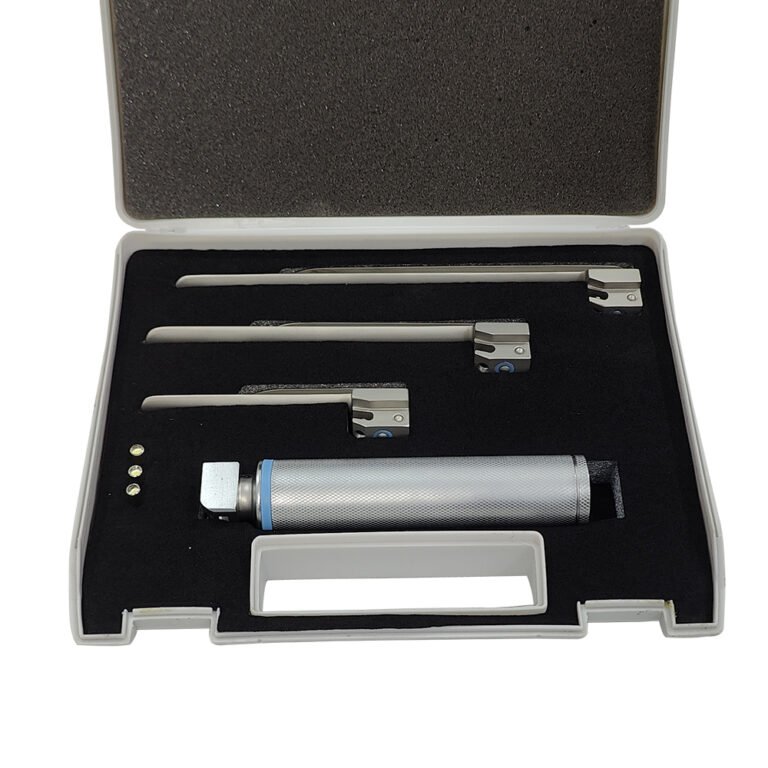
Miller Conventional Laryngoscope Set | NJ Medical Instruments
In stock
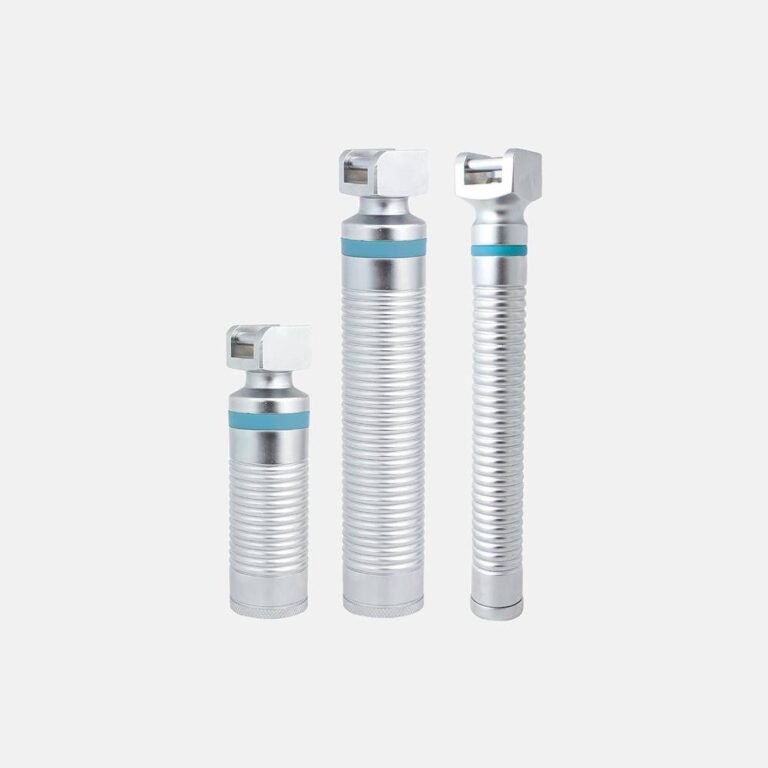
Reusable Conventional Laryngoscope Handles | NJ Medical Instruments
In stock
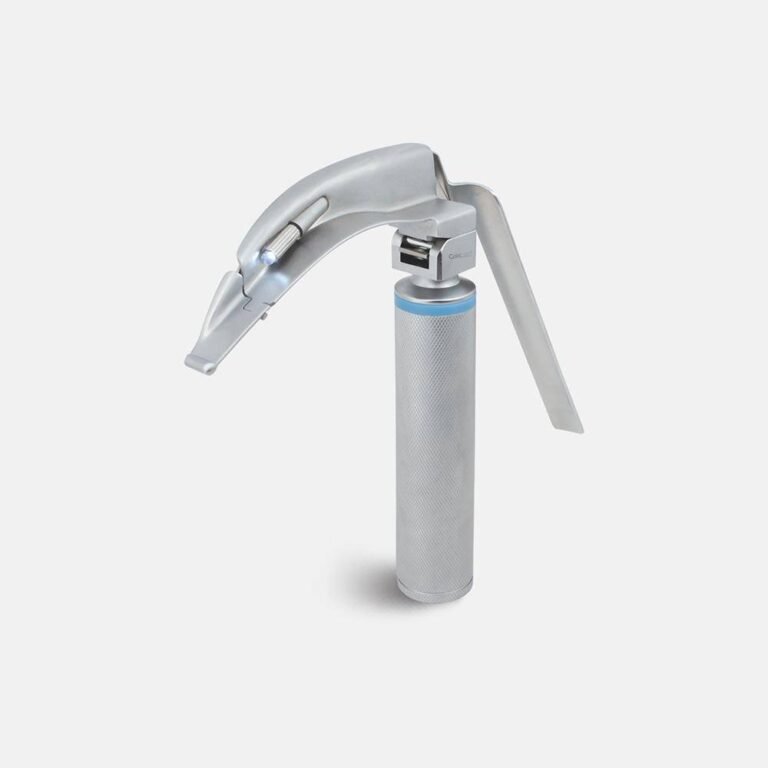
Reusable Conventional Laryngoscope Mccoy | NJ Medical Instruments
In stock
Conventional Laryngoscopes: The Standard Blade-and-Handle Airway Instrument
A conventional laryngoscope carries its light source as a bulb mounted on the blade, and it remains the most widely used airway instrument in the world for straightforward reasons: it is simple, robust, inexpensive, and universally understood. The blade locks onto a handle containing the batteries, the bulb makes contact when the blade is opened to the working position, and the instrument is ready. There is very little to go wrong mechanically, and almost every anaesthetist and emergency clinician has trained on one. NJ Medical Instruments supplies the full range of blades and handles in surgical-grade stainless steel, worldwide direct from the factory for individual purchase and for bulk, wholesale, and OEM/private-label supply.
The bulb is the maintenance point
Everything that typically fails on a conventional laryngoscope traces back to the bulb or its electrical contacts. A bulb dims as it ages, contacts corrode or accumulate residue from repeated reprocessing, and a bulb that has loosened slightly may light on the bench and flicker under movement. Because the fault develops gradually, the failure tends to reveal itself at induction rather than during a check. Two practices address this: test at full brightness before every case, not just for illumination, and confirm the bulb is finger-tight when a blade is returned to service after cleaning — a loose bulb in an airway is a foreign body.
Macintosh and Miller
The Macintosh curved blade is placed into the vallecula and lifts the epiglottis indirectly by tensioning the hyoepiglottic ligament. It is the usual adult first choice. The Miller straight blade passes beyond the epiglottis and lifts it directly, which suits infants and small children where the epiglottis is longer, softer, and less reliably lifted by indirect pressure. Sizes run from 00 for neonates to 4 for large adults.
Reprocessing
Blades must be cleaned thoroughly along the flange and around the bulb housing, where secretions collect and are easily missed. Handles carry batteries and contacts, so they are wiped down rather than immersed unless specified as immersible. Where a validated reprocessing cycle is not available at the point of use, single-use blades are the more appropriate choice.
Which blade do you need?
| Blade | Shape and action | Best for |
|---|---|---|
| Macintosh 3 | Curved, indirect lift | Standard adult intubation |
| Macintosh 4 | Curved, longer | Larger adults |
| Miller 0–1 | Straight, direct lift | Neonates and infants |
| Miller 2 | Straight, direct lift | Children |
| Standard handle | Batteries and contacts | General use |
| Stubby handle | Shortened body | Obese patients, limited chest clearance |
Explore related ENT instruments
- Fiber Optic Laryngoscopes — brighter, no bulb on the blade
- Single Use Laryngoscopes
- All ENT Diagnostic Instruments and ENT Complete Sets
- ENT Instrument Sets
All manufactured in surgical-grade stainless steel to international standards, with worldwide shipping.
Bulk, wholesale & OEM supply
As a direct manufacturer and supplier, NJ Medical Instruments provides conventional laryngoscope blades, handles, and replacement bulbs in bulk and wholesale quantities to hospitals, anaesthetic and emergency departments, teaching institutions, and distributors, and produces OEM / private-label sets with custom branding. Contact us by email at info@njmedicalinstruments.com or by WhatsApp for volume pricing — no minimum-order barriers, no middlemen.
Frequently asked questions
What is a conventional laryngoscope?
It is a laryngoscope with the light source mounted as a bulb on the blade itself. The blade locks onto a handle containing the batteries, and the bulb makes contact when the blade is opened to the working position.
What is the difference between a conventional and a fiber optic laryngoscope?
A conventional laryngoscope has the bulb on the blade. A fiber optic instrument keeps the light source in the handle and transmits it through the blade, giving brighter cooler light and removing the risk of a blade-mounted bulb loosening.
What usually fails on a conventional laryngoscope?
The bulb or its electrical contacts. Bulbs dim with age, contacts corrode or collect residue from reprocessing, and a slightly loose bulb may light on the bench but flicker under movement. Test at full brightness before every case.
Should I use a Macintosh or a Miller blade?
Macintosh curved blades sit in the vallecula and lift the epiglottis indirectly, the usual adult choice. Miller straight blades pass beyond the epiglottis and lift it directly, which suits infants and small children.
How should laryngoscope blades be cleaned?
Thoroughly along the flange and around the bulb housing, where secretions collect and are easily missed. Handles contain batteries and contacts, so they are wiped rather than immersed unless specified as immersible.
Do you supply laryngoscopes in bulk or for OEM / private label?
Yes. We supply blades, handles, and replacement bulbs in bulk and wholesale quantities to hospitals, departments, and distributors, and offer OEM / private-label sets with custom branding. Contact us by email or WhatsApp for volume pricing.