


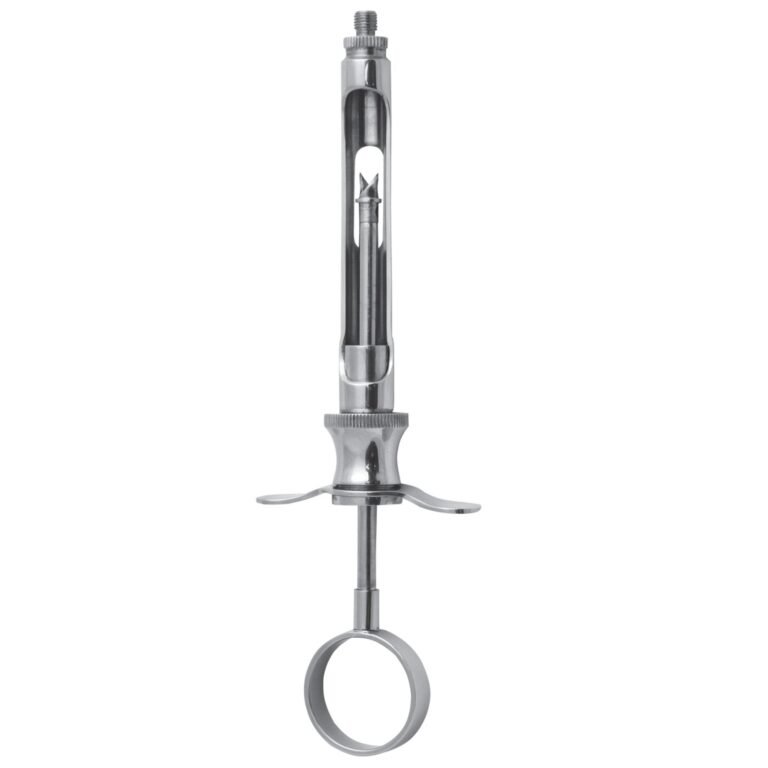
Aspirating Syringe 1.8ml with fix tip | NJ Medical Instruments
In stock
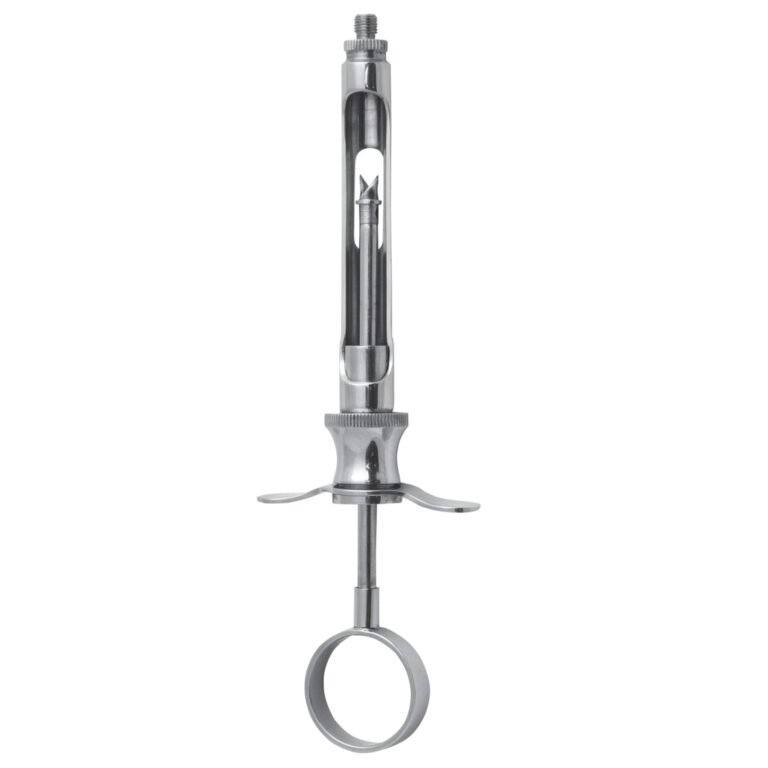
Aspirating Syringe 2.2ml With fix tip | NJ Medical Instruments
In stock
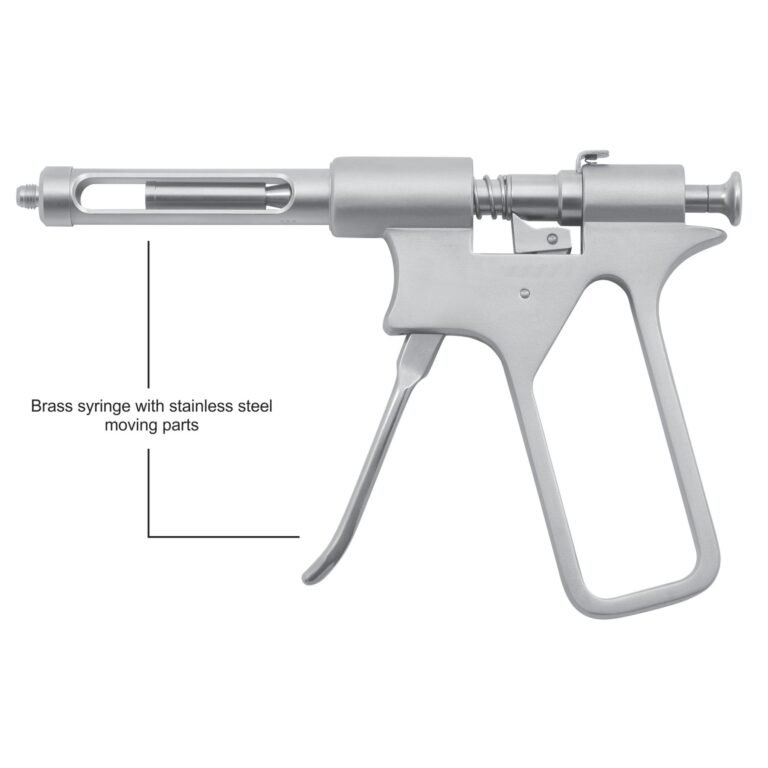
Brass Syringe with stainless steel moving parts | NJ Medical Instruments
In stock
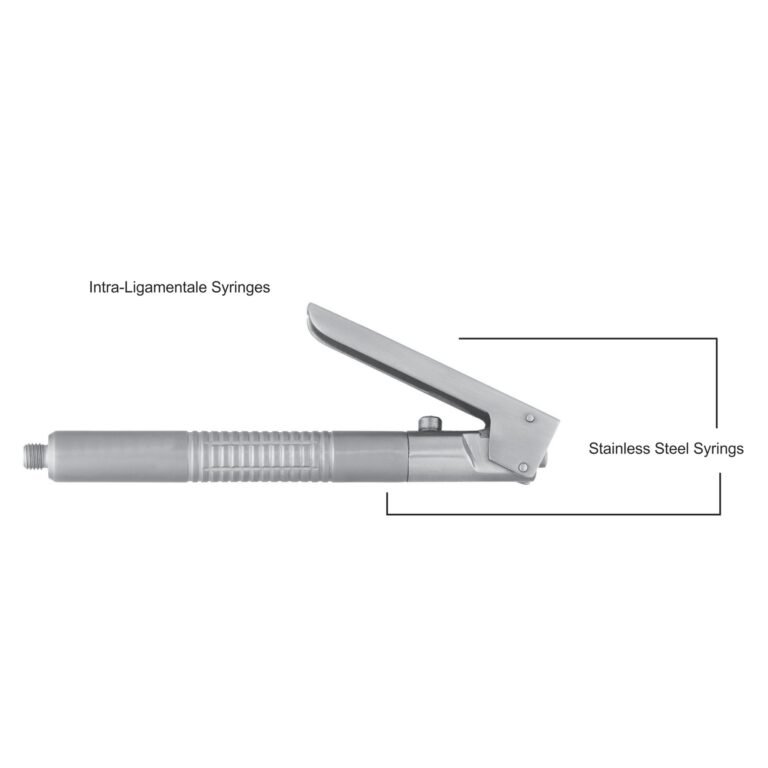
Intraligamental stainless steel syringe | NJ Medical Instruments
In stock
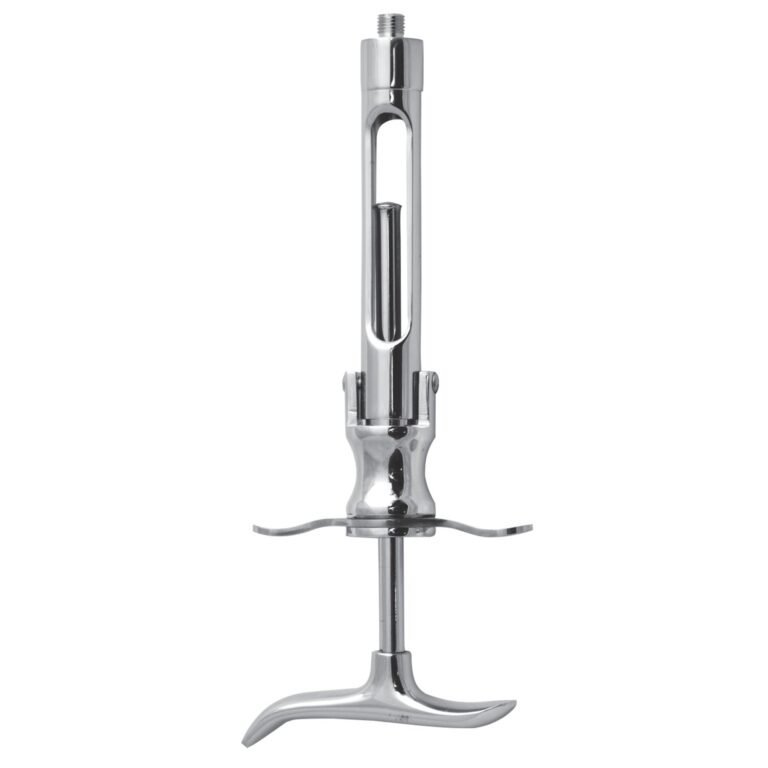
Non Aspirating Syringe 1.8ml with Matric Thread | NJ Medical Instruments
In stock
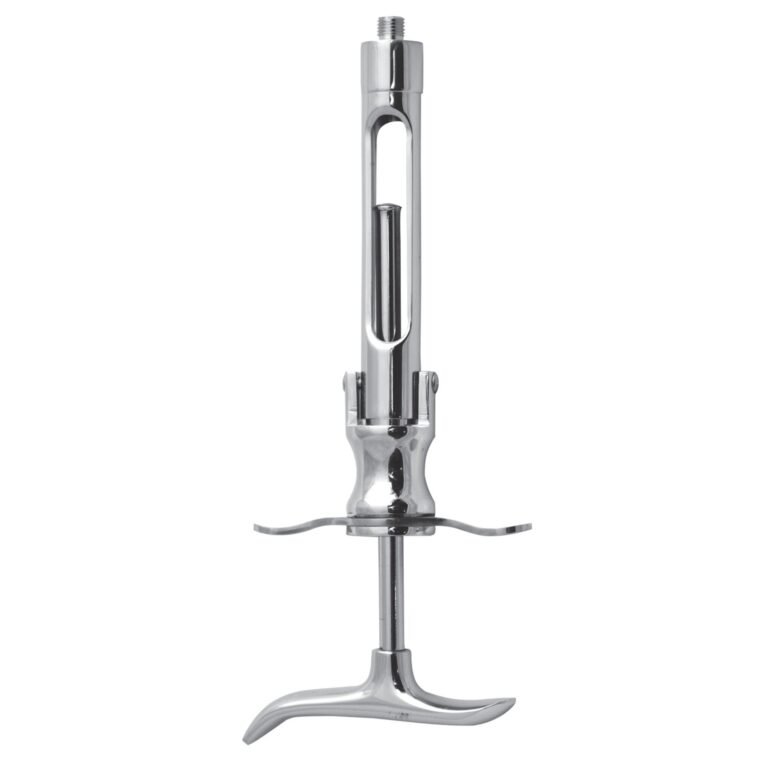
Non Aspirating Syringe 2.2ml with Matric Thread | NJ Medical Instruments
In stock
Dental Syringes: Aspirating and Non-Aspirating Cartridge Syringes
The single most important distinction in a dental syringe is whether it aspirates — whether the operator can draw back before injecting to confirm the needle has not entered a blood vessel. Local anaesthetic delivered directly into a vessel produces a systemic dose rather than a local block, which is the outcome aspiration exists to prevent. An aspirating syringe has a harpoon or barbed plunger tip that engages the rubber stopper in the cartridge, so pulling back on the thumb ring draws the stopper with it and creates negative pressure. A non-aspirating syringe has no such engagement and cannot perform that check. NJ Medical Instruments manufactures the range in surgical-grade stainless steel, supplied worldwide direct from the factory for individual purchase and for bulk, wholesale, and OEM/private-label supply.
Self-aspirating syringes
A self-aspirating design achieves the same check differently: pressure released on the thumb ring causes the elasticity of the cartridge diaphragm to produce a brief negative pressure automatically. There is no harpoon to engage, which makes cartridge loading simpler and removes the risk of a harpoon that has failed to seat properly — a harpoon not engaged in the stopper gives a false reassurance, because the syringe appears to aspirate while nothing is actually being drawn back.
Petit point and paediatric patterns
Petit point syringes have a narrower barrel and shorter reach, designed for smaller hands and for paediatric use where a full-size instrument is unwieldy in a small mouth. The cartridge and needle remain standard; only the body scales down.
The thumb ring and the harpoon
Two components carry the maintenance burden. The harpoon blunts with repeated use and eventually fails to hold the stopper reliably — a harpoon that slips mid-aspiration is the commonest cause of a false negative. It should be inspected regularly and the syringe retired or the harpoon replaced when it no longer engages positively. The thumb ring and finger grips must allow a firm one-handed grip, since aspiration requires pulling back while the needle stays perfectly still.
Which syringe do you need?
| Type | Aspiration mechanism | Best for |
|---|---|---|
| Aspirating syringe | Harpoon engages stopper | Standard local anaesthesia |
| Self-aspirating syringe | Diaphragm elasticity | Simpler loading, no harpoon seating |
| Non-aspirating syringe | None | Infiltration only, where protocol allows |
| Petit point | Harpoon, narrow barrel | Smaller hands and paediatric use |
| Intraligamentary syringe | Geared high-pressure | Periodontal ligament injection |
| Cartridge syringe, standard | Takes standard cartridges | General practice |
Explore related dental instruments
- All Dental Instruments
- Extracting Forceps and Dental Elevators
- Mouth Mirrors, Scalers, Explorers & Probes
- Amalgam Pluggers, Condensers & Burnishers
All manufactured in surgical-grade stainless steel to international standards, reusable and autoclavable, with worldwide shipping.
Bulk, wholesale & OEM supply
As a direct manufacturer, NJ Medical Instruments supplies dental cartridge syringes in bulk and wholesale quantities to dental clinics, hospitals, dental schools, and distributors, and produces OEM / private-label instruments to custom specifications and laser marking. Contact us by email at info@njmedicalinstruments.com or by WhatsApp for volume pricing — no minimum-order barriers, no middlemen.
Frequently asked questions
What is an aspirating dental syringe?
An aspirating syringe has a harpoon or barbed plunger tip that engages the rubber stopper in the anaesthetic cartridge. Pulling back on the thumb ring draws the stopper and creates negative pressure, allowing the operator to confirm the needle has not entered a blood vessel before injecting.
Why does aspiration matter?
Local anaesthetic delivered into a blood vessel produces a systemic dose rather than a local block. Aspiration is the check that prevents that, which is why aspirating syringes are standard for block anaesthesia.
What is a self-aspirating syringe?
It uses the elasticity of the cartridge diaphragm rather than a harpoon. Releasing pressure on the thumb ring produces a brief negative pressure automatically, which simplifies loading and removes the risk of an improperly seated harpoon.
Why does a harpoon need checking?
A blunted harpoon may fail to hold the stopper, so the syringe appears to aspirate while nothing is actually drawn back — a false negative. Harpoons should be inspected regularly and replaced when they no longer engage positively.
What is a petit point syringe?
A petit point syringe has a narrower barrel and shorter reach for smaller hands and paediatric use. It takes standard cartridges and needles; only the body of the instrument is scaled down.
Do you supply dental syringes in bulk or for OEM / private label?
Yes. As a direct manufacturer we supply dental cartridge syringes in bulk and wholesale quantities and offer OEM / private-label production to custom specifications. Contact us by email or WhatsApp for volume pricing.